Chen Collection, Middle Volume
Radical: Tree (mù)
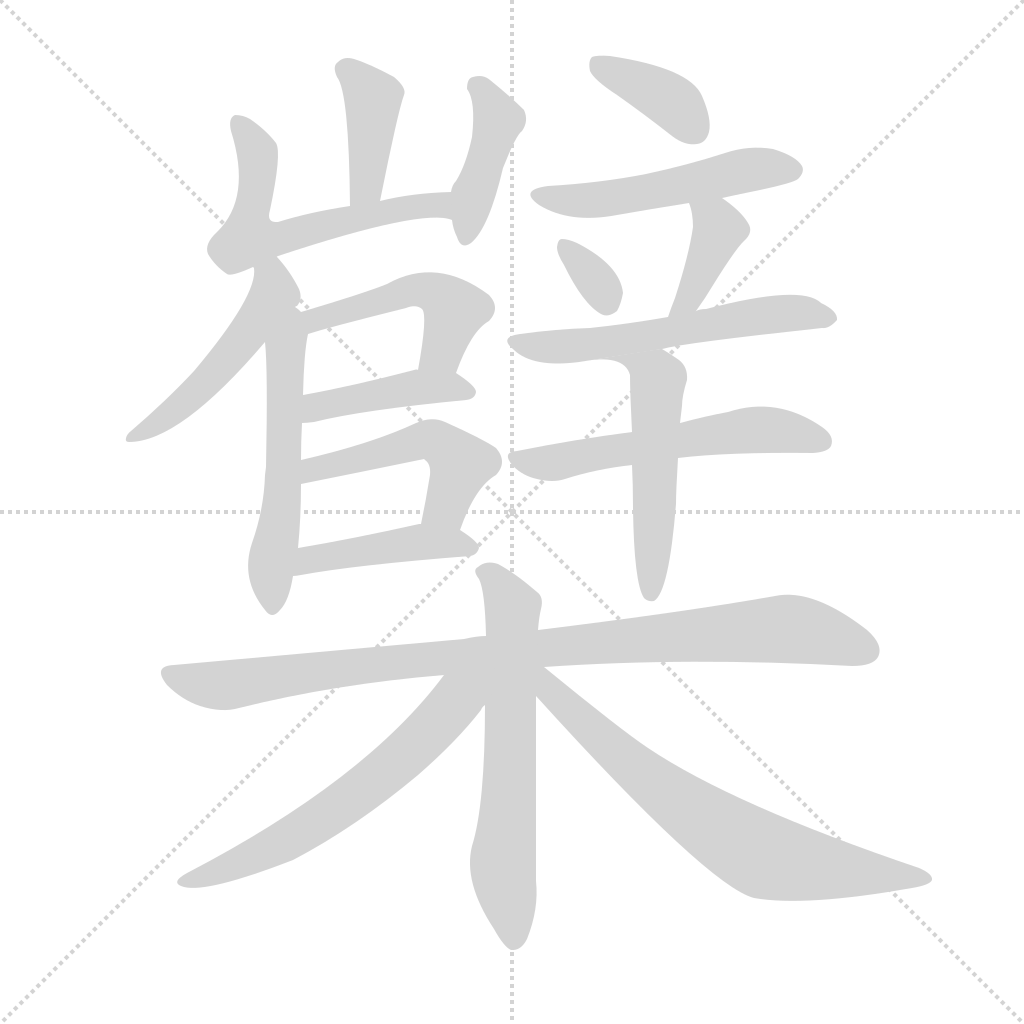
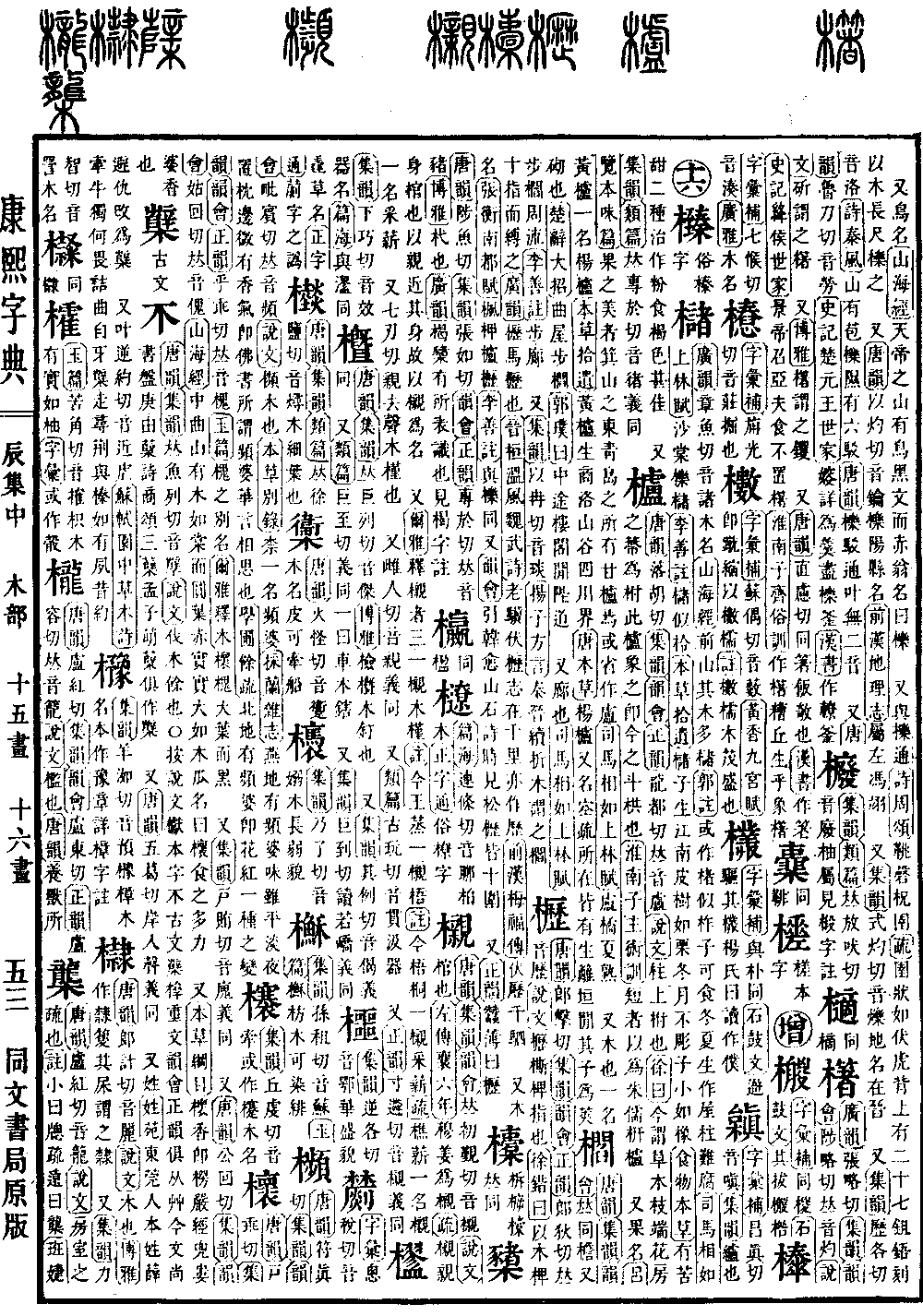
Entry: nie
Kangxi Dictionary Strokes: 20
Page 561, Entry 33
Ancient form. Tang Rhymes (Tangyun) and Collected Rhymes (Jiyun) state: pronounced nie. In the Explaining and Analyzing Characters (Shuowen Jiezi), it is defined as the remainder of a tree after it has been cut down. Note: The Explaining and Analyzing Characters (Shuowen Jiezi) contains the original character; this is an ancient form. The character nie is a variant. The Dictionary of Rhymes (Yunhui) and the Correct Rhymes (Zhengyun) both use the radical for grass. In the Modern Text Book of Documents (Jinwen Shangshu), specifically the Pan Geng chapter, it is written as nie; in the Book of Odes (Shijing), within the Odes of Shang (Shangsong), it is written as nie; in the Mencius (Mengzi), it is written as mengnie. All these instances use the variant form.
Also, per Tang Rhymes (Tangyun), pronounced nie (entering tone). The meaning is the same.
Also a surname. According to the Garden of Surnames (Xingyuan), it originates from Dongguan. Originally surnamed Xue, the name was changed to nie to avoid an enemy.
Also, rhyming with a word pronounced nue (entering tone). In Su Shi's poem on the plants and trees in his garden: Morning glories, why are you alone so afraid, twisting and turning, sprouting from your own roots. Seeking out the brambles and the hazel trees, as if you had an agreement from long ago.