Wu Collection, Lower Volume
Radical: Grain (hé)
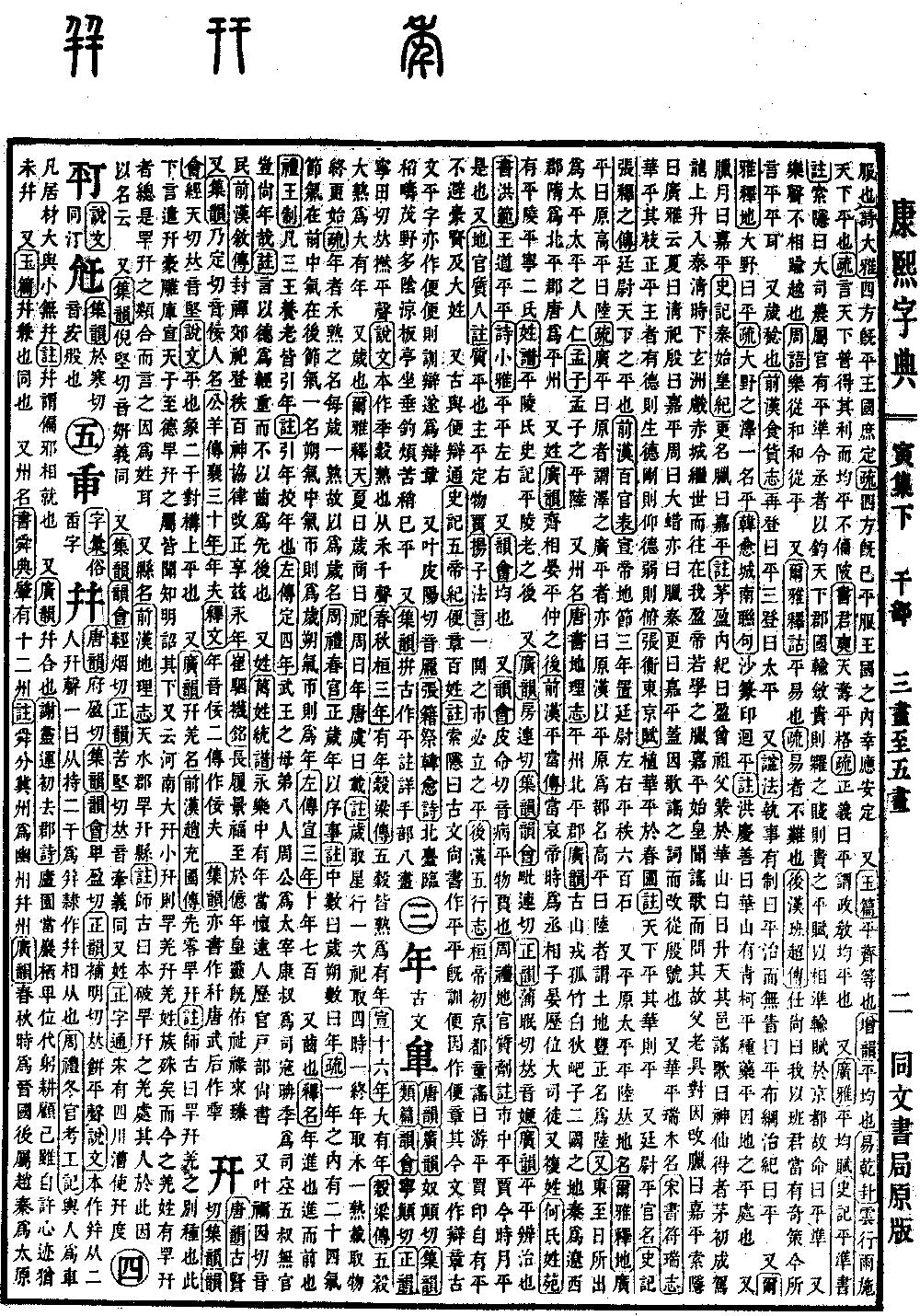
Page 340, Entry 01
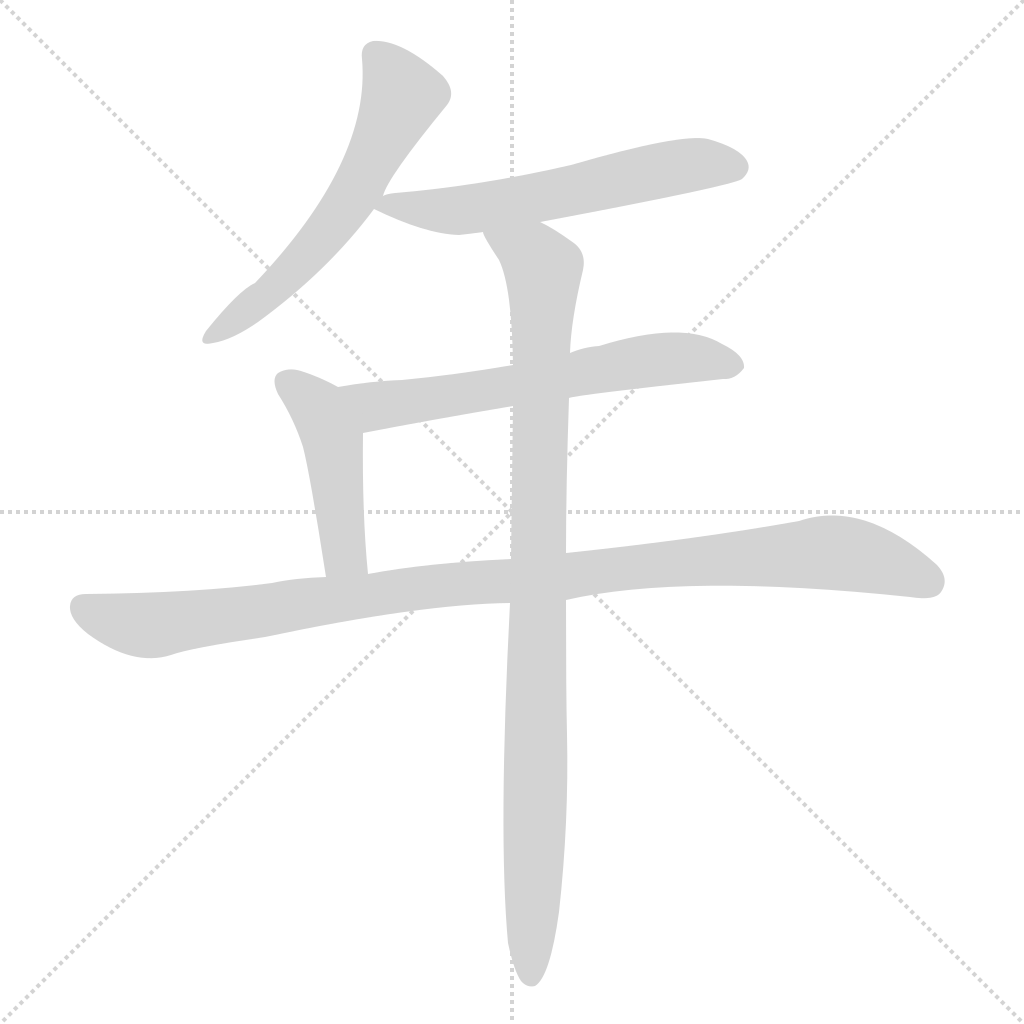
Ancient form. Pronounced nian (level tone).
Shuowen Jiezi says it was originally written with the characters for grain and thousand. It means grain ripening.
Spring and Autumn Annals (Chunqiu), in the third year of Duke Huan: There was a harvest. The Guliang Commentary (Guliang Zhuan) says that when all five grains ripen, it is called a harvest. In the sixteenth year of Duke Xuan: There was a great harvest. The Guliang Commentary says that when all five grains ripen fully, it is called a great harvest.
Also means a year. Er Ya says that in the Xia dynasty it was called sui, in the Shang dynasty it was called si, in the Tang and Yu dynasties it was called zai, and it is called nian throughout the year. The commentary explains that sui represents the movement of the stars, si represents the completion of the four seasons, nian represents the ripening of grain, and zai represents the completion and renewal of all things. The sub-commentary states that nian is the name for grain ripening, which occurs once per year, thus becoming the name for the year.
Rites of Zhou (Zhouli), Spring Officials: Regulate the years to order affairs. The commentary states that the count of the middle qi constitutes a sui, and the count of the new moons constitutes a nian. The sub-commentary explains that within one year there are twenty-four solar terms; the seasonal term comes first, and the middle qi comes later. When the middle qi is fully completed, it is a sui; when the solar terms are fully completed, it is a nian.
Zuo Commentary (Zuozhuan), in the third year of Duke Xuan: Divining for seven hundred years.
Also means age. Explaining Names (Shiming) says that nian means to advance forward. Book of Rites (Liji), Royal Regulations: Whenever the three kings practiced the rites for the elderly, they all performed the age-ranking ritual. The commentary explains that this means to examine their ages. Zuo Commentary (Zuozhuan), in the fourth year of Duke Ding: King Wu had eight younger brothers; the Duke of Zhou was the Grand Minister, Kangshu was the Minister of Crime, and Ji was the Minister of Works; the five uncles held no offices, but was this based on age? The commentary states that this means priority was given to virtue rather than age.
Also a surname. Ten Thousand Surnames Genealogy (Wanxing Tongpu) records that during the Yongle reign there was a person named Nian Dang from Huaiyuan, who served as Minister of the Ministry of Revenue.
Also rhymes with ren (level tone). History of the Former Han (Qianhan Shu), Narrative Biography: Perform the feng and shan sacrifices, and pay homage to all spirits. Harmonize the temperament and correct the system, to enjoy this eternal year. Cui Yin, Inscription on Socks: May you walk in great fortune for a hundred million years. Imperial spirits have granted their protection, and blessings and salary have arrived.
Also pronounced ning (falling tone). A person's name. Gongyang Commentary (Gongyang Zhuan), in the thirtieth year of Duke Xiang: Nianfu. The Explanatory Text (Shiwen) says nian is pronounced ning. The two commentaries write it as ningfu. Also written as a variant form. Empress Wu of the Tang dynasty wrote it as a variant form.
Textual correction: Also rhymes with ren (level tone). Note: The phonetic description provided in the original text was incorrect; it has been amended to reflect the ren pronunciation.