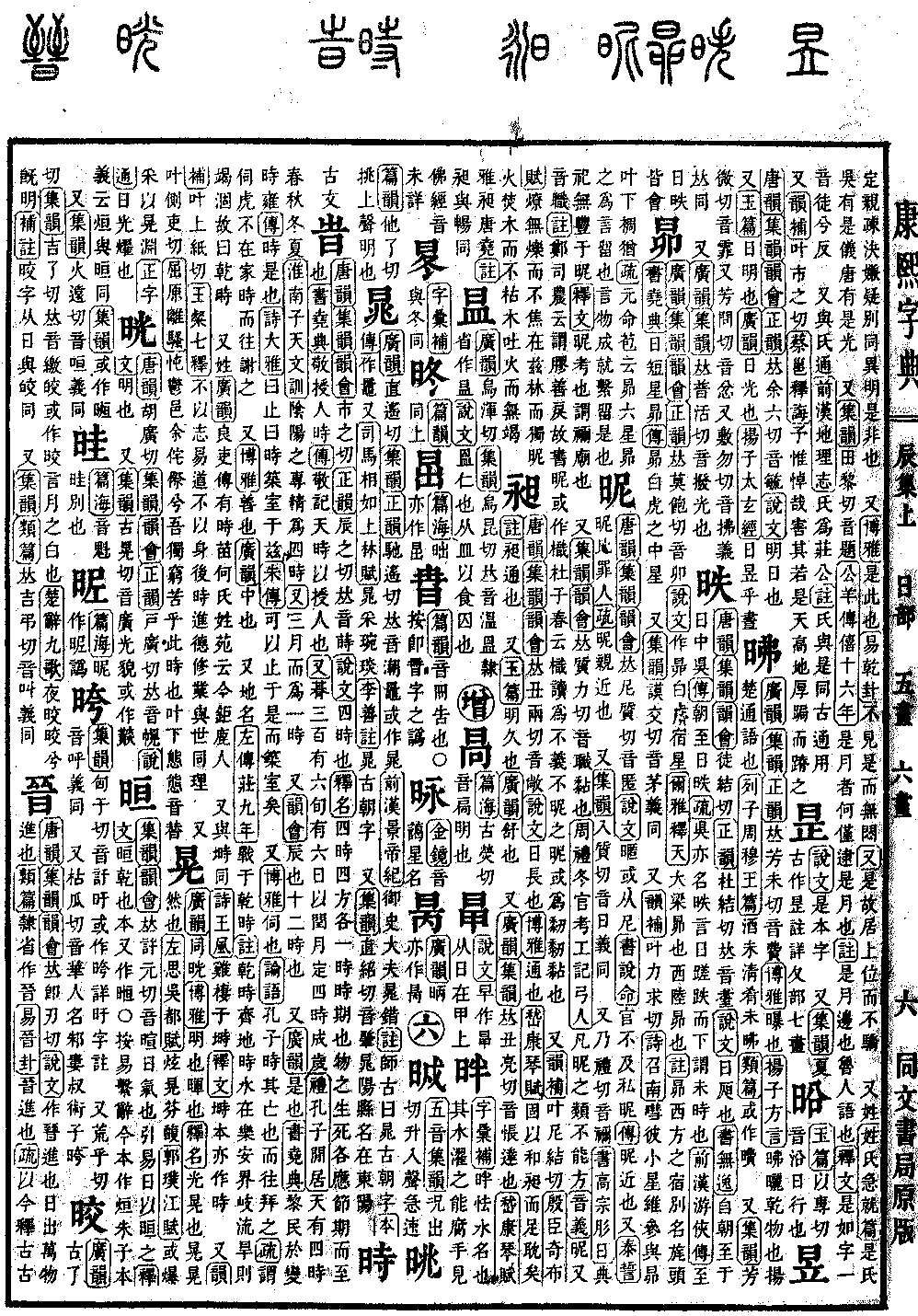
Chen Collection, Upper Volume
Radical: Sun (rì)
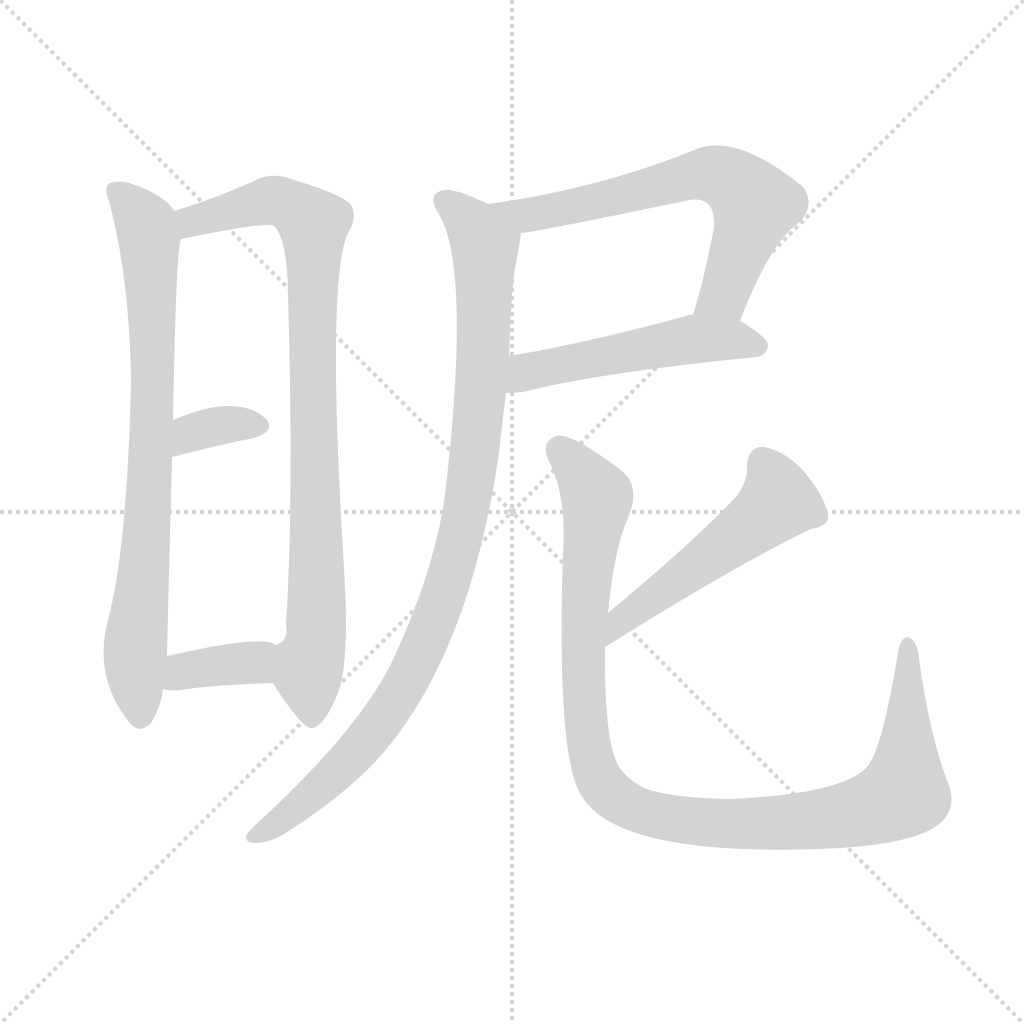
昵
Kangxi strokes: 9
Page 494, Entry 07
Tang Rhymes (Tangyun), Collection Rhymes (Jiyun), Rhyme Compendium (Yunhui): Pronounced ni (falling tone).
Explanation of Graphs (Shuowen): A variant form of a character written with the radical for sun, or sometimes written with the radical for woman (ni).
Book of Documents (Shujing), Speech of Yue: Official positions should not be used for personal favorites.
Commentary: This character means close or intimate.
Also in the Great Oath (Taishi): Intimately associating with criminals.
Sub-commentary: This character means to draw near or be intimate.
Also in Collection Rhymes (Jiyun): Pronounced ri (falling tone). The meaning is the same.
Also pronounced mi (rising tone).
Book of Documents (Shujing), The Day of the Sacrifice to Gaozong: In the canon of sacrifices, one should not be excessive in the ancestral temple.
Explanation of Texts (Shiwen): This character refers to the father, specifically the ancestral temple of the deceased father.
Also in Collection Rhymes (Jiyun) and Rhyme Compendium (Yunhui): Pronounced zhi (entering tone). It means to be sticky or adhesive.
Rites of Zhou (Zhouli), Winter Officials, Artificers Record: Among all such adhesives, none can be squared.
Pronunciation and Meaning (Yinyi): Also pronounced zhi (entering tone).
Note: Zheng Sinong stated: It means the glue is strong and flexible; hence, the original text used this character. It is sometimes written as another form (zhi). Du Zichun stated: It should be read as the character in the phrase "not righteous and not intimate." Sometimes written as another character. That character means to be sticky.
Also in Rhyme Supplements (Yunbu): Rhymes with the sound nie (entering tone).
Yin Chen, Rhapsody on Unusual Cloth: There is no light that does not scorch, only in this forest it remains intimate. Fire burns wood without it withering, wood emits fire without being exhausted.