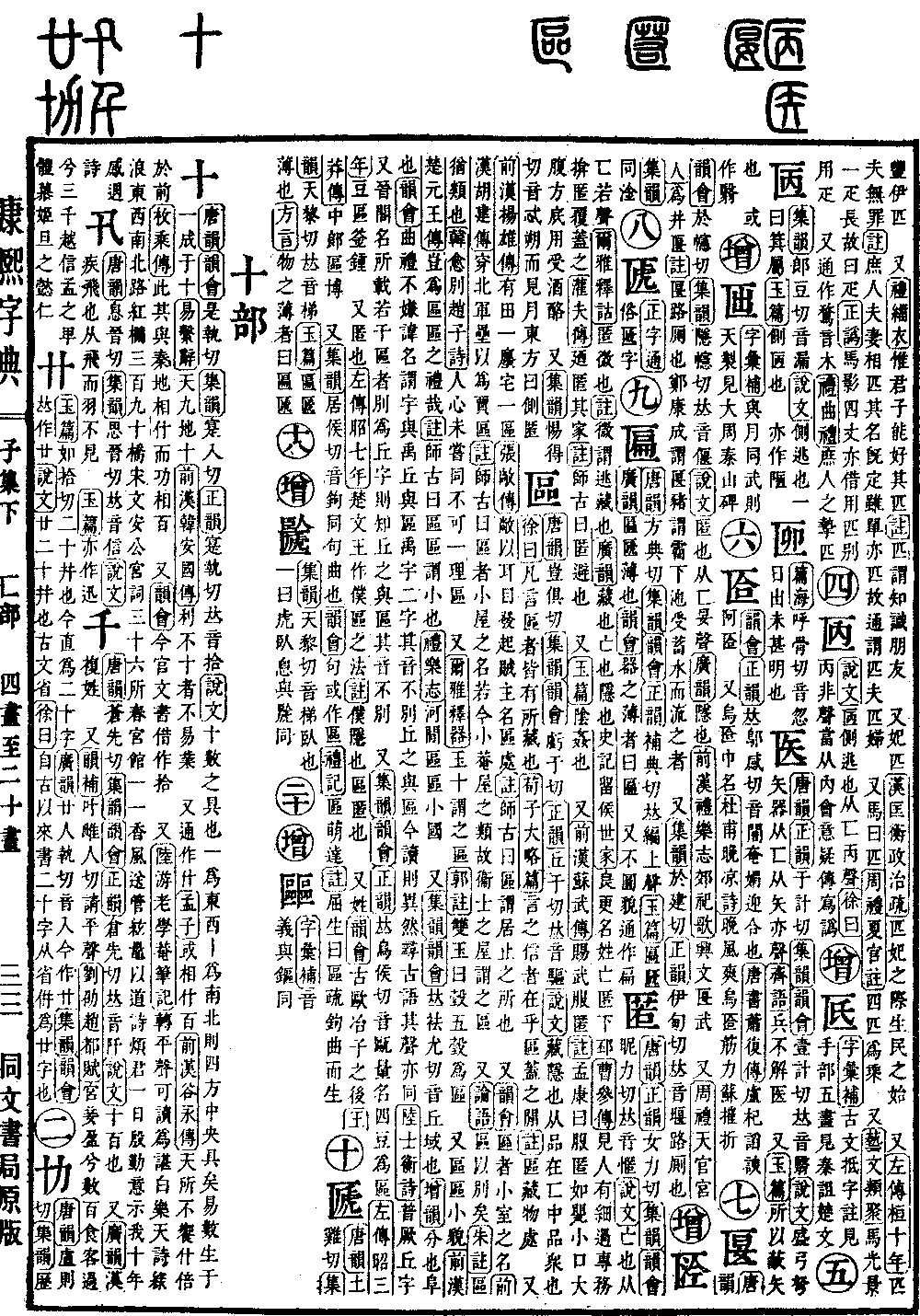
Zi Collection, Page Position: Lower. Radical: Hide (xi). Kangxi stroke count: 11. Page 155, Number 12.
Tang Rhymes (Tangyun) and Correct Rhymes (Zhengyun) indicate the pronunciation is ni. Collected Rhymes (Jiyun) and Rhyme Assembly (Yunhui) also indicate the pronunciation is ni.
Explaining Graphs and Analyzing Characters (Shuowen Jiezi) states it means to flee. It is composed of the radical Hide (xi) and the phonetic component ruo.
Erya (Erya), Explaining Words (Shigu) states that ni means minute. The commentary explains that minute refers to fleeing and hiding.
Broad Rhymes (Guangyun) defines it as to hide, to flee, or to conceal.
Records of the Grand Historian (Shiji), Hereditary House of the Marquis of Liu: Liang changed his name and surname, then fled and hid in Xiapi.
Biography of Cao Shen: When he saw that people had small faults, he focused on concealing and hiding them.
Biography of Guan Fu: He then hid in his house. The commentary by Yan Shigu states that ni means to avoid.
Jade Chapters (Yupian) defines it as underhanded treachery.
History of the Former Han (Qian Han Shu), Biography of Su Wu: Bestowed upon Wu a funi vessel. The commentary by Meng Kang states that a funi is like a jar with a small mouth, a large belly, and a square base, used for holding wine and yogurt.
Collected Rhymes (Jiyun) also provides the pronunciation te. When the moon appears in the east on the first day of the lunar month, it is called ceni.