You Collection, Upper Volume
Radical: Speech (yán)
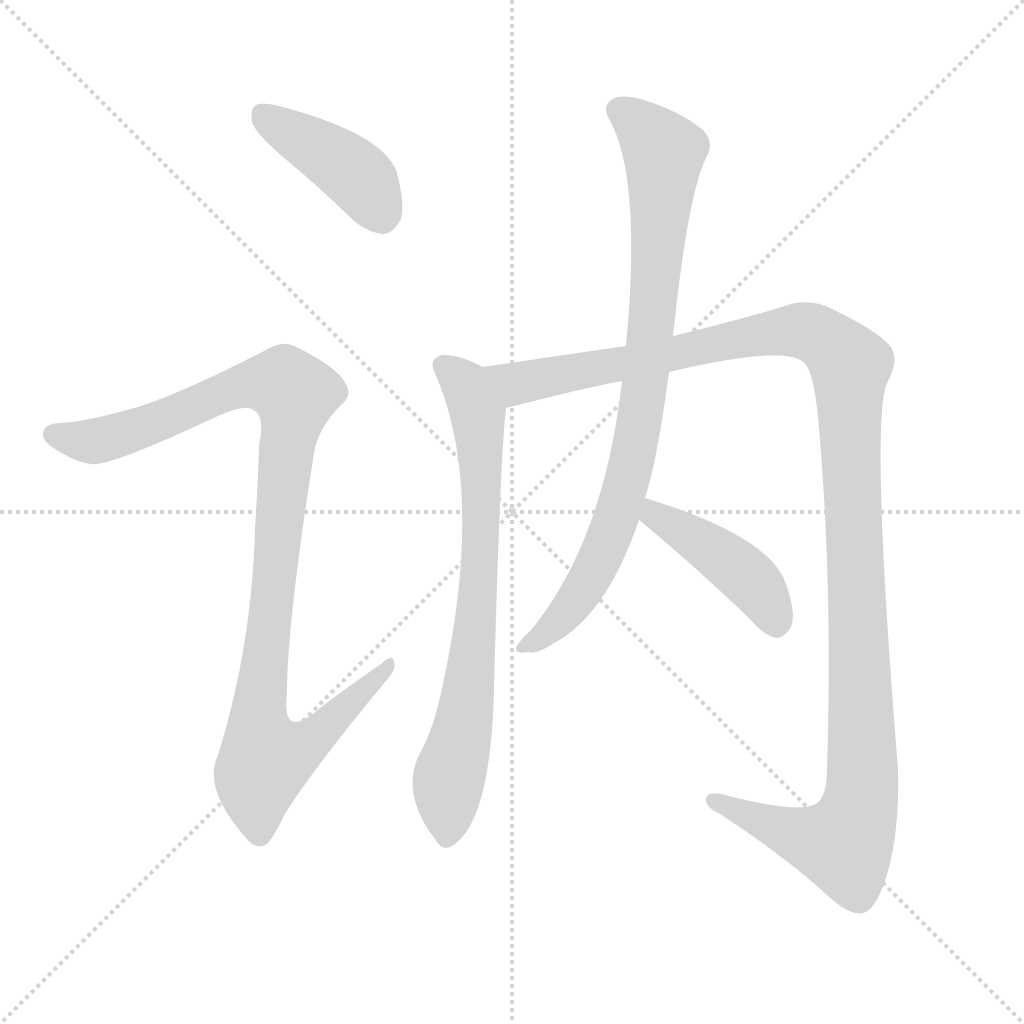
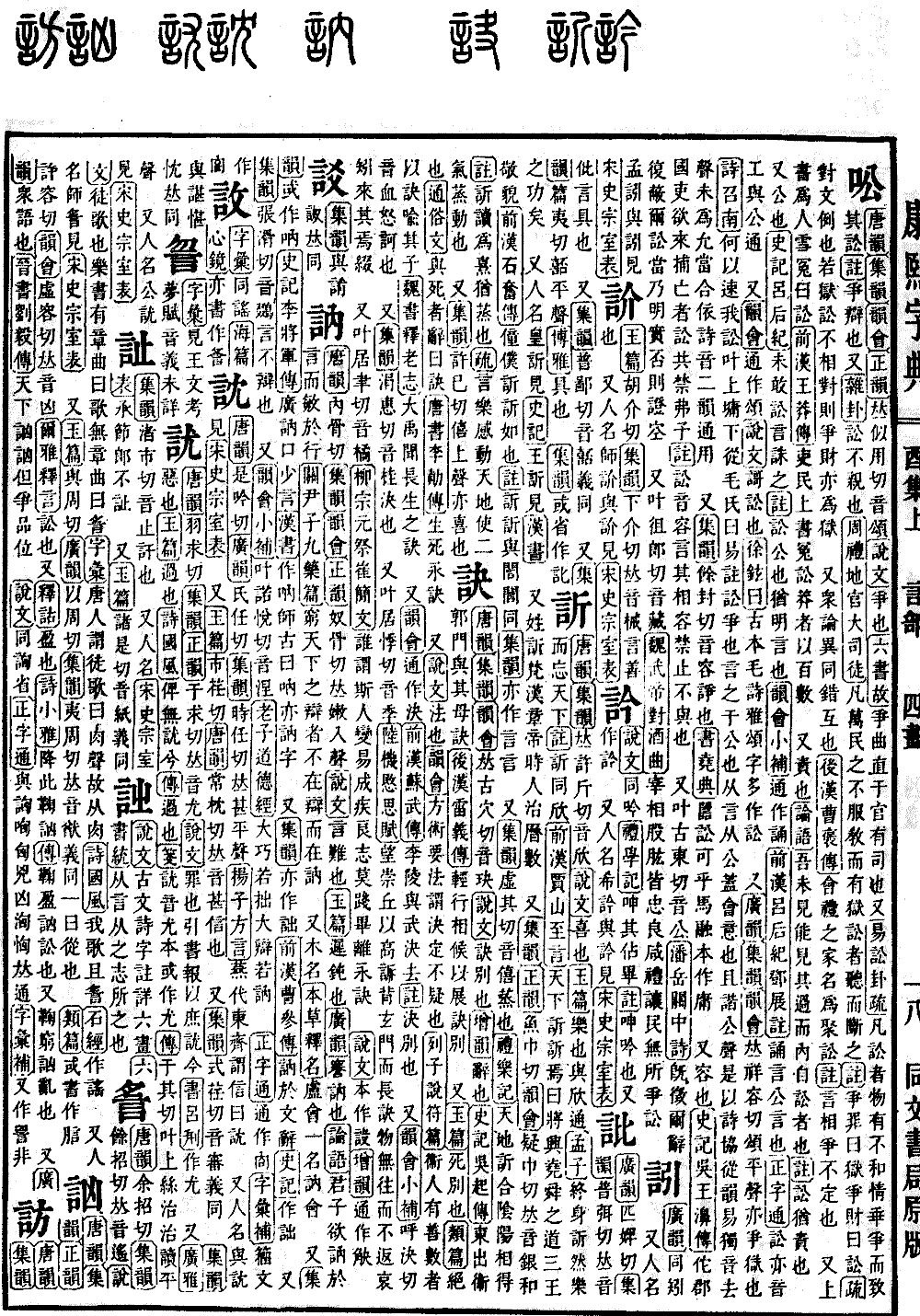
訥
Kangxi stroke count: 11
Page 1150, Entry 01
Pronounced ne.
According to the Explaining Graphs and Analyzing Characters (Shuowen Jiezi), it refers to difficulty in speech. According to the Jade Chapters (Yupian), it means slow or dull. According to the Broad Rhymes (Guangyun), it means to be hesitant or inarticulate.
From the Analects (Lunyu): The superior person desires to be slow in speech and earnest in action.
From the Guan Yinzi, Chapter on Nine Medicines: Those who exhaust the eloquence of the world do not rely on debate, but on being hesitant in speech.
Also, the name of a tree. According to the Commentary on Names in the Materia Medica (Bencao Shiming), Aloe is also known as Nehui.
According to the Collected Rhymes (Jiyun), it is sometimes written as a variant form (na). According to the Biography of General Li in the Records of the Grand Historian (Shiji), Li Guang was inarticulate and spoke little. The History of the Former Han (Hanshu) uses the variant form (na). The commentator Yan Shigu stated that the variant form is also the character for ne.
According to the Collected Rhymes (Jiyun), it is also written as a variant form (qu). In the Biography of Cao Shen in the History of the Former Han (Qianhan), it is written that he was inarticulate with literary phrases. The Records of the Grand Historian (Shiji) uses the variant form (qu).
According to the Collected Rhymes (Jiyun), it is also pronounced du. It refers to a lack of eloquence in speech.
According to the Supplement to the Collected Rhymes (Yunhui Xiaobu), it rhymes with the word for joy, pronounced nie. From the Laozi (Daodejing): Great skill appears as clumsiness, great eloquence appears as hesitation.
According to the Comprehensive Dictionary of Characters (Zhengzitong), it is commonly written in a variant form. According to the Supplement to the Dictionary (Zihuibu), the ancient seal script (zhòu) form is written as a variant.