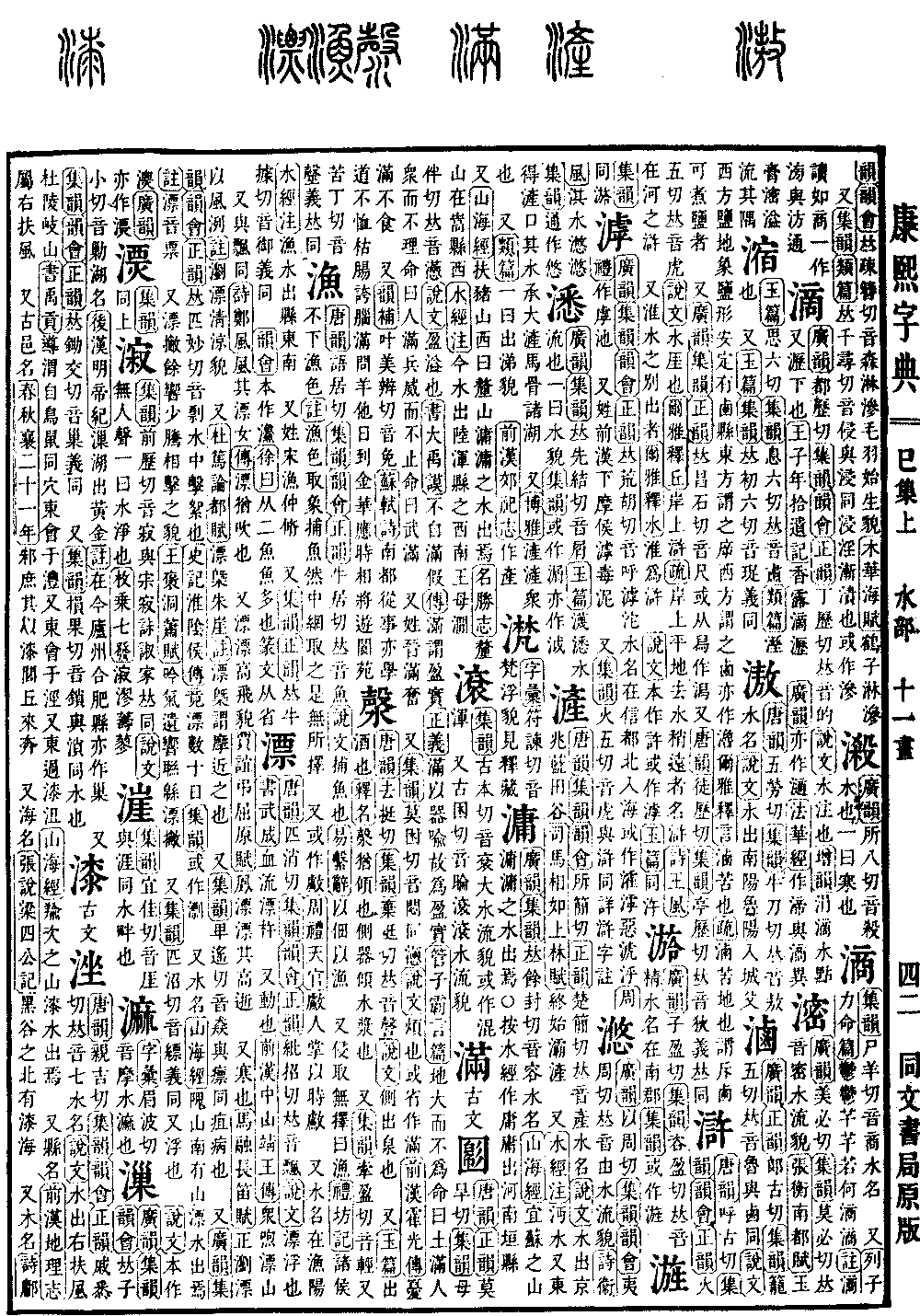
Si Collection, Upper Volume
Radical: Water (shuǐ)
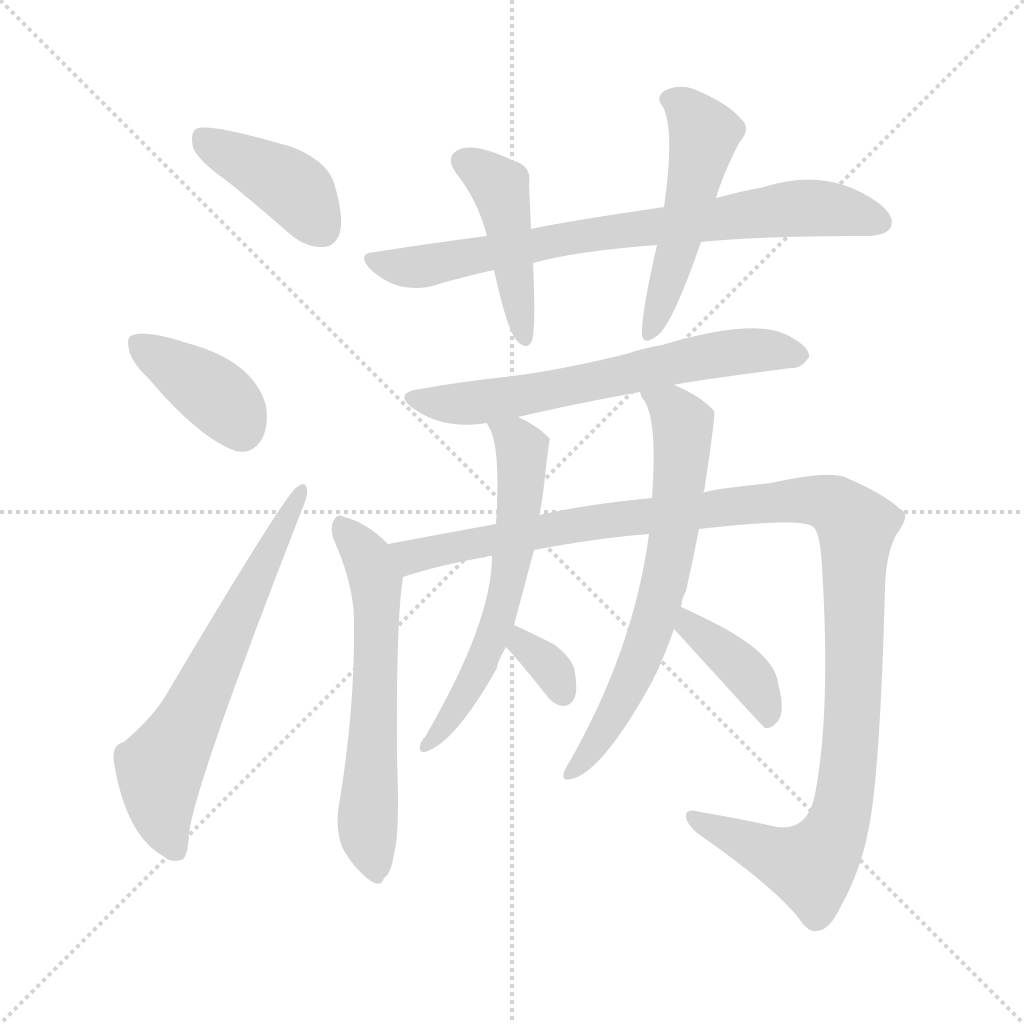
Man
Kangxi Dictionary Stroke Count: 15
Page 644, Entry 01
In ancient texts: Pronounced man (falling-rising tone).
Explaining the meaning as full and overflowing in the Explanations of Graphs and Analysis of Characters (Shuowen Jiezi).
Book of Documents (Shangshu), Chapter on the Counsels of Great Yu: Do not be self-satisfied.
Commentary: Man indicates being fully filled.
Orthodox Commentary: Man is used as a metaphor for vessels, therefore it means to be fully filled.
Guanzi, Chapter on Hegemonic Discourse: Lands being vast without governance is called land-fullness. A population being numerous without administration is called people-fullness. Military power being strong without restraint is called martial-fullness.
Also a surname; in the Jin Dynasty there was Man Fen.
Also, according to the Collected Rhymes (Jiyun): Pronounced men (falling tone). Same as the character for vexation.
Explaining the meaning as vexed or depressed in the Explanations of Graphs and Analysis of Characters (Shuowen Jiezi). Sometimes written in a simplified form.
History of the Former Han (Qian Hanshu), Biography of Huo Guang: Worried and vexed to the point of not eating.
Also, according to the Supplements to the Rhymes (Yunbu): Pronounced mian (rising tone).
Poem by Su Shi: The official from the southern capital also studies the Way, not pitying his withered intestines while boasting of a full brain. Asking about the sheep, one day arriving at Jinhua, we should go together to tour the Langyuan Garden.
Also written in a variant form.