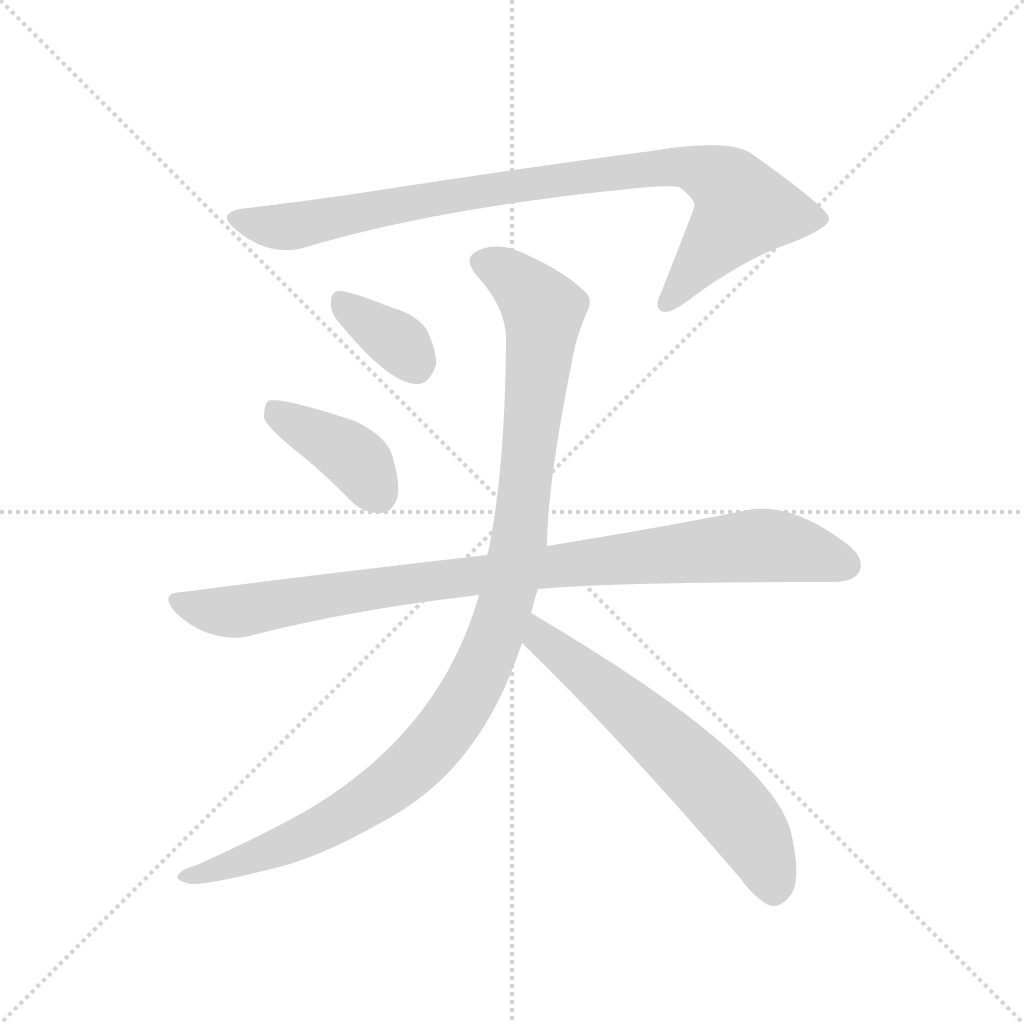
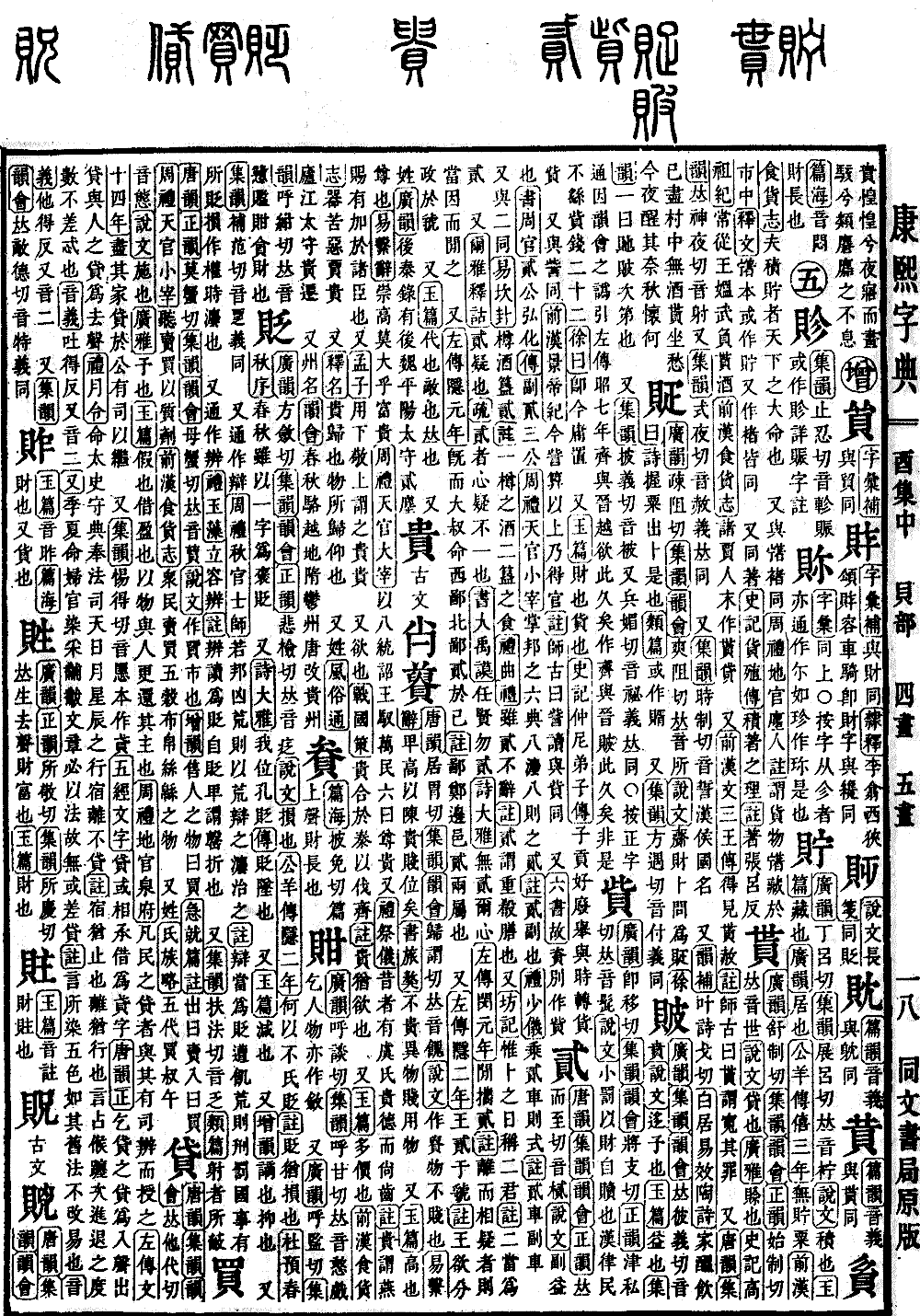
You Collection, Middle Volume. Radical: Shell (bèi). Character: mǎi. Kangxi stroke count: 12. Page 1206.
According to the Tang Rhymes (Tangyun) and the Correct Rhymes (Zhengyun), the pronunciation is derived from the fanqie of mò and xiè. According to the Collected Rhymes (Jiyun) and the Rhyme Assembly (Yunhui), the pronunciation is derived from the fanqie of mǔ and xiè. It is pronounced the same as mǎi.
The Explaining Graphs and Analyzing Characters (Shuowen Jiezi) states that the character is written in a variant form meaning to trade or to market.
The Supplemented Rhymes (Zengyun) states that purchasing the goods of others is called mǎi.
The commentary of the Primer for Quick Achievement (Jijiupian) states that for goods to go out is called mài (to sell), and for goods to come in is called mǎi (to buy).
The Rites of Zhou (Zhouli), in the section for the Lesser Steward of the Offices of Heaven, mentions managing buying and selling through the use of formal contracts.
The Book of Han (Hanshu), in the Treatise on Food and Money, mentions that the common people buy and sell goods such as the five grains, cloth, silk, and cotton.
It is also a surname. The Compendium of Clans and Lineages (Shizulüe) mentions Mai Shuwu of the Five Dynasties period.