Wu Collection, Middle Volume
Radical: Eye (mù)
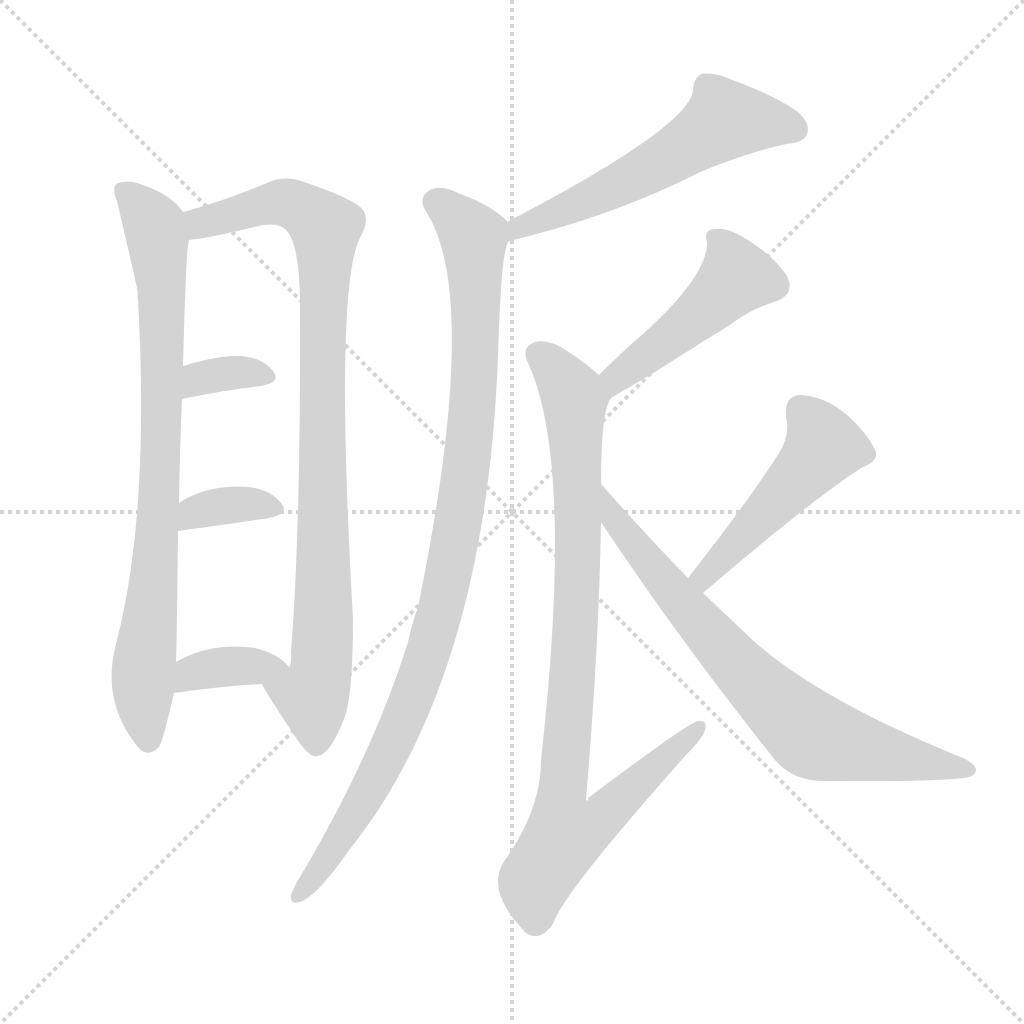
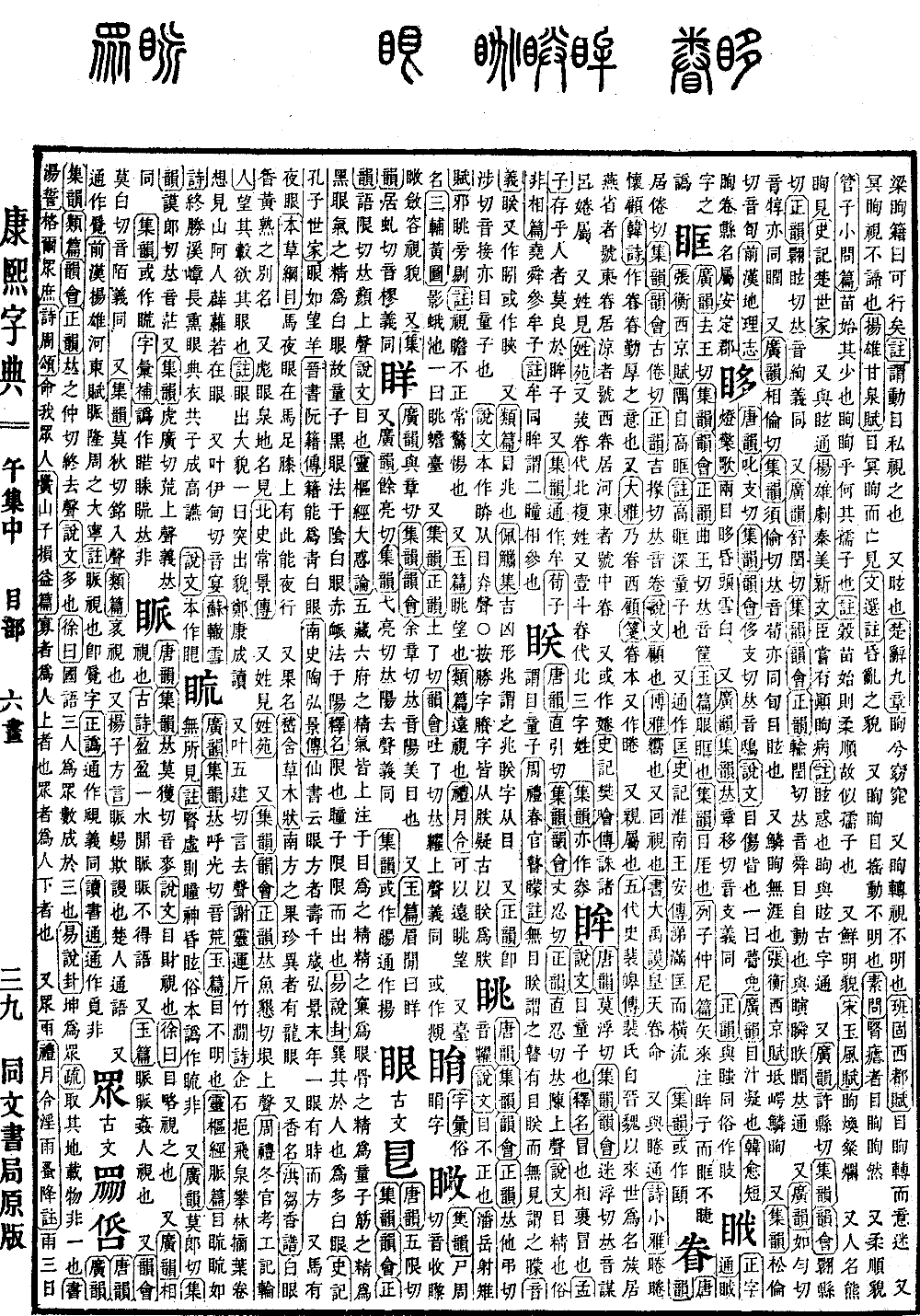
Entry: 眽
Kangxi Stroke Count: 11
Page 807, Entry 14
Tang Rhyme (Tangyun) and Collection Rhyme (Jiyun) state: pronounced mai (entering tone).
According to Explaining Graphs and Analyzing Characters (Shuowen Jiezi), it means to look at something with financial interest.
Xu states: it means to look at something briefly.
Broad Rhyme (Guangyun) states: it means to look at one another.
Ancient Poetry states: Between the brimming waters, they look at one another (mai-mai) unable to speak.
Jade Chapters (Yupian) states: mai-mai, to look like a treacherous person.
Rhyme Collection (Yunhui) states: pronounced mo (entering tone). The meaning is the same.
Collection Rhyme (Jiyun) states: pronounced mi (entering tone).
Categorized Chapters (Leipian) states: to look askance.
According to Yangzi's Regional Dialects (Fangyan): mai-yi, to deceive or insult. This is common language among the people of Chu.
Also used interchangeably with the character without the eye radical.
Former Han History (Qian Han Shu), Yang Xiong's Rhapsody on the He River: looking at the great peace of the Zhou dynasty.
Annotation: mai, to look. This is the same as the character without the eye radical.
Rectification of Errors (Zheng'e): used interchangeably with the character meaning to observe. The meaning is the same.
General Reading Notes (Dushu Tong): also written as the character meaning to seek, which is incorrect.