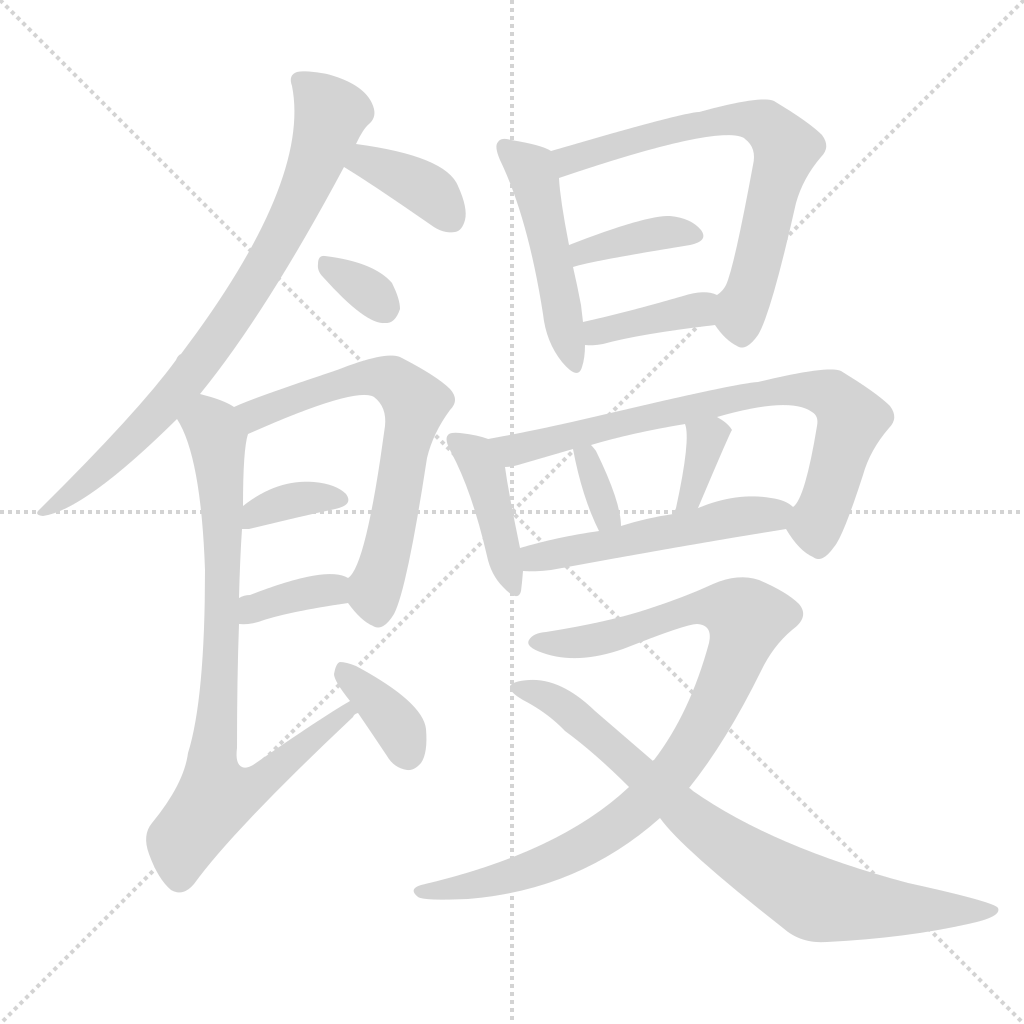
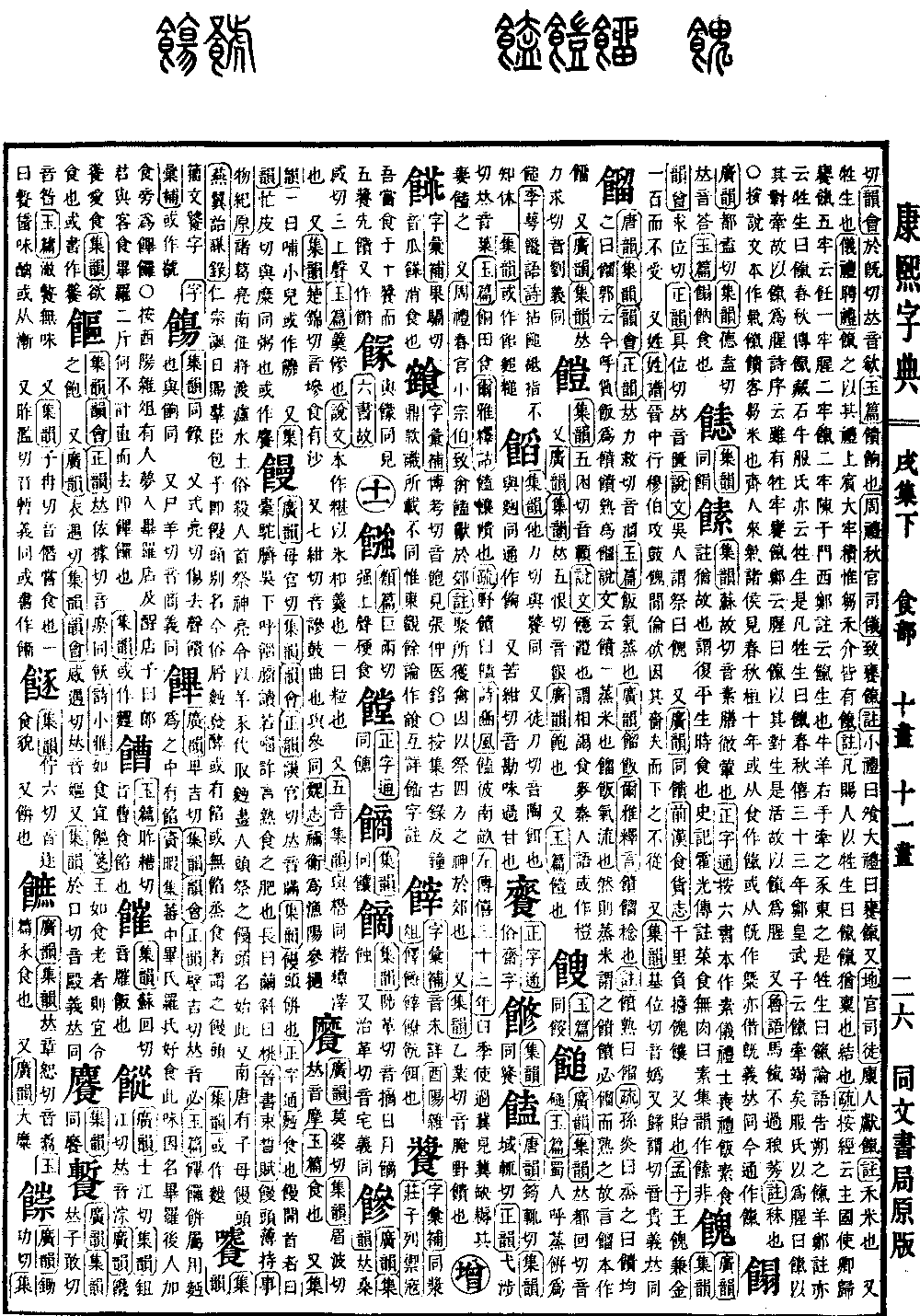
Xu Collection, Lower Volume
Radical: Food (shí)
Character: Man
Kangxi stroke count: 20
Page 1424, Entry 24
Guangyun: Pronounced man.
Jiyun, Yunhui, Zhengyun: Pronounced man.
Jiyun: Steamed bun, a type of baked or steamed dough product.
Zhengzitong: A wheat-based food. Steamed buns that are split open are called camel navels. In the Wu region, they are referred to as guai, pronounced similarly to nao zha, meaning the cooked food is rich and savory. Long ones are called cocoons, and slanted ones are called peaches.
Book of Jin (Jin shu), Shu Xi Rhapsody: Steamed buns held thinly.
Origins of Matters (Shiwu jiyuan): When Zhuge Liang campaigned in the south and was about to cross the Lu River, local custom dictated using human heads to sacrifice to the spirits. Zhuge Liang ordered the use of pork and mutton instead, using flour to form the shape of a human head for the ritual. The name for steamed bun originated from this. In the Southern Tang dynasty, there were also mother-and-child steamed buns.
Records of Advice and Planning (Yanyi yimou lu): On Emperor Renzong's birthday, he bestowed baozi upon his ministers, which is another name for steamed buns. Nowadays, it is common to use fermented wheat flour, sometimes with fillings and sometimes without, which is steamed and consumed as a steamed bun.
Jiyun: Sometimes written in a variant form.