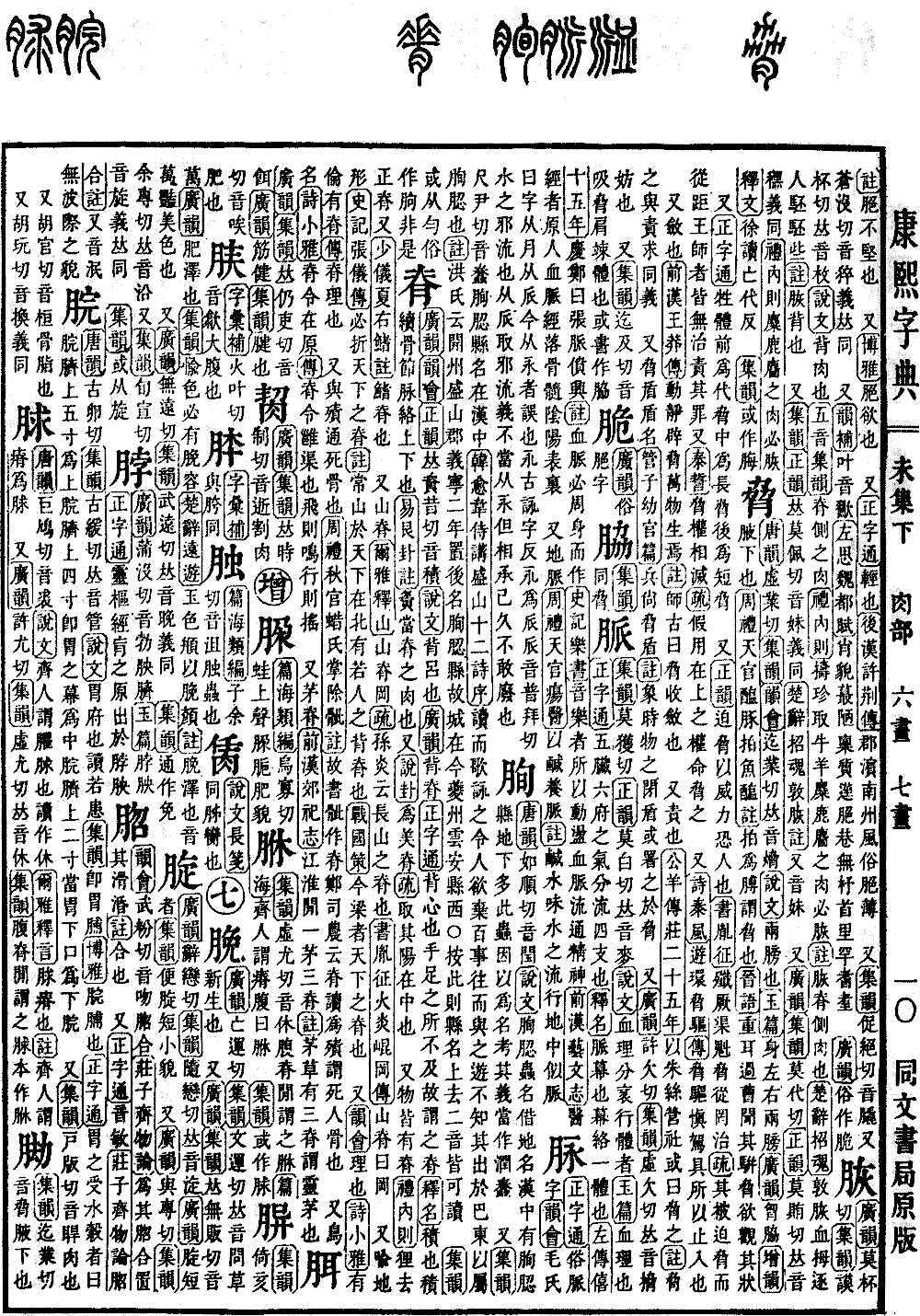
Wei Collection, Lower Volume
Radical: Flesh (ròu)
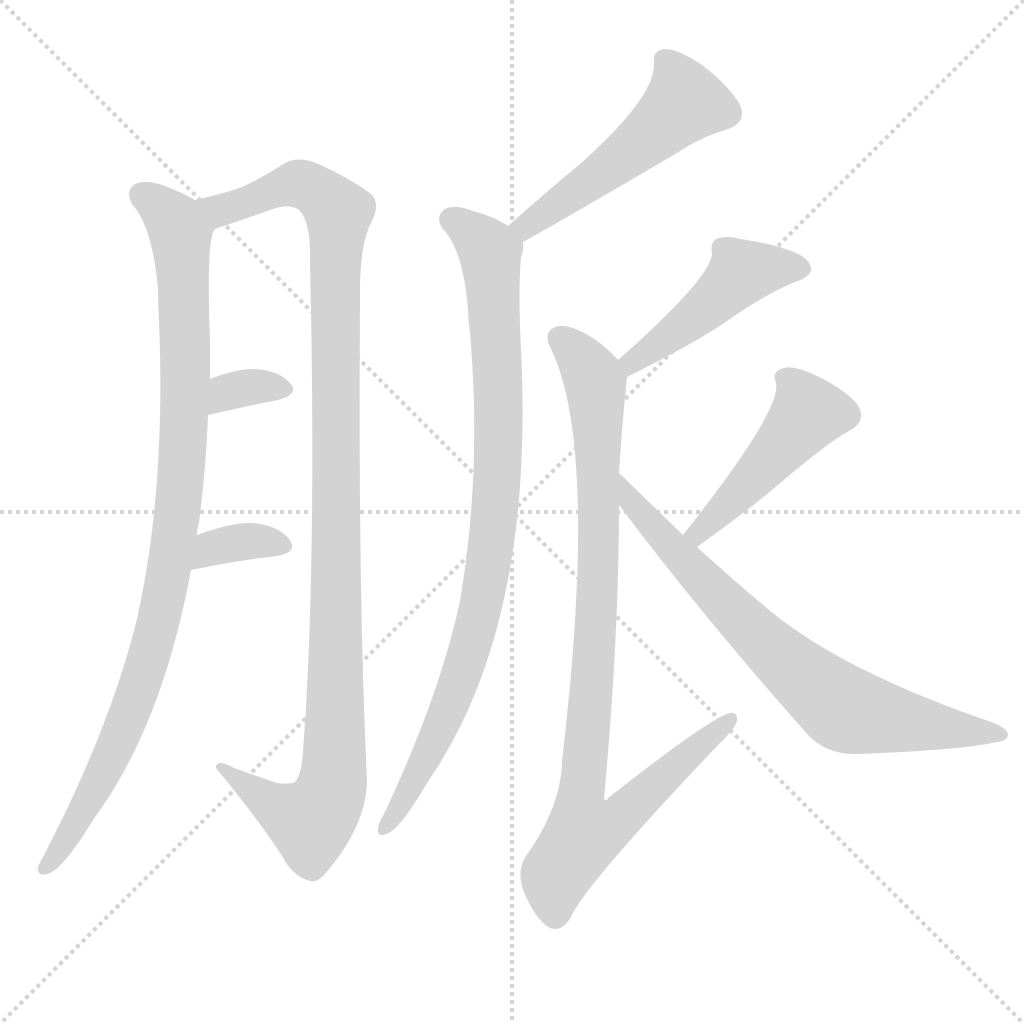
脈
Kangxi strokes: 12
Page 982, Entry 05
Collected Rhymes (Jiyun): Pronounced mai (entering tone). Orthodox Rhymes (Zhengyun): Pronounced mai (entering tone).
According to the Explaining Graphs (Shuowen), it refers to the branching paths of blood that traverse the body. In the Jade Chapters (Yupian), it is defined as blood vessels. In the Comprehensive Correctness of Characters (Zhengzitong), it refers to the qi of the five viscera and six bowels flowing into the four limbs. In the Explanation of Names (Shiming), it states that pulse (mai) is to cover (mu), meaning it covers and connects the entire body.
In the Zuo Tradition (Zuozhuan), under the fifteenth year of Duke Xi, Qing Zheng says: To strain the pulses and rise in a sudden agitation. The commentary explains: Blood pulses must circulate throughout the body.
In the Records of the Grand Historian (Shiji), Music Treatise: Music is that which stirs and agitates the blood pulses and circulates the spirit.
In the Book of Han (Qianhan), Treatise on Arts and Literature: The Medical Classics explore human blood pulses, meridians, bones, marrow, yin, yang, interior, and exterior.
Also refers to land veins. In the Rites of Zhou (Zhouli), Ministry of Heaven, Wound Physician: Use salt to nourish the pulses. The commentary notes: Salt is the flavor of water. The flow of water through the earth is like the pulse.