You Collection, Lower Volume
Radical: Walk (chuò)
Kangxi Strokes: 20
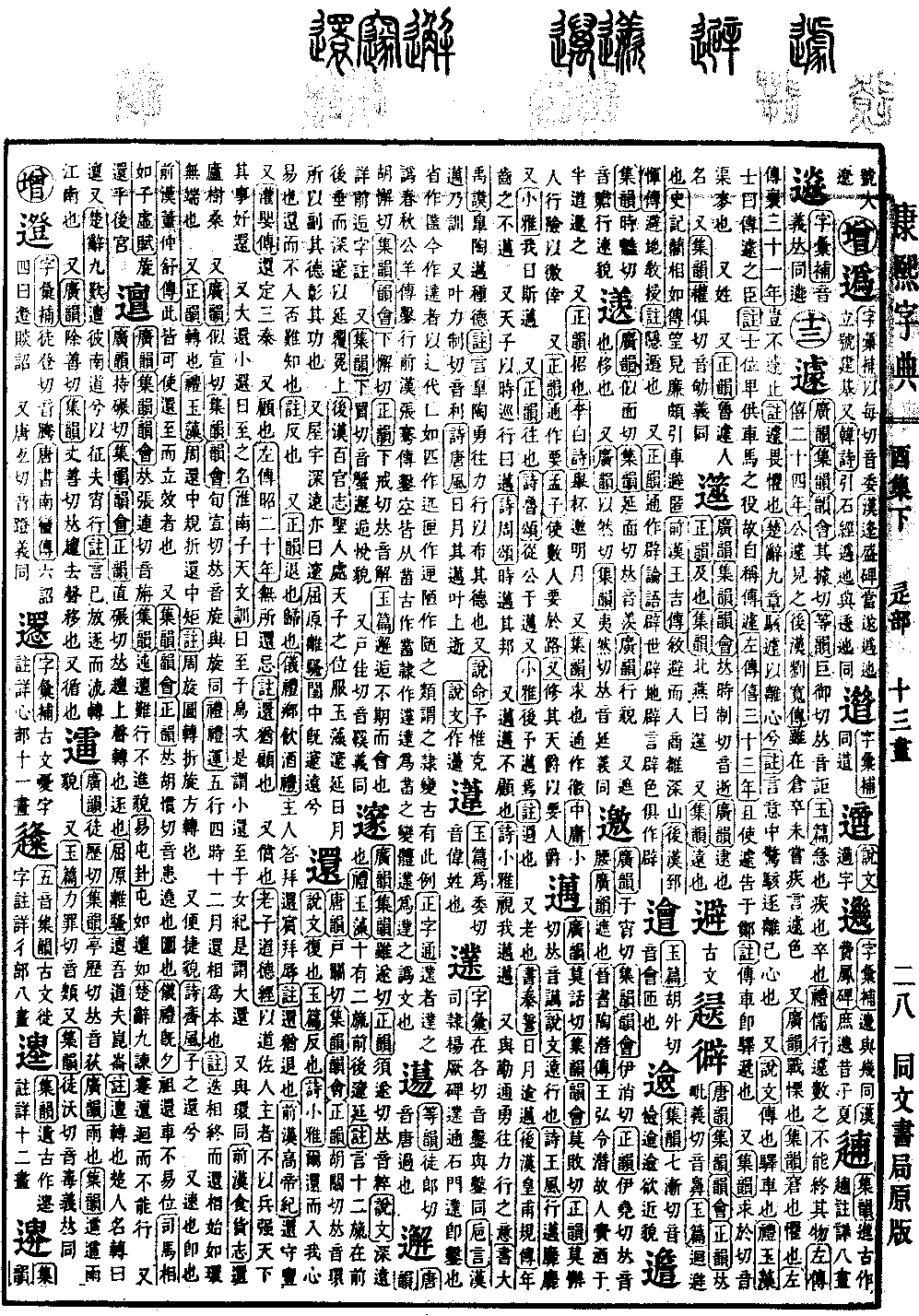
Page 1266, Entry 17
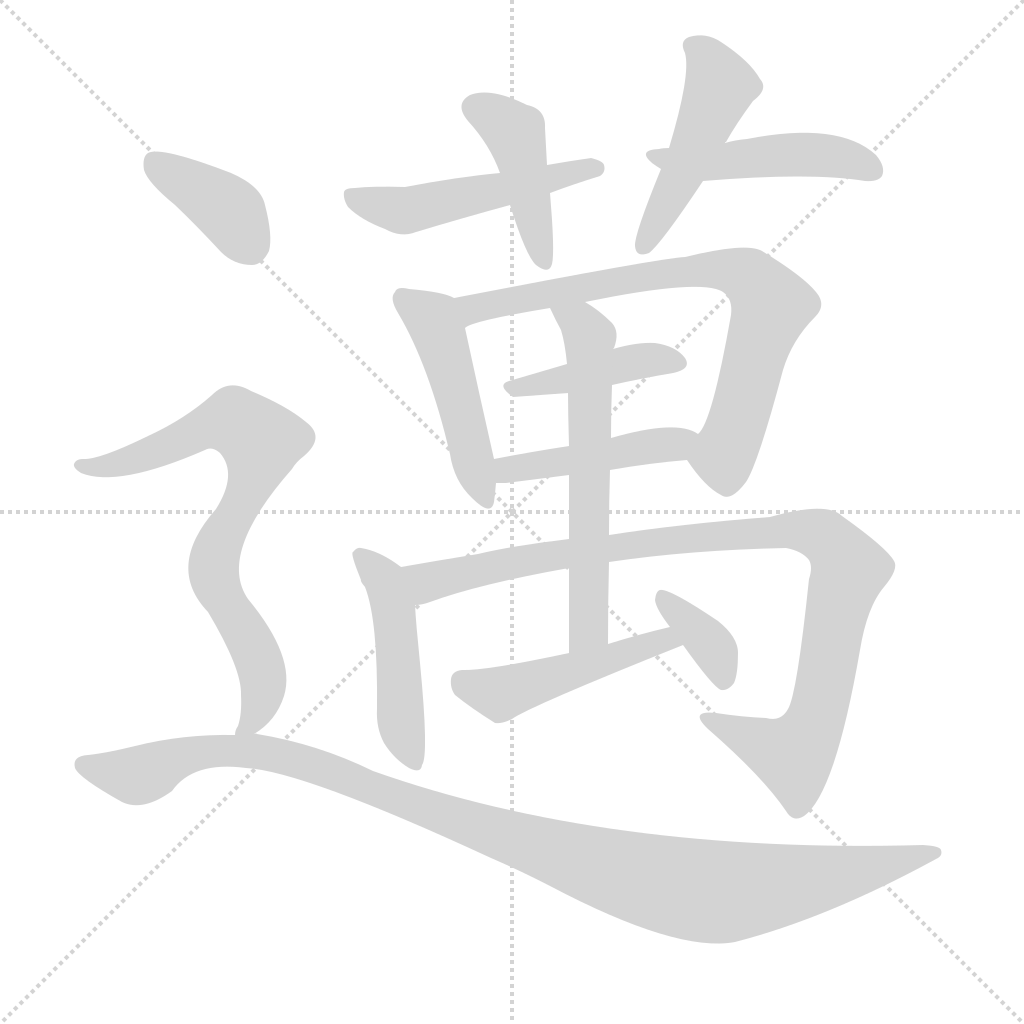
Pronounced mai (falling tone).
According to the Explanation of Graphs and Analysis of Characters (Shuowen Jiezi), it means to travel a great distance.
In the Book of Odes (Shijing), it is written: Walking slowly.
Also, in the Book of Odes (Shijing): My days are passing by.
According to the Correct Rhymes (Zhengyun), it also means to go.
In the Book of Odes (Shijing): Following the duke on his journey.
Also in the Book of Odes (Shijing): Afterwards, I shall pass by. The commentary notes this means to pass.
It also means to grow old.
In the Book of Documents (Shangshu): The days and months pass by.
In the History of the Later Han (Hou Hanshu): My years and age do not advance.
Also, when the Son of Heaven makes periodic royal tours, it is called mai.
In the Book of Odes (Shijing): Making a tour of his states.
Also, mai-mai means to disregard or look at with indifference.
In the Book of Odes (Shijing): You look at me with cold indifference.
It is also used interchangeably with li (to encourage), carrying the meaning of moving forward with great effort.
In the Book of Documents (Shangshu): Gao Yao diligently planted virtue. The commentary explains this as Gao Yao moving forward with great effort to spread his virtue.
Also in the Charge to Yue (Shuoming): I am able to put your teachings into practice.
Also, it rhymes with li (falling tone).
In the Book of Odes (Shijing): The sun and moon are passing. It rhymes with shi (to pass away).
In the Explanation of Graphs and Analysis of Characters (Shuowen Jiezi), it is written as a variant form.