Chen Collection, Middle Volume
Radical: Tree (mù)
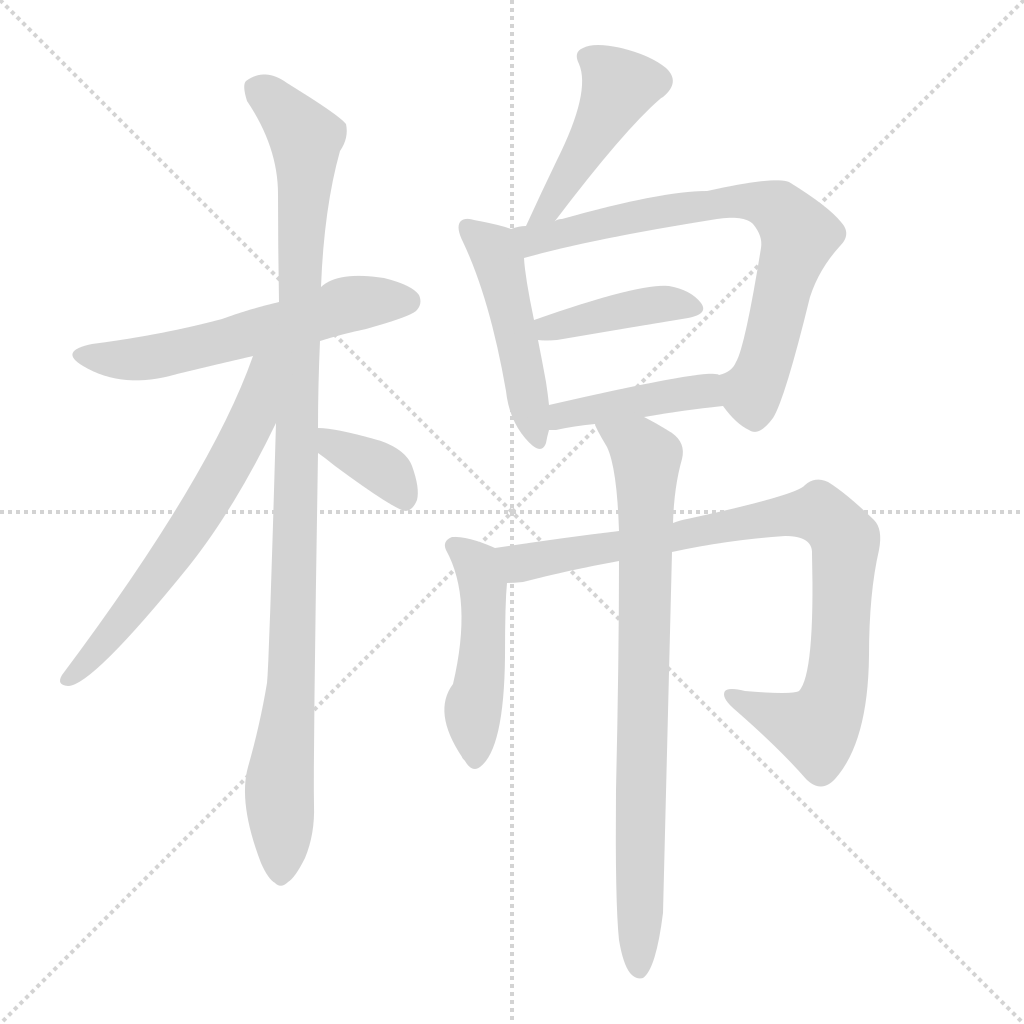
Cotton (mián)
Kangxi Strokes: 12
Page 531, Entry 24
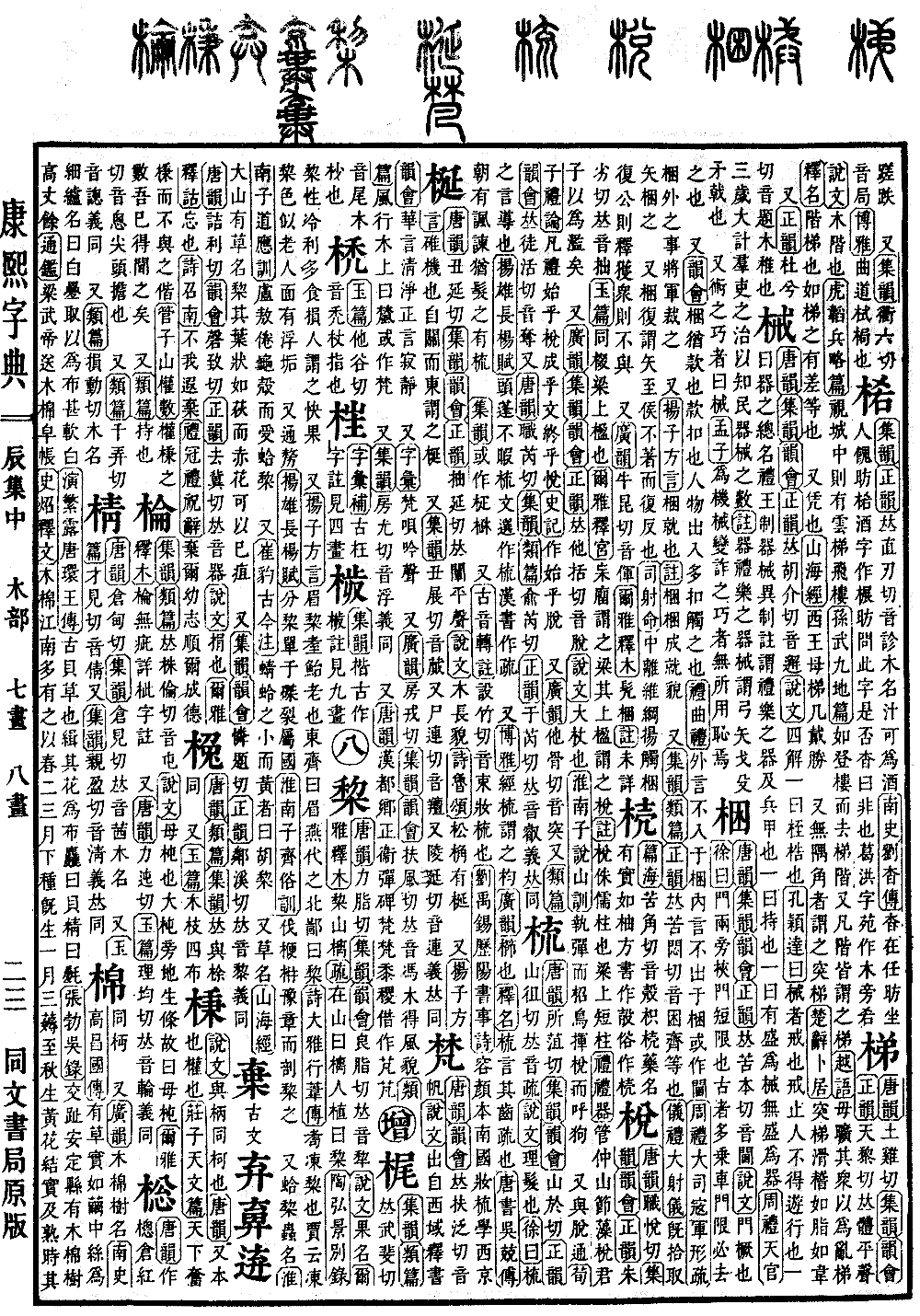
Also in Rhyme Dictionary (Guangyun), Cotton (mù mián) is the name of a tree.
History of the Southern Dynasties (Nan Shi), Biography of Gaochang: There is a plant with fruit resembling a silkworm cocoon. The silk inside can be spun into fine thread, called white fabric (bái dié), which is woven into cloth that is exceptionally soft and white.
Comprehensive Records of Abundant Miscellany (Yan fanlu), Record of the Huan King of the Tang: This is the ancient shell grass (gǔ bèi cǎo). Its blossoms are spun into cloth; the coarse variety is called shell (bèi), and the fine variety is called fabric (dié).
Zhang Bo, Record of Wu (Wu Lu): In Anding County, Jiaozhi, there are cotton trees over one zhang tall.
Comprehensive Mirror (Tongjian): Emperor Wu of Liang once gifted a black tent made of cotton.
Zhang Zhao, Explanations (Shiwen): Cotton is abundant in the Jiangnan region. It is sown in the second or third month of spring. Once the seedlings emerge, the weeds are hoed three times a month. By autumn, it produces yellow flowers and bears fruit. When the fruit ripens, its skin splits into four sections, revealing substance like silk batting inside. According to the Materia Medica (Bencao), cotton exists in both herbaceous and woody varieties.
Also, in Rhyme Dictionary (Guangyun), pronounced wu lian mian.