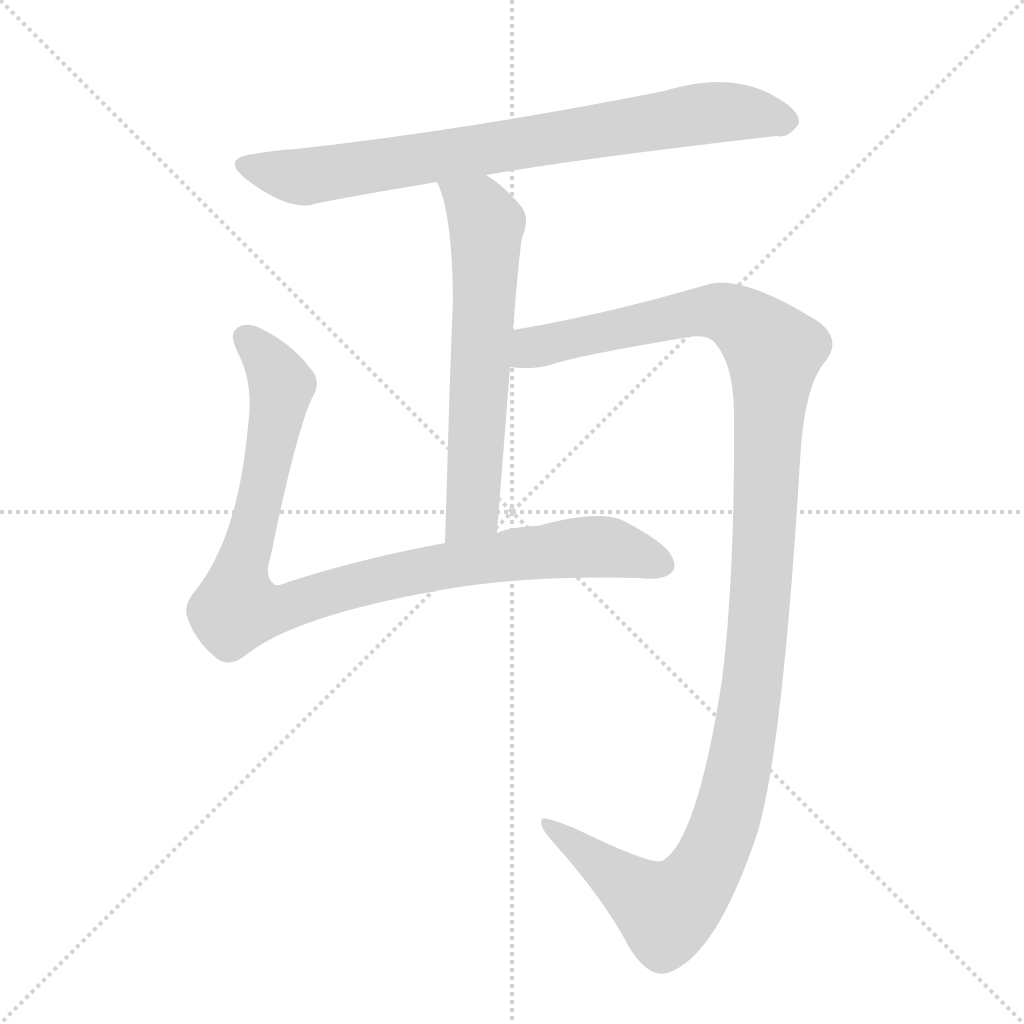
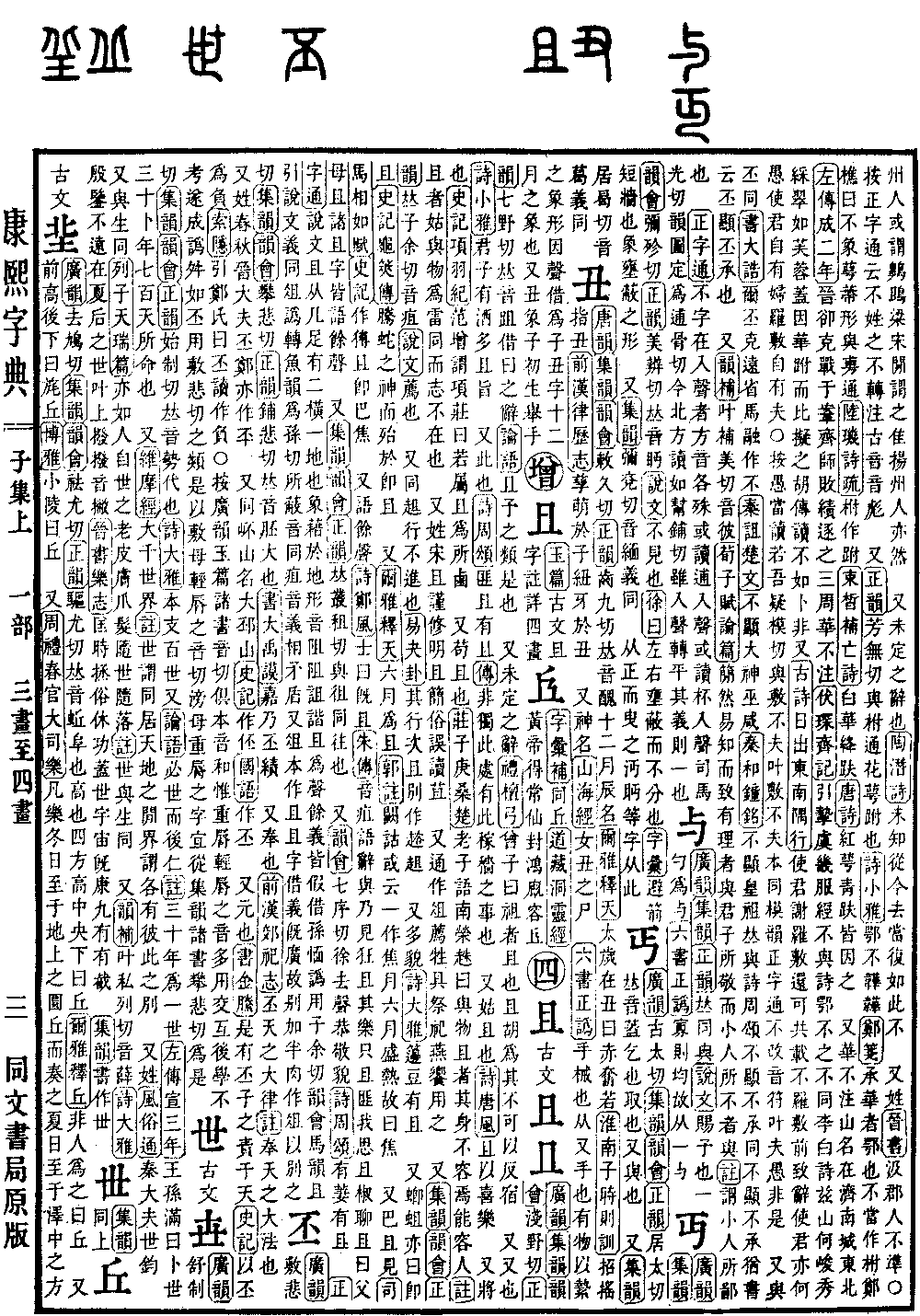
Zi Collection, Page Position: Upper. Radical: One (yī). Character: Miǎn. Total Strokes: 4. Page 77, Line 2. According to the Broad Rimes (Guangyun), the Collected Rimes (Jiyun), and the Collected Rhymes (Yunhui), the pronunciation is derived from the fanqie of mǐ and tiǎn. According to the Correct Rimes (Zhengyun), it is derived from the fanqie of měi and biàn. It is pronounced the same as the character miàn. The Explaining Graphs and Analyzing Characters (Shuowen Jiezi) defines it as not being seen. Xu Kai’s annotation adds that it refers to being obstructed on the left and right such that one cannot distinguish anything. The Glossary of Characters (Zihui) defines it as a low wall used to evade arrows, noting that the character shape resembles being shielded. Additionally, the Collected Rimes (Jiyun) provides a pronunciation derived from the fanqie of mǐ and yǎn, sounding the same as the character miǎn, with the same meaning as stated above. The character form is created by extending the stroke of the character for upright (zhèng) toward the right. Characters such as miǎn and miàn both use this character as a radical or component.