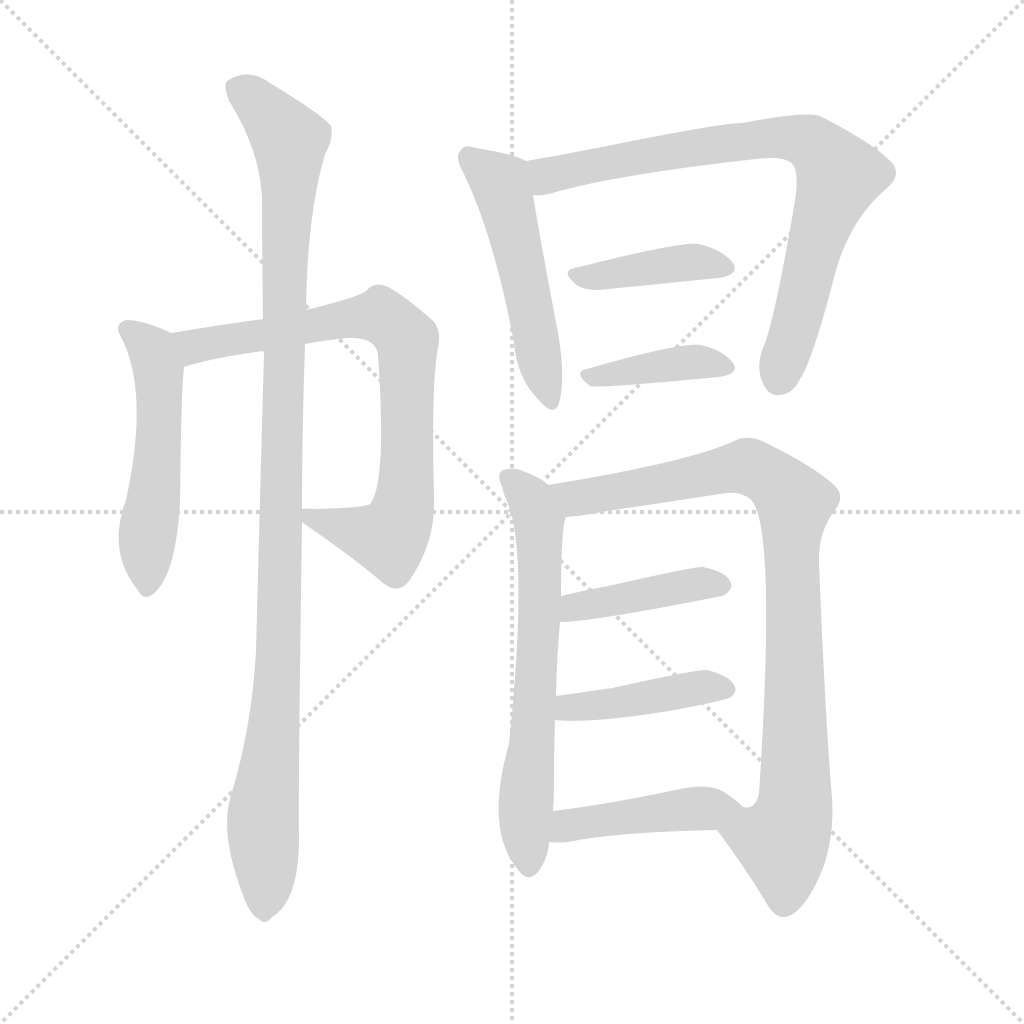
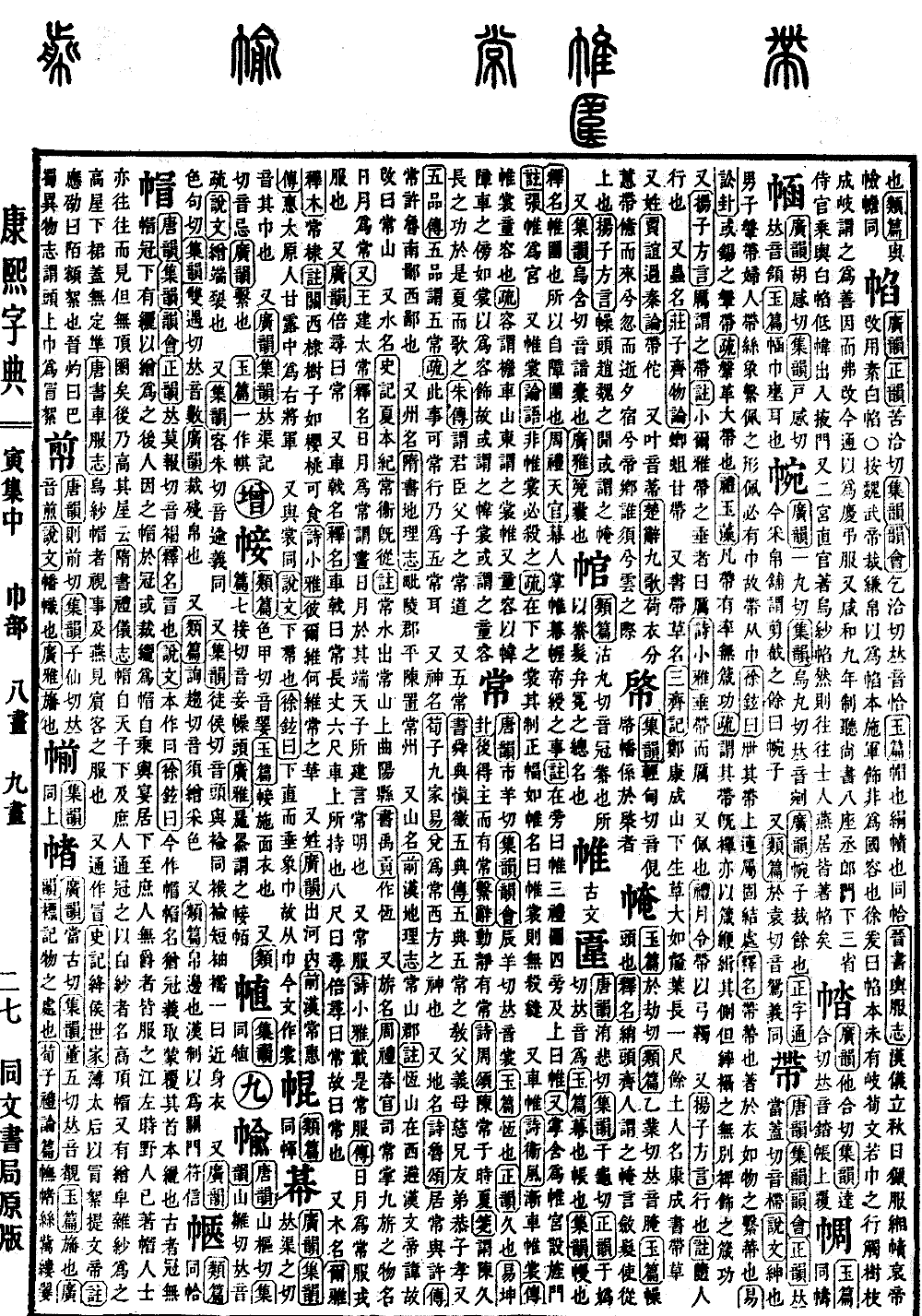
Yin Collection, Middle Volume
Radical: Towel (jīn)
Kangxi Strokes: 12
Page 333, Entry 19
Pronounced mao (falling tone).
Explanation of Names: To cover.
Shuowen Jiezi: Originally written as a character meaning to cover.
Xu Xuan says: It is now written as the character for hat. The hat is named similarly to a crown. Its meaning derives from covering the head; originally, it was a type of headcloth. In ancient times, there were no hats, only crowns, with a headcloth made of silk worn beneath them. Later generations added a hat to the crown or fashioned the headcloth into a hat. From the emperor riding in his carriage at leisure down to the common people without rank, all wear it. During the Jiangdong period, mountain dwellers already wore hats, and scholars were often seen wearing them, though without a circular brim at the time; the high crown was added later.
Book of Sui (Suishu), Treatise on Rituals and Etiquette: The hat is used by all, from the emperor down to the common people. Those made of white gauze are called high-top hats. There are also those made of black silk and multicolored gauze, with high tops and skirts at the bottom; there is generally no fixed standard for them.
Book of Tang (Tangshu), Treatise on Carriages and Clothing: The black gauze hat is the attire worn for official business and when hosting guests. It is also used interchangeably with the character for cover.
Records of the Grand Historian (Shiji), Biography of the Marquis of Jiang: Empress Dowager Bo threw a gauze hood at Emperor Wen.
Annotation: Ying Shao says it is a cloth headband worn on the forehead. Jin Zhuo says the Records of Unusual Things from Bashu states that the headcloth is a gauze hood.