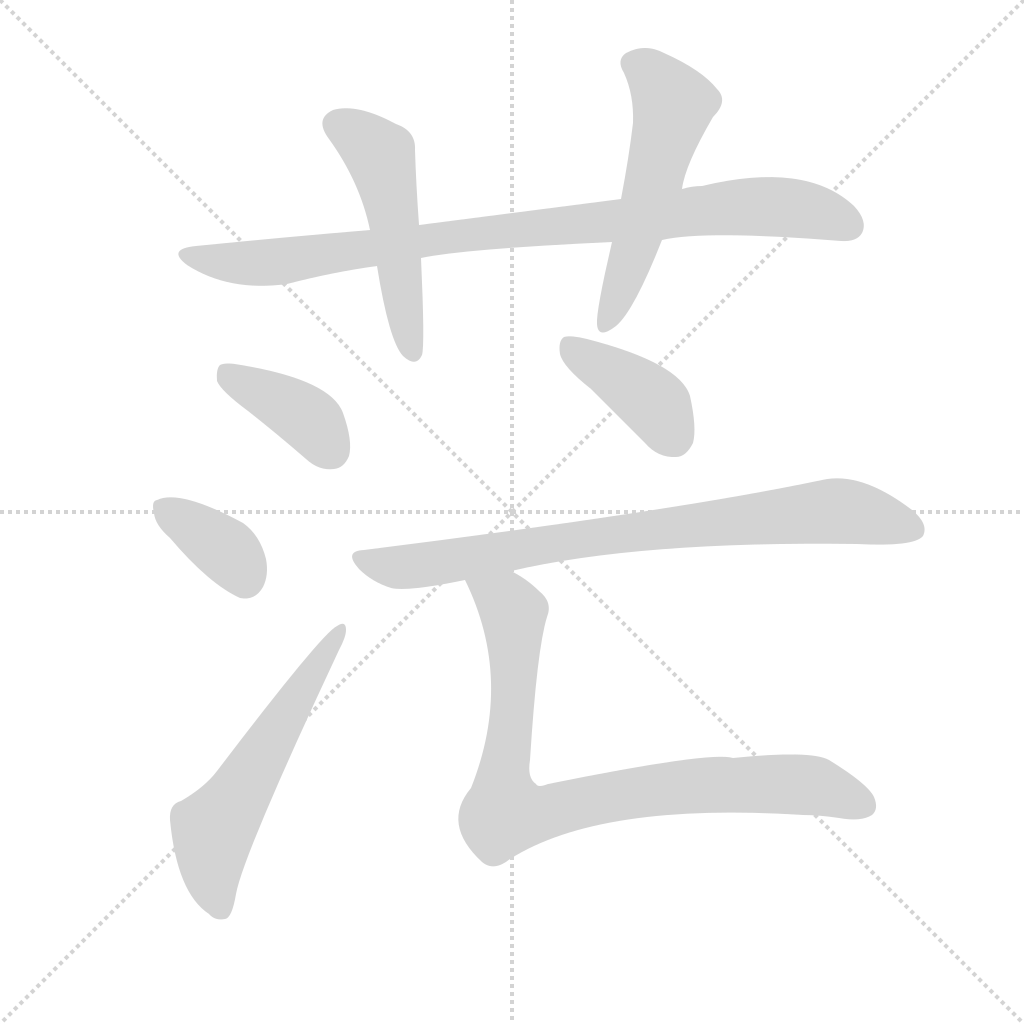
Shen Collection, Upper Volume
Radical: Grass (cǎo)
Kangxi strokes: 12
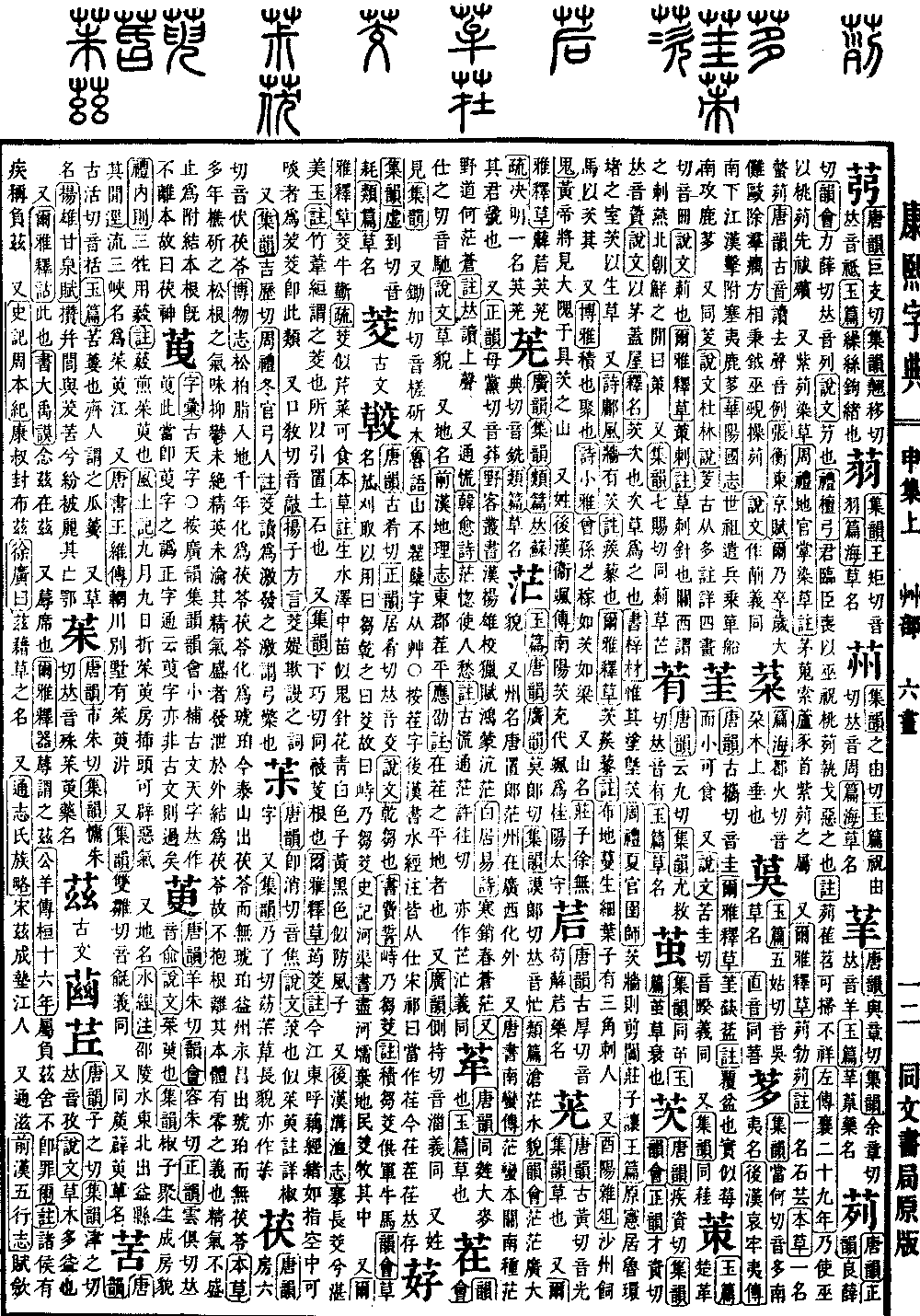
Page 1028, Entry 17
According to Jade Chapter (Yupian), Tang Rhymes (Tangyun), and Extensive Rhymes (Guangyun), it is pronounced mang. According to Collected Rhymes (Jiyun), it is also pronounced mang.
According to Classified Chapters (Leipian), it describes the appearance of water, as in vast and boundless. According to Rhyme Collection (Yunhui), it describes the appearance of something vast and great.
It is also the name of a prefecture. During the Tang Dynasty, Langmang Prefecture was established in the areas beyond the borders of Guangxi.
According to Book of Tang (Tangshu), Southern Barbarians Biography, the Mang Barbarians were originally a tribe from the south of the passes. Mang was the title of their ruler.
According to Correct Rhymes (Zhengyun), it is pronounced mang (third tone).
According to Wild Guest Collected Books (Yeke Congshu), in the Hunting Rhapsody (Jiaolie Fu) by Yang Xiong of the Han Dynasty, it appears in the phrase, "The vast and formless mist."
In the poetry of Bai Juyi, it appears in the line, "The cold melts into the spring haze." In another line, "How vast and desolate is the wilderness path." Note: Read in the rising tone.
It is also used interchangeably with the word for flustered or confused. In the poetry of Han Yu, it appears in the line, "Confused, it makes one sorrowful." Note: In ancient times, the word for flustered was used interchangeably with this character, pronounced huang. It is also written in variant forms, with the same meaning.