Si Collection, Upper Volume
Radical: Water (shuǐ)
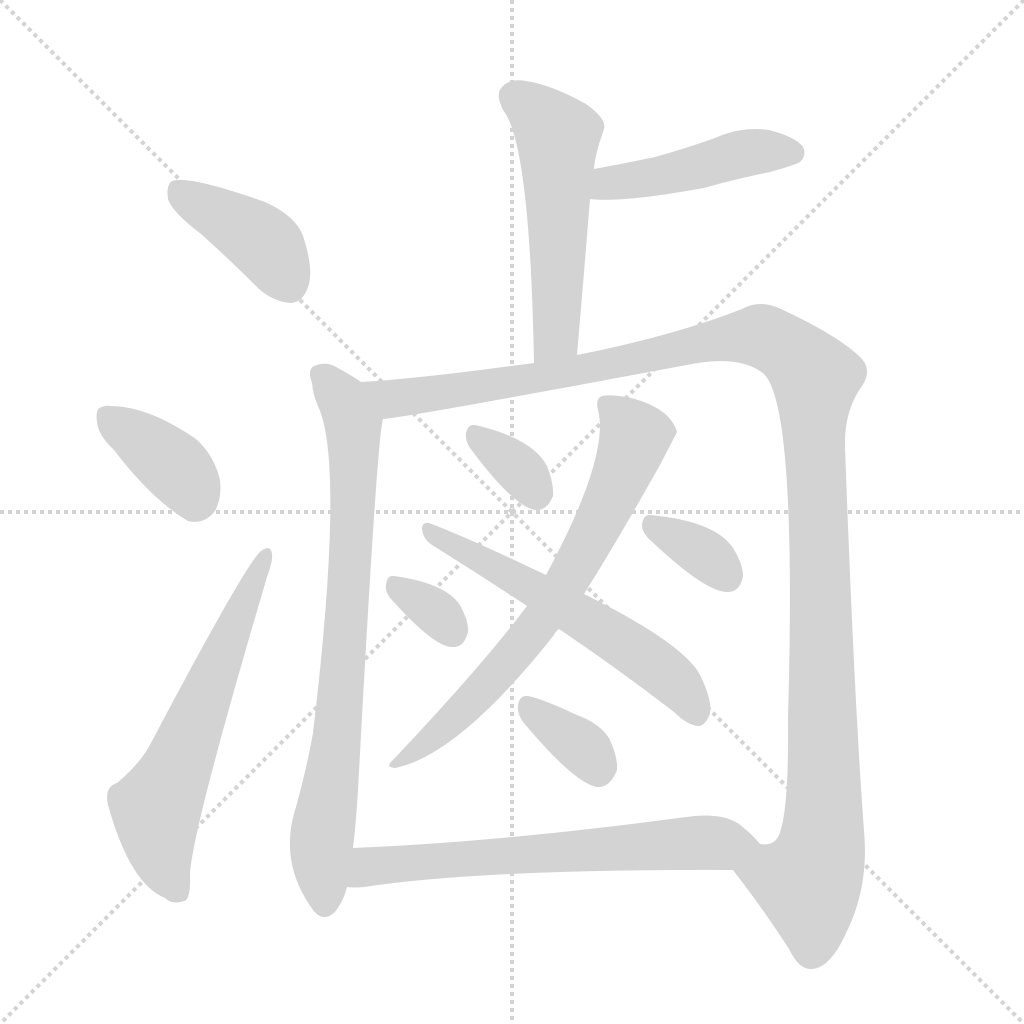
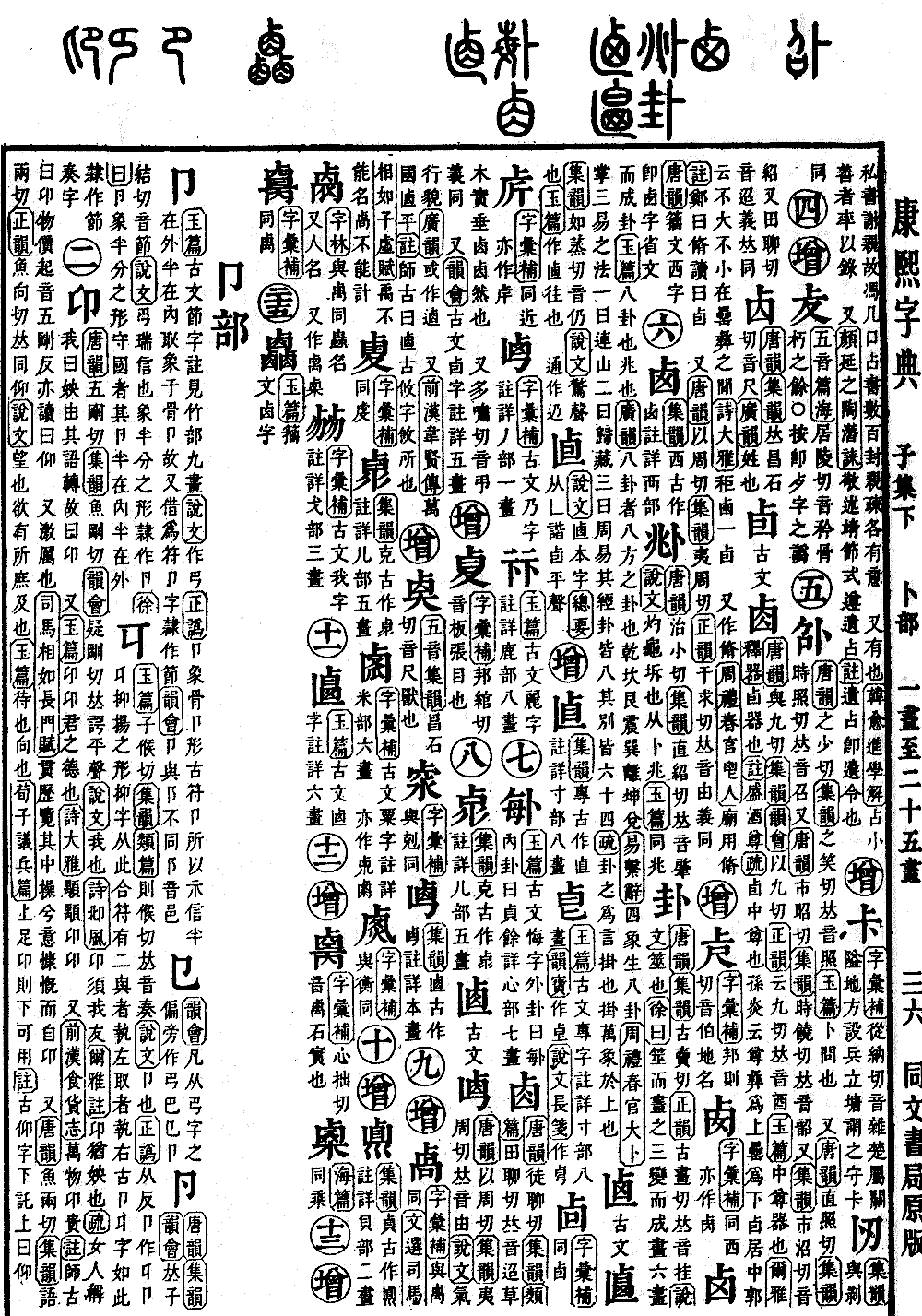
滷; Kangxi stroke count: 15; Page 158
Guangyun (Guǎngyùn) and Zhengyun (Zhèngyùn) both state the pronunciation is lang gu, Jiyun (Jíyùn) states long wu; pronounced lu (rising tone). It is the same as lu.
Shuowen Jiezi (Shuōwén Jiězì) states: The western lands are salty, resembling the form of salt. In Anding there is a Lu county; in the east, this is called chi, and in the west, it is called lu. Also written in a variant form (lǔ).
Erya (Ěryǎ), Explanation of Words: Lu means bitter. Commentary: Lu refers to bitter, salty land. This is alkali land where salt can be boiled.
Also, Guangyun (Guǎngyùn), Jiyun (Jíyùn), and Zhengyun (Zhèngyùn) state the pronunciation is chang shi; pronounced chi (entering tone). Sometimes written as xi by using the character that contains the radical for bird (xì).
Also, Tangyun (Tángyùn) states the pronunciation is tu li, Jiyun (Jíyùn) states ting li; pronounced di (entering tone). The meaning is the same.