Wu Collection, Lower Volume
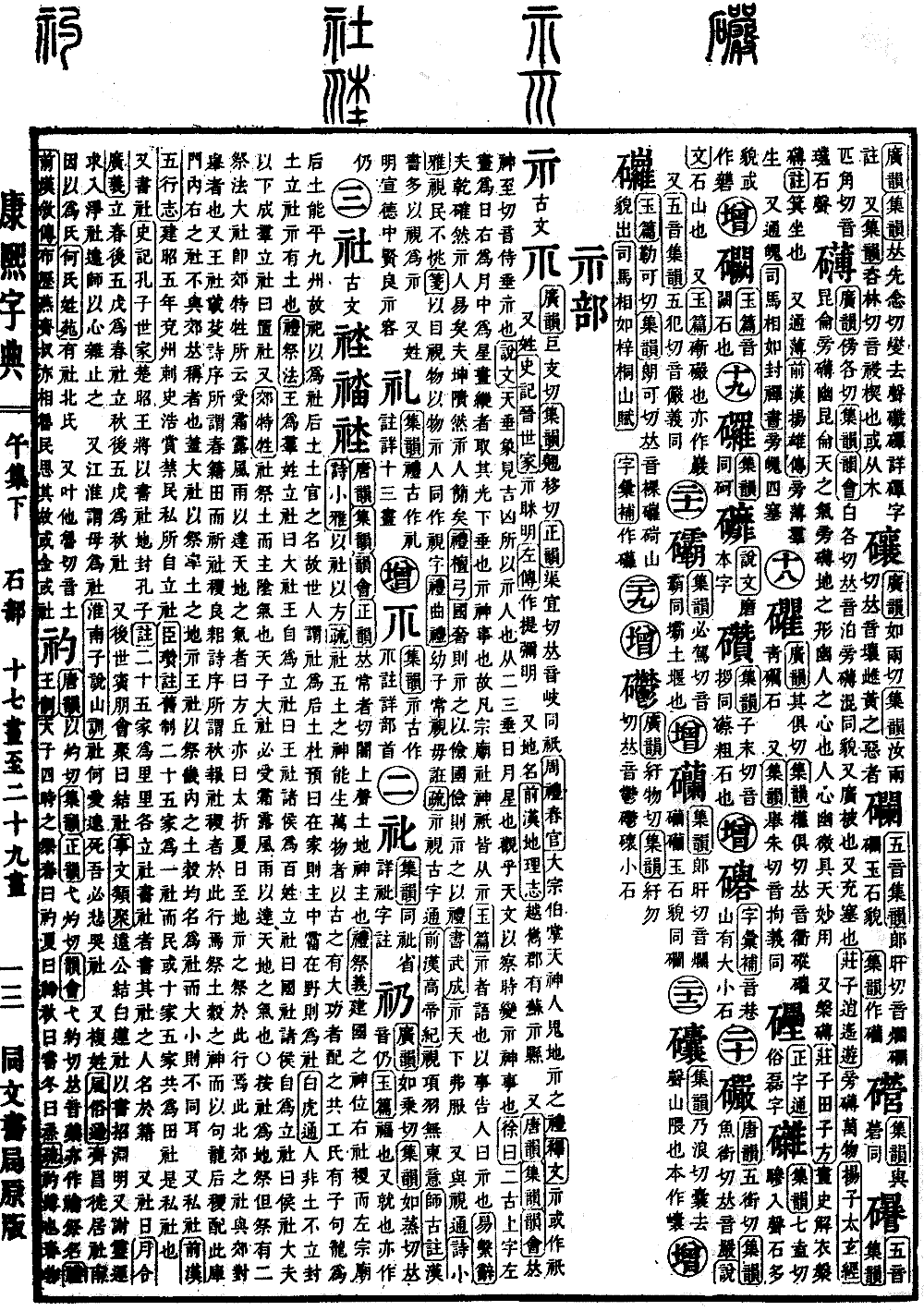
Radical: Spirit (shì)
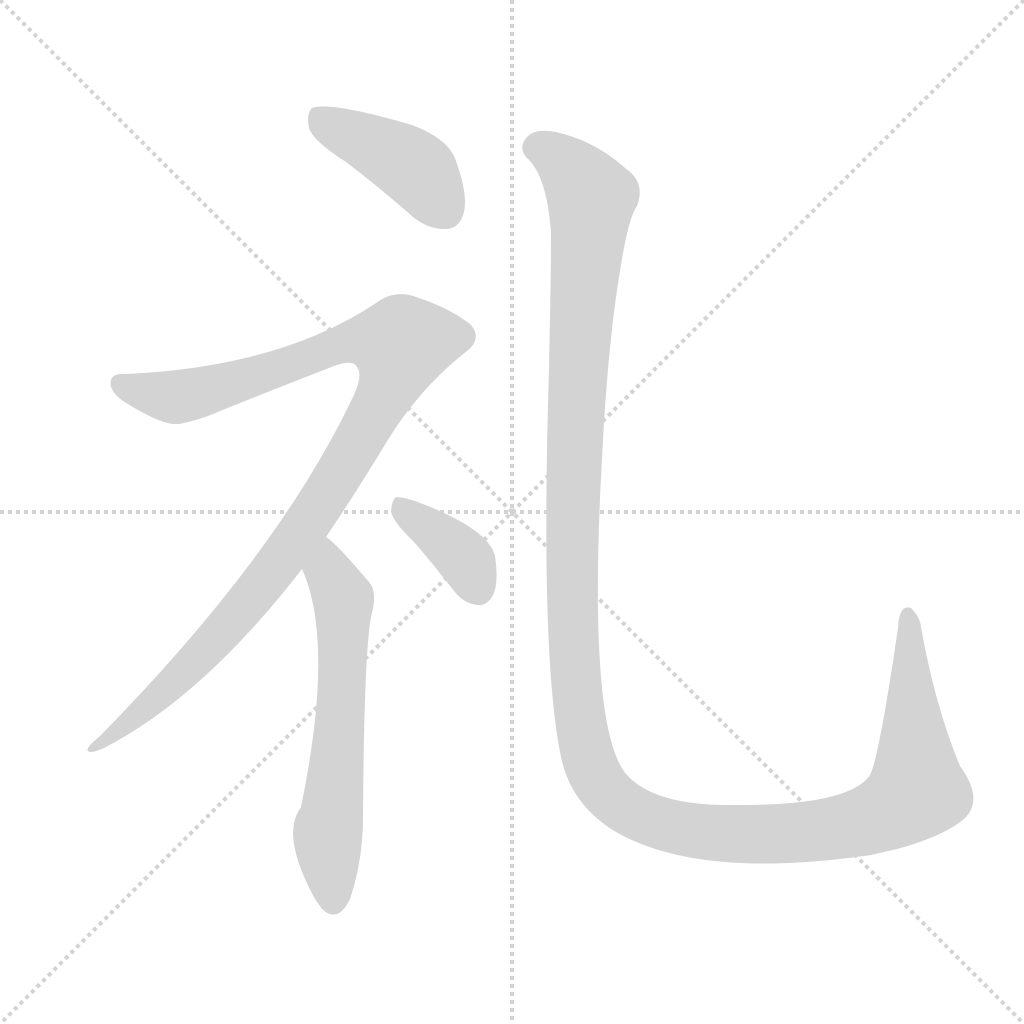
Li
Kangxi stroke count: 18
Page 839, Entry 22
Collected Rimes (Jiyun) states that in ancient times this was written in a variant form. Detailed notes are provided under the thirteen-stroke entry. An archaic form of the character also exists.
Guangyun: Pronounced li (rising tone).
Collected Rimes (Jiyun) and Rhyme Collection (Yunhui): Pronounced li (falling tone).
Orthography Standard (Zhengyun): Pronounced li (rising tone), sound identical to li.
Explaining Graphs and Analyzing Characters (Shuowen Jiezi): Li refers to the act of practice, used to serve divine spirits and pray for blessings.
Explication of Names (Shiming): Li refers to embodiment, signifying the attainment of concrete norms.
Rhyme Collection (Yunhui): Mencius states that the essence of li lies in the regulation and ornamentation of these two elements, likely establishing hierarchical order based on human benevolence and righteousness, ensuring each thing finds its proper place; this is called li.
It also serves as a surname.
Zuo Tradition (Zuozhuan): Mentions the Wei state official Li Kong.
Xu Xuan states: Among the five types of ritual, none are more important than sacrificial rites, which is why the character is derived from the Spirit radical. The component representing the vessel is used for sacrificial offerings.