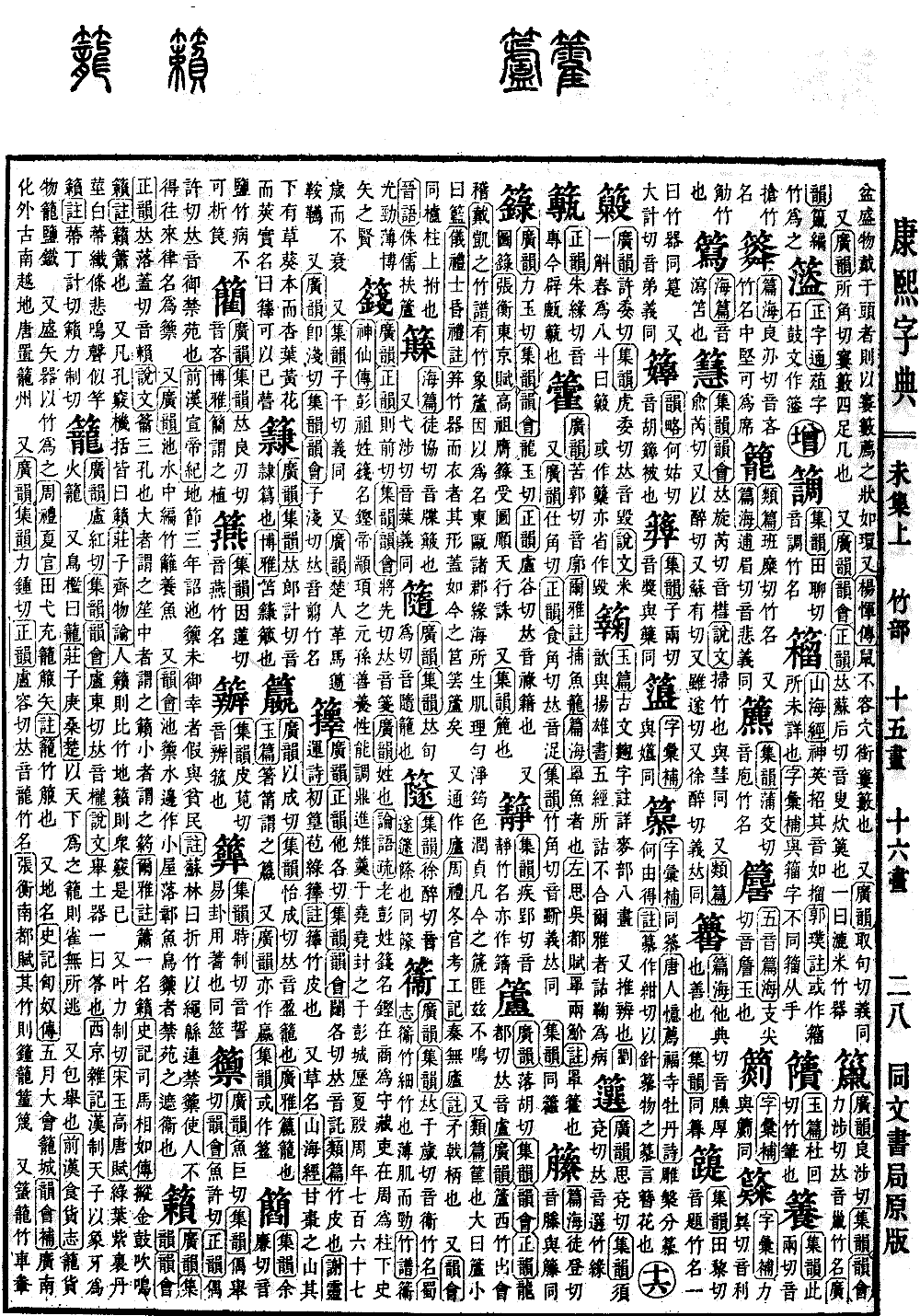
Wei Collection, Upper Volume
Radical: Bamboo (zhú)
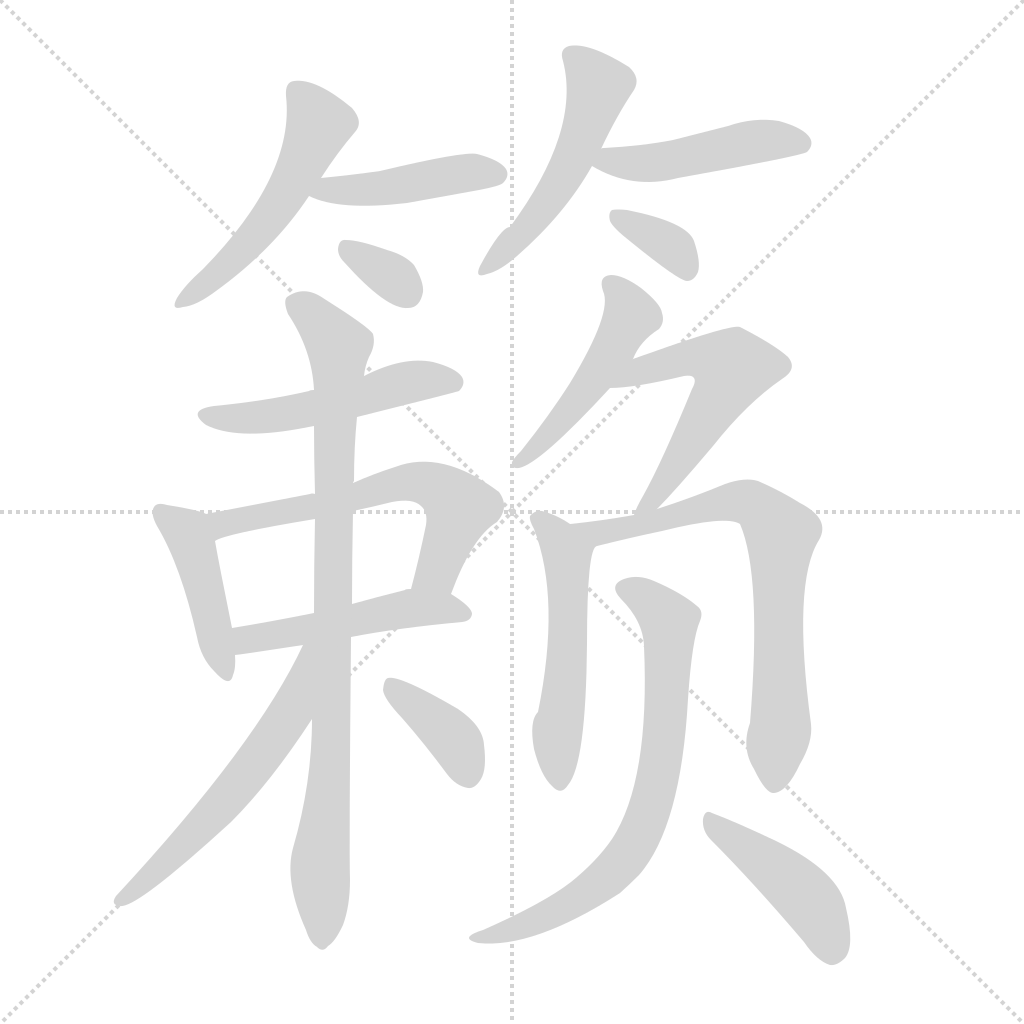
籁
Kangxi strokes: 22
Page 904, Entry 02
Broad Rhymes (Guangyun), Collected Rhymes (Jiyun), Rhyme Meetings (Yunhui), and Orthodox Rhymes (Zhengyun): Pronounced lai (falling tone).
Explication of Writing (Shuowen): A flute with three holes. The largest is called a sheng, the medium is called a lai, and the smallest is called a yue.
Notes to the Approaching Nearness (Erya): The xiao flute is also known as a lai.
Records of the Grand Historian (Shiji), Biography of Sima Xiangru: Beating metal drums and blowing the sounding lai. Note: The lai is a xiao flute. Also, all apertures and mechanisms are called lai.
Master Zhuang (Zhuangzi), Discussion on Making All Things Equal (Qiwulun): The human lai is then the matching bamboo pipes, while the earthly lai is then the many apertures.
Also pronounced li (falling tone) to rhyme. Song Yu, Rhapsody on Gaotang (Gaotang Fu): The edges of the leaves are purple and inner, with red stems and white calyxes. The delicate branches hum sadly, the sound resembling the yu and the lai. Note: The calyx is pronounced di (falling tone). The lai is pronounced li (falling tone).
Textual Research: Records of the Grand Historian (Shiji), Biography of Sima Xiangru: Beating metal drums and blowing the sounding lai. In accordance with the original text, the character for beating has been emended.