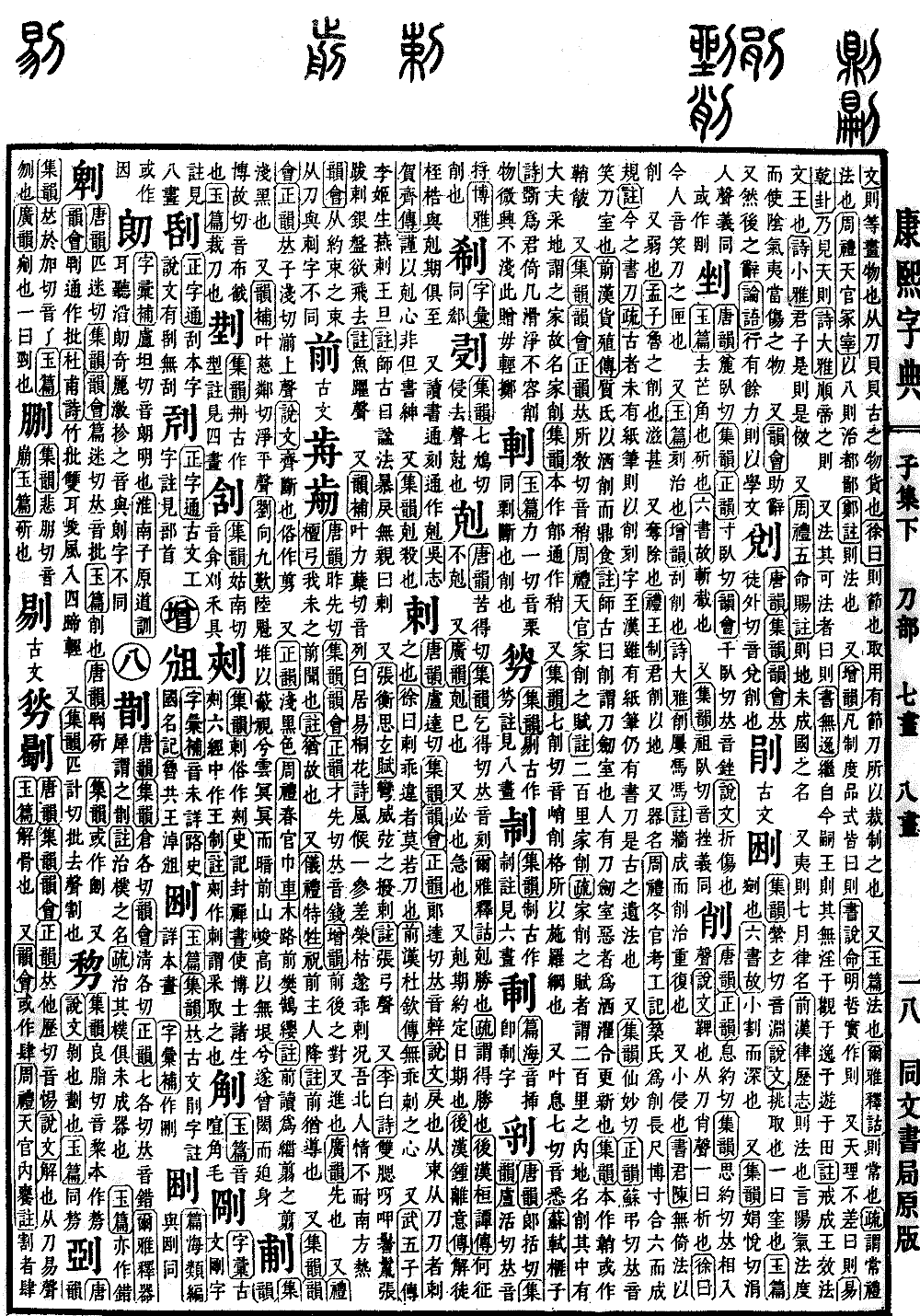
Zi Collection, Page Position: Lower
Radical: Knife (dāo)
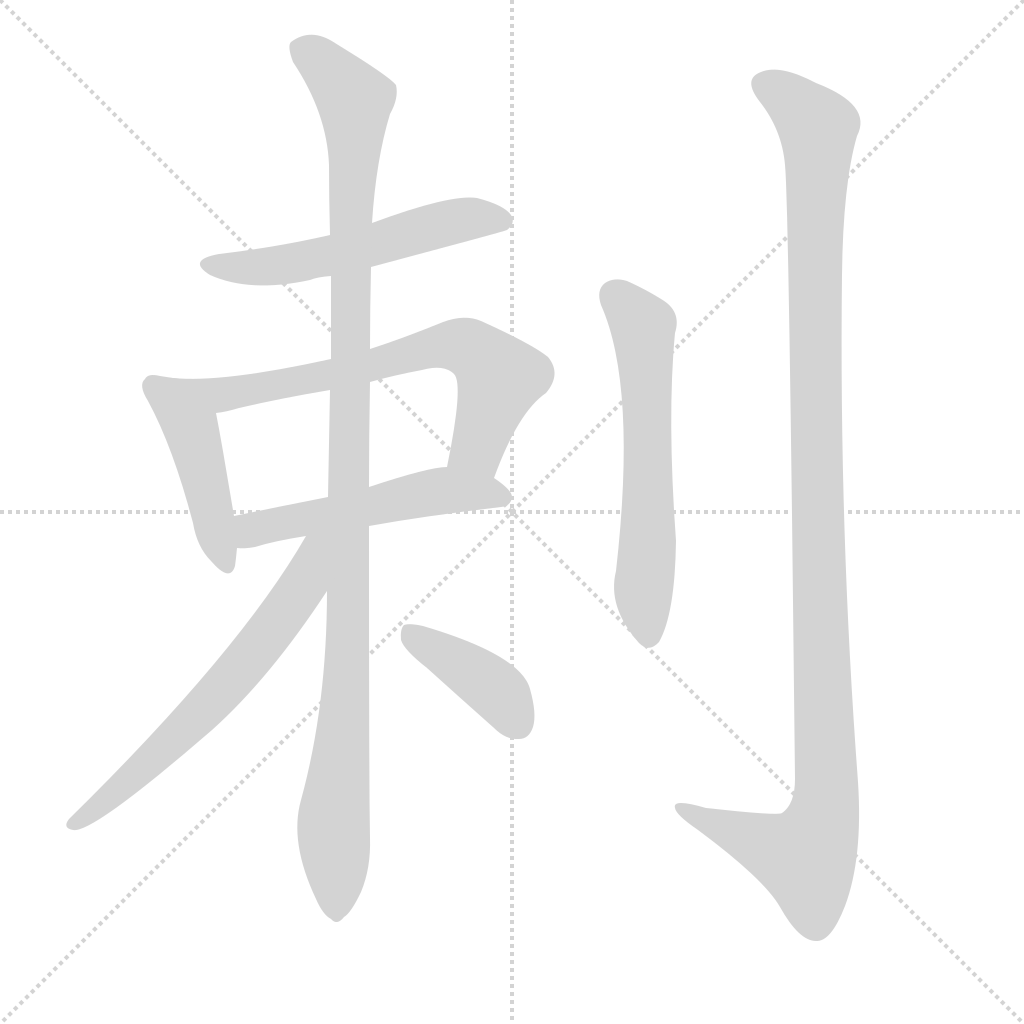
lā; Kangxi Dictionary strokes: 9; Page: 140, Entry: 14
Pronounced lū dǎ qiè in Tang Yun; pronounced láng dá qiè in Ji Yun, Yun Hui, and Zheng Yun, similar to "zhá".
Shuowen Jiezi explains it as perverse and contrary. The character is composed of "shù" and "dāo". Dāo indicates separation by cutting and piercing.
Xu Kai annotates that nothing better symbolizes perversity and separation than a knife.
Recorded in "Hanshu - Biography of Du Qin": "No heart of perversity and rebellion."
Also recorded in "Hanshu - Biography of the Five Sons of Emperor Wu": Li Ji gave birth to Prince Yan La of Yan.
Yan Shigu explains that according to posthumous appellations, cruelty, lack of compassion, and widespread rebellion are called "lā".
Also in Zhang Heng's "Si Xuan Fu": "Bending the bowstring with a 'bō lā'."
This describes the sound of drawing a bowstring.
Also in Li Bai's poetry: "Double cheeks gulping, hair disheveled and raised, the leaping fish 'bá lā' on the silver plate wanting to fly away."
This describes the sound of a fish leaping out of the water.
Also in Yun Bu, the rhyme sound is liè niè qiè, similar to "liè".
In Bai Juyi's "Poem on Phoenix Flowers": "The wind is uneven, prosperity and decay follow perversity. Moreover, my northern heart cannot withstand the southern heat."
Yun Hui emphasizes: The character's form is from "shù" (meaning restraint), and from "dāo". It is different from the character "cì".