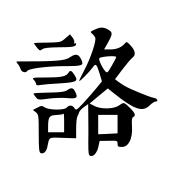
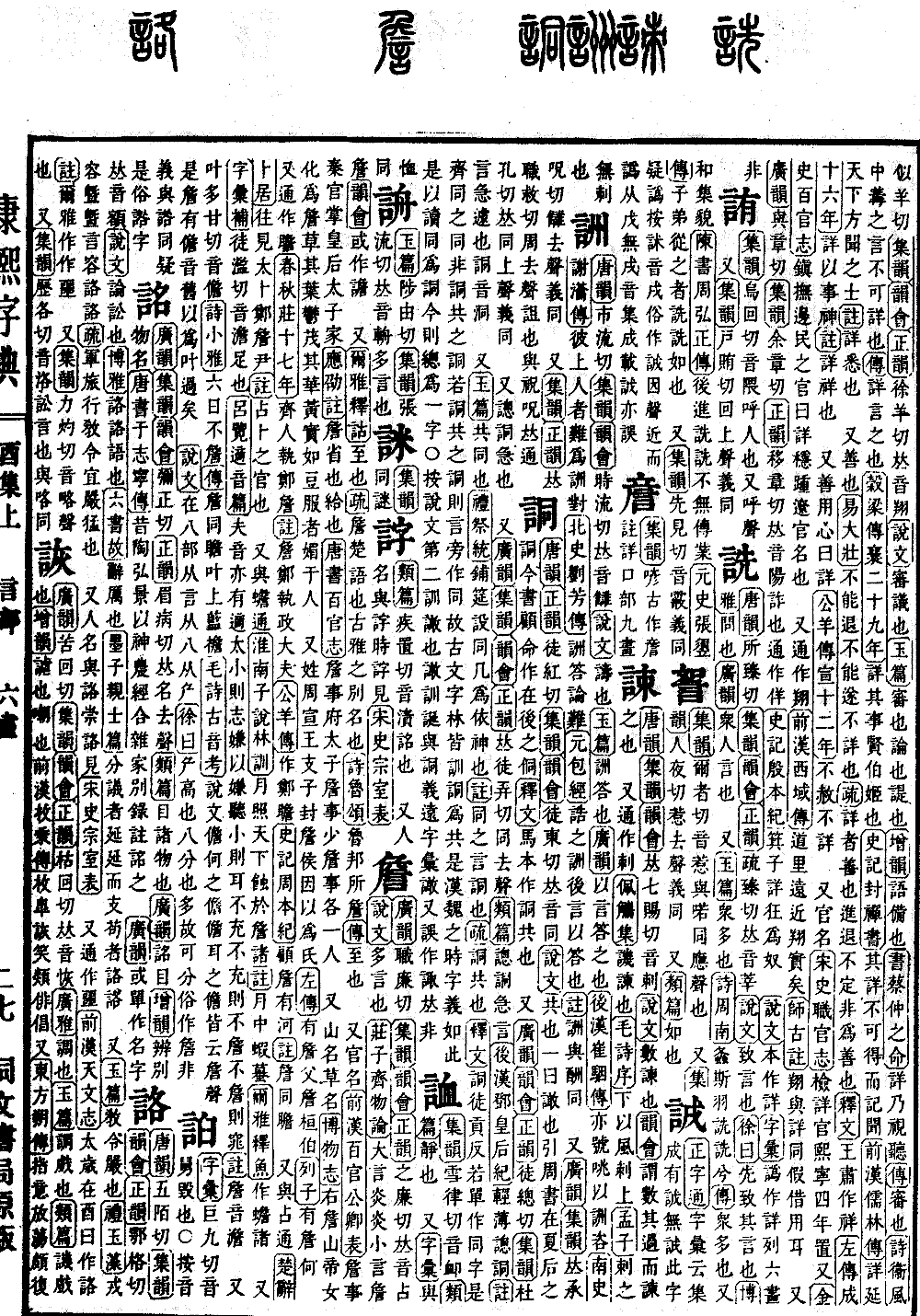
You Collection, Upper Volume
Radical: Speech (yán)
13 strokes
Page 1159, Entry 16
Pronounced e.
In the dictionary Explanation of Graphs (Shuowen), it means to argue or litigate. According to the Extensive Refinements (Boya), the reduplicated form refers to speaking. According to the Origins of the Six Writings (Liushugu), it means stern or harsh language. As mentioned in the Works of Mozi (Mozi), Chapter on Closeness to Officials: Those who divide the discourse are verbose, while those who support the essential are stern.
According to the Jade Chapters (Yupian), it also denotes strict or severe commands. As recorded in the Book of Rites (Liji), Section on Jade Ornaments: The demeanor for military activity is firm, and the demeanor for speech is stern. The commentary notes that military commands should be strictly enforced.
Also used in names. One such person is Chong'e, found in the History of the Song Dynasty (Songshi), Table of the Imperial Clan.
Also used interchangeably with the character meaning startled or alarmed (e). In the History of the Former Han (Qianhanshu), Treatise on Astronomy: When the Grand Year is in the You position, it is called the year of alarm. The commentary notes that in the Erya (Erya), it is written as the year of alarm.
According to the Collected Rhymes (Jiyun), pronounced lue. It means the sound of speech.
According to the Collected Rhymes (Jiyun), pronounced luo. It means argumentative speech. Equivalent to the variant form (ge).