You Collection, Lower Volume
Radical: Carriage (chē)
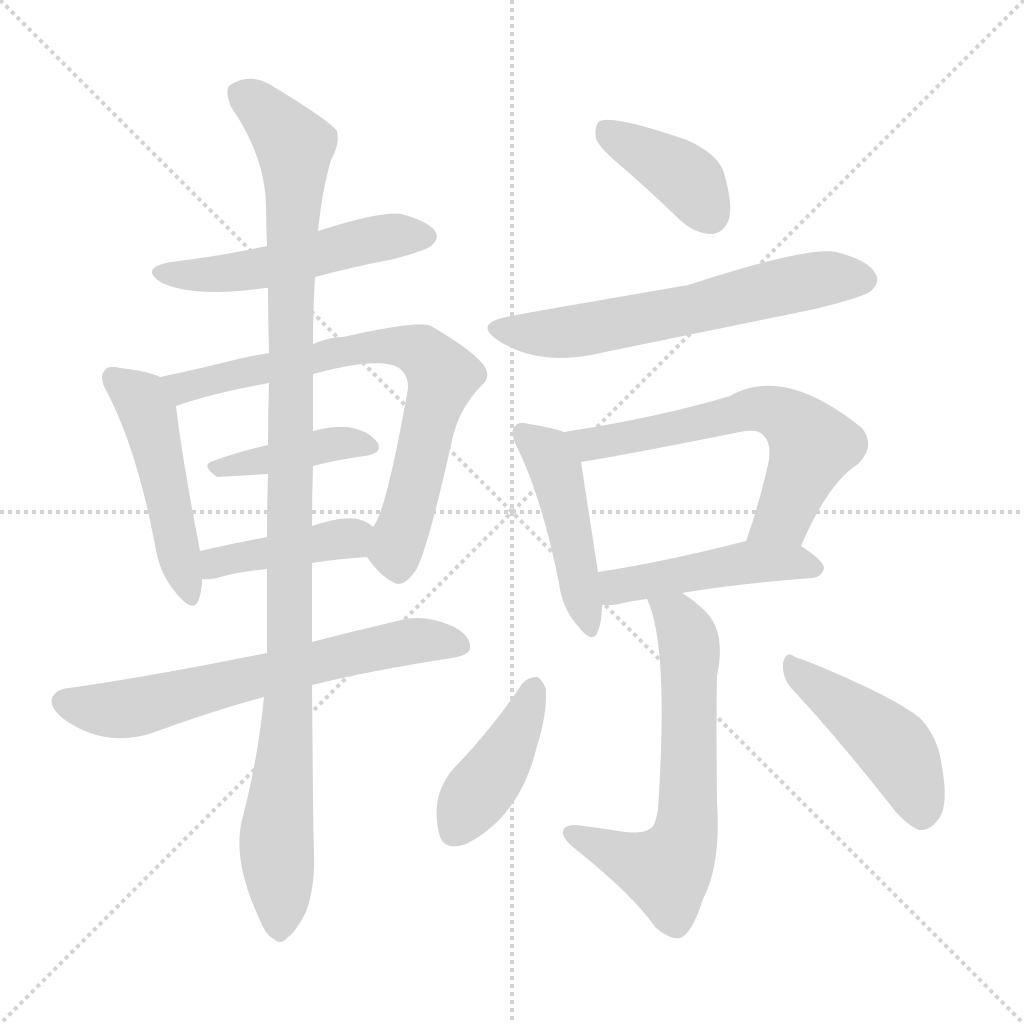
輬
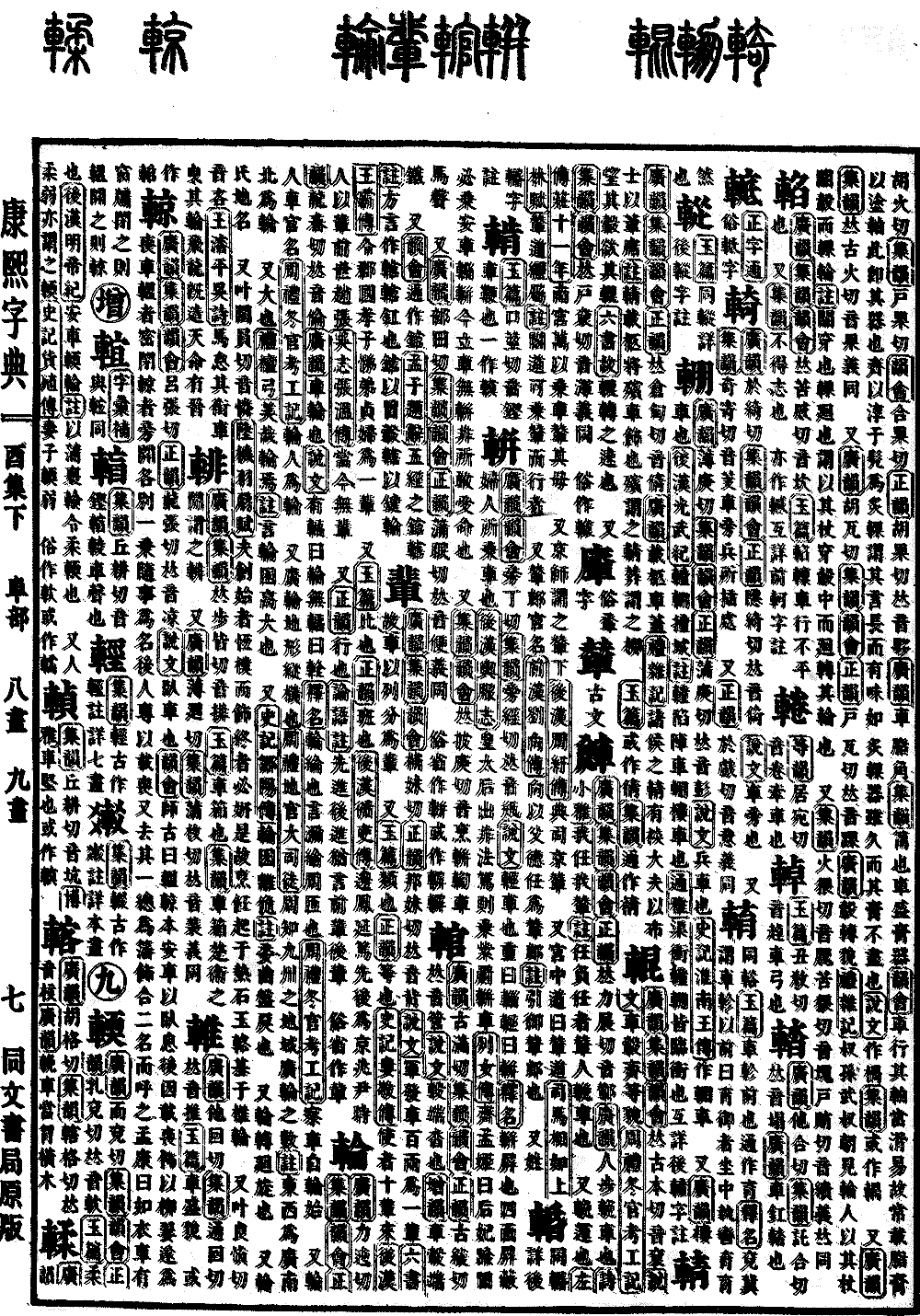
Kangxi Strokes: 15
Page 1245, Entry 23
Broad Rhymes (Guangyun), Collected Rhymes (Jiyun), and Dictionary of Rhymes (Yunhui) cite the pronunciation as lu (rising tone); Standard Rhymes (Zhengyun) cites the pronunciation as long (level tone), with the final sound being liang (level tone).
According to the Explaining Graphs and Analyzing Characters (Shuowen), it is a sleeping carriage.
The Dictionary of Rhymes (Yunhui) records that Shigu said: The wen and liang carriages were originally comfortable vehicles for resting. Later, because they were used to transport the deceased, they were decorated with willow-branch fans and became funeral carriages. The wen carriage was sealed tight, while the liang carriage had side openings; they were two distinct types of vehicles, named according to their functions. Later generations used them exclusively for funeral transport, removed one, and adorned them with screens, calling them by the combined name. Meng Kang noted: It is like a carriage with windows; when closed, it is a wen, and when opened, it is a liang.