Zi Collection, Page Position: Lower
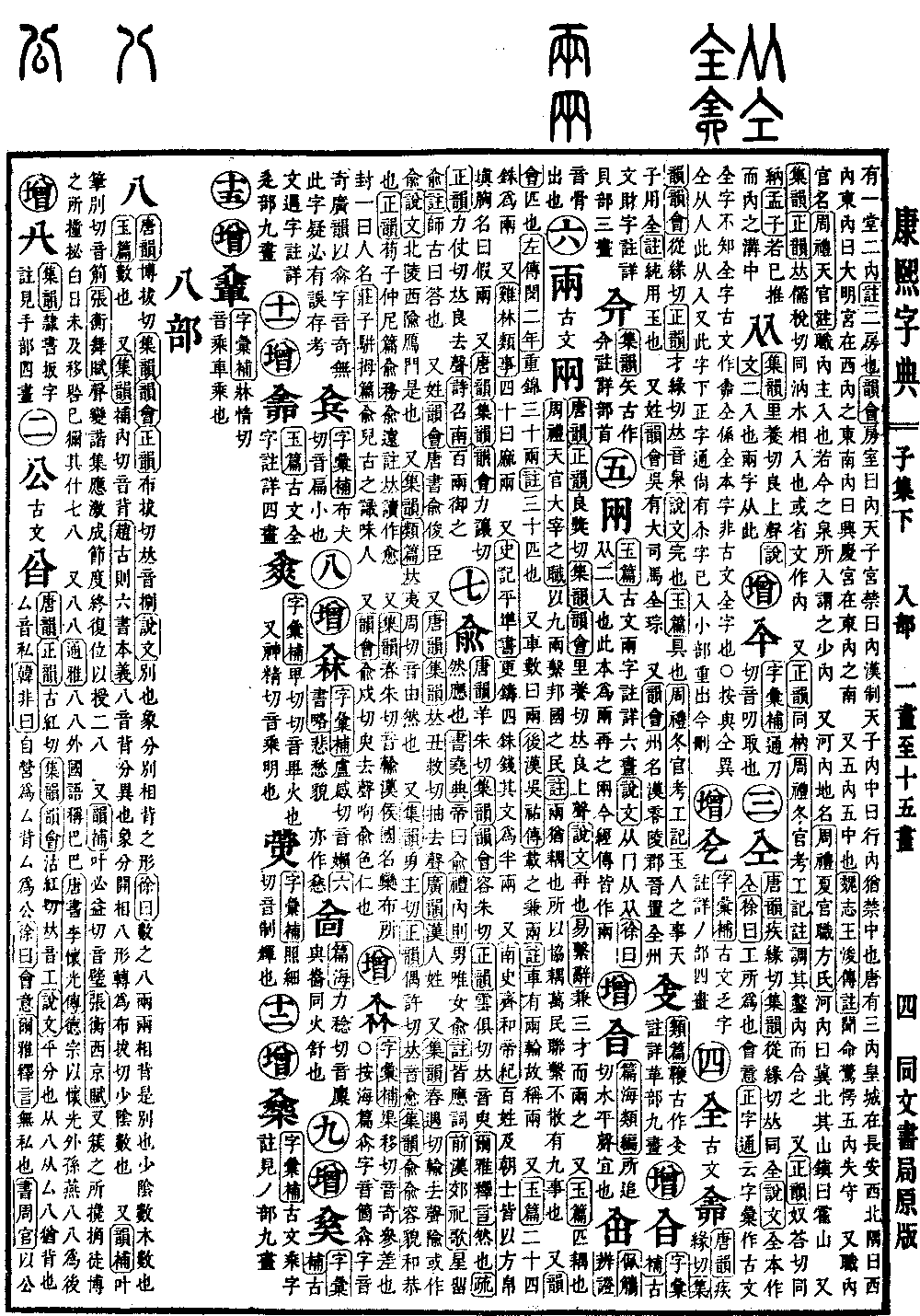
Radical: Enter (rù)
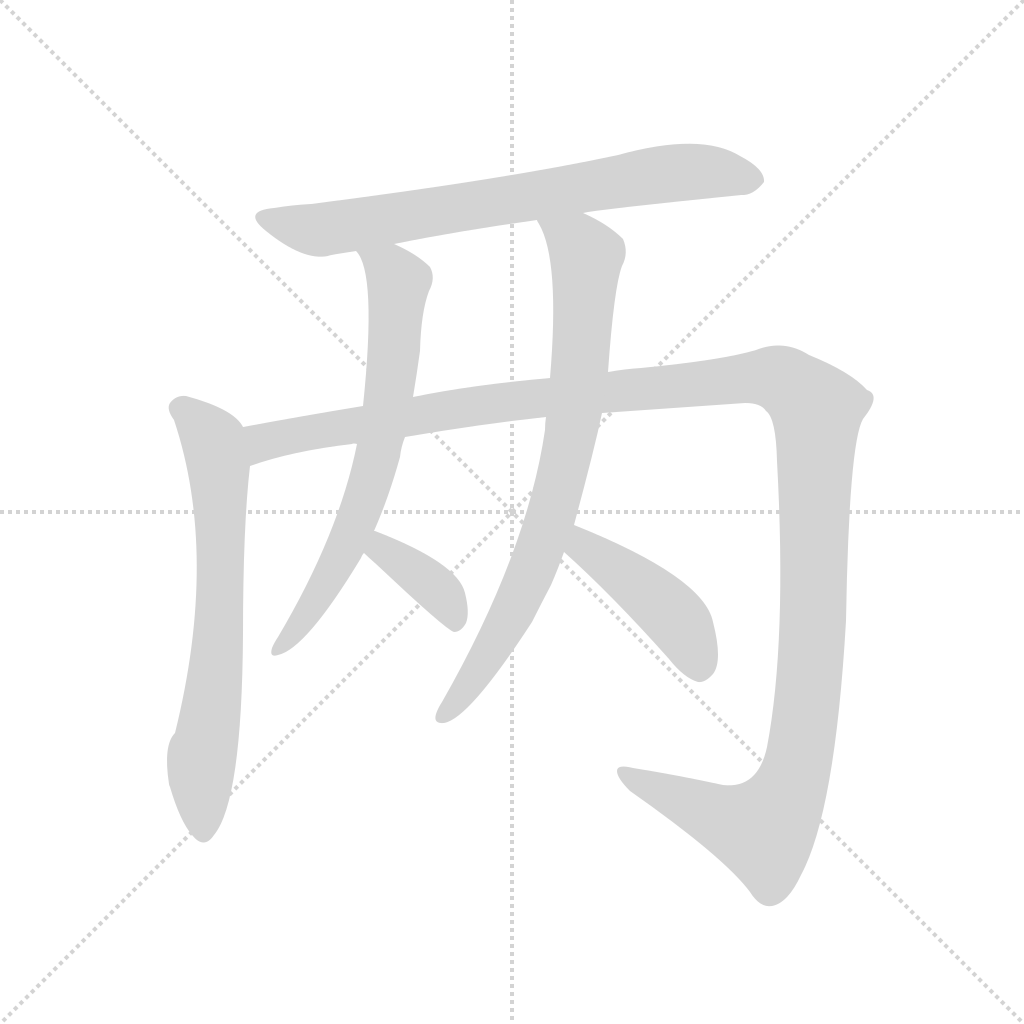
liǎng
Kangxi Stroke Count: 8; Page 126
Ancient form. According to the Tang Rhymes (Tangyun) and Correct Rhymes (Zhengyun), the pronunciation follows the fanqie phonetic system of liǎng in the rising tone. According to the Explaining Graphs and Analyzing Characters (Shuowen Jiezi), it means a second time or double. It encompasses the three powers and doubles them — Classic of Changes (Yijing). Also, according to the Jade Chapters (Yupian), it means a pair or to match. Using nine pairings to bind the people of the state. Note: Pairing refers to matching or coordinating, used to harmonize the masses and keep them connected; there are nine such matters — Rites of Zhou (Zhouli). Also, according to the Rhyme Assembly (Yunhui), it refers to a bolt of fabric. Thirty bolts of heavy brocade. Note: Thirty bolts — Commentary of Zuo (Zuozhuan). Also, the count of carriages is called liǎng. Carrying them in two carriages. Note: A carriage has two wheels, therefore it is called liǎng — Book of the Later Han (Hou Hanshu). Also, according to the Jade Chapters, twenty-four zhu make one liang, a unit of weight. Also, according to the Matters Related to the Chicken Forest (Jilin Leishi), the number forty is called ma-liang. Also, according to the Records of the Grand Historian (Shiji), the four-zhu coins were recast with the inscription reading ban-liang, or half-liang. Also, according to the History of the Southern Dynasties (Nanshi), commoners and court officials all used square pieces of silk to pad their chests, calling them jia-liang, or false pairs. Also, according to the Tang Rhymes, Collected Rhymes (Jiyun), and Rhyme Assembly, the pronunciation follows the fanqie phonetic system of liàng in the departing tone. A hundred carriages come to meet her — Book of Odes (Shijing).