Xu Collection, Upper Volume
Radical: Metal (jīn)
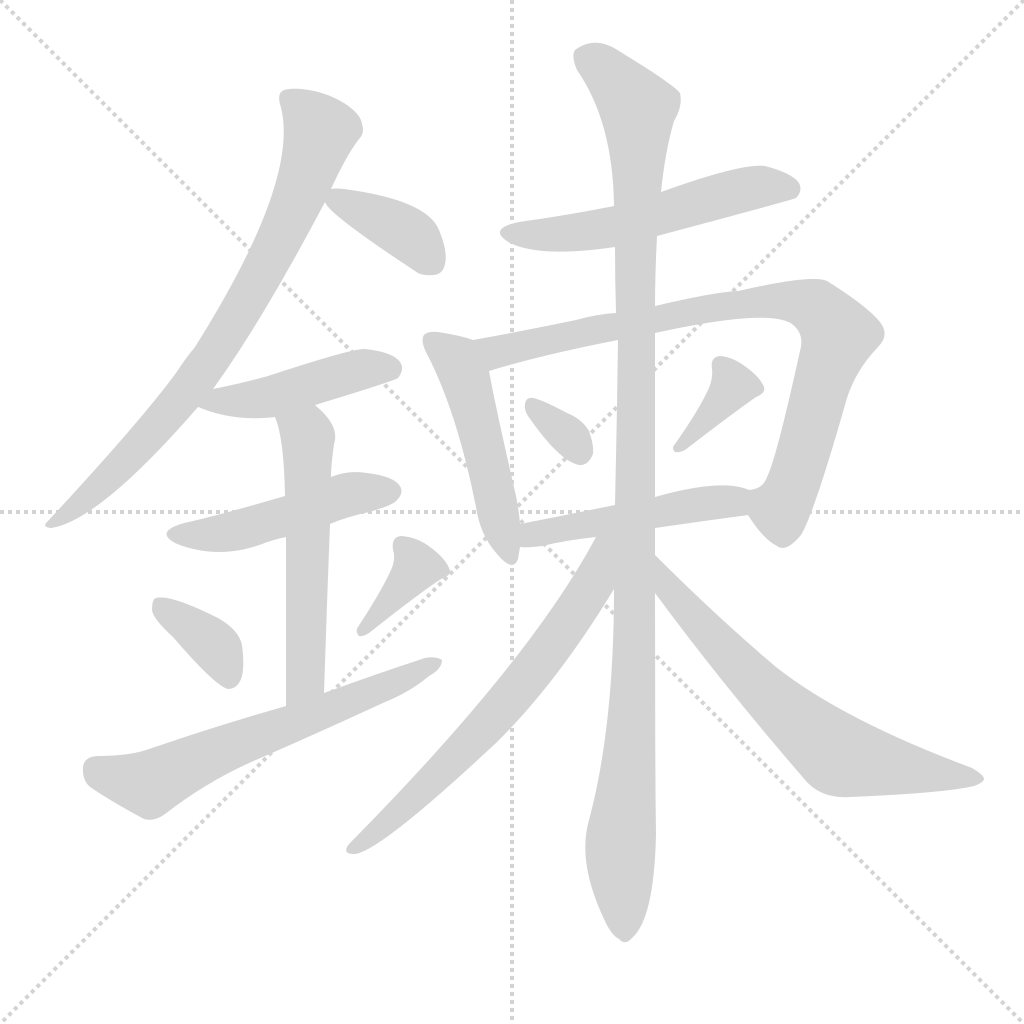
Lian
Kangxi strokes: 17
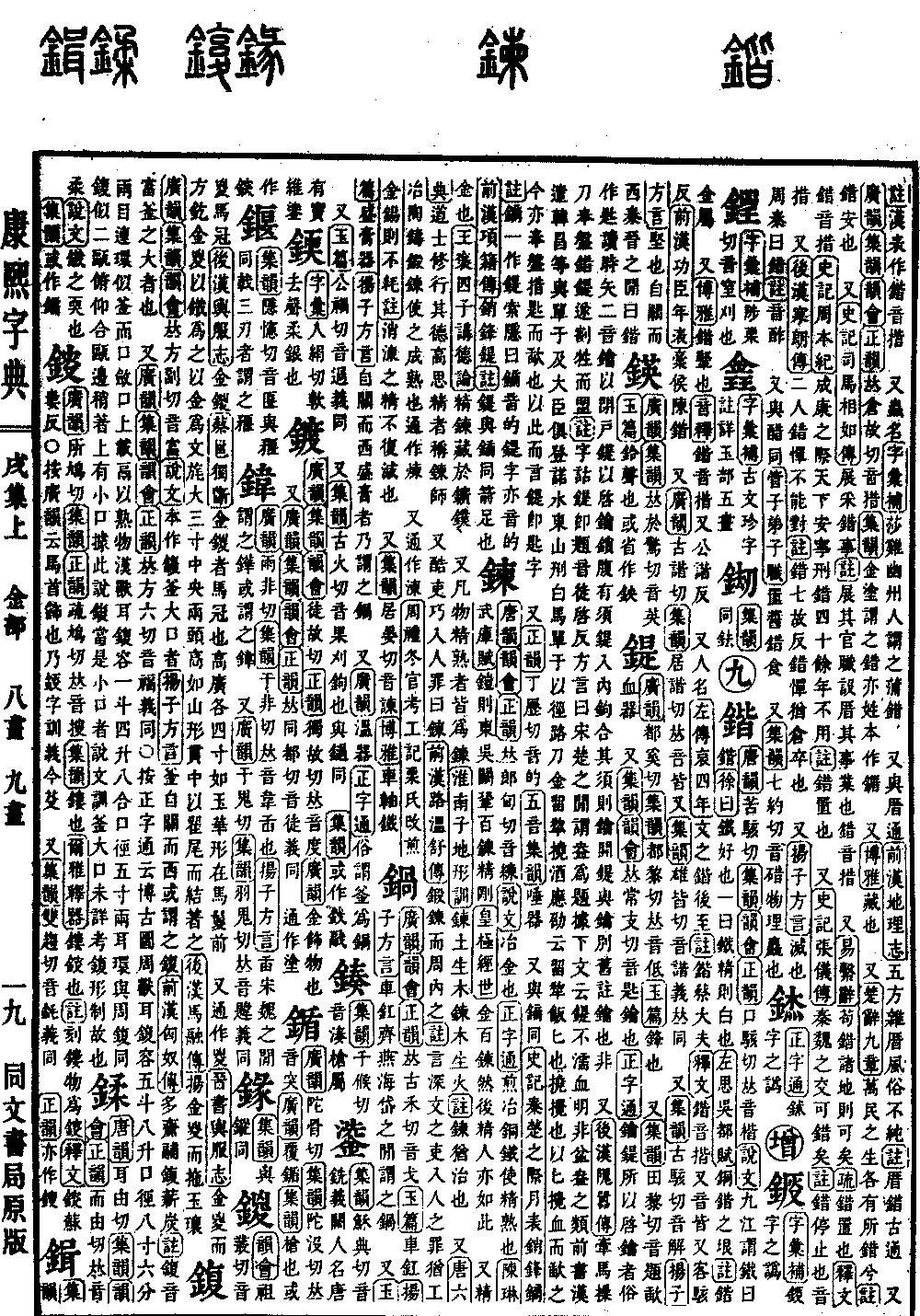
Page 1313, Entry 09
Pronounced lian (falling tone).
Shuowen Jiezi (Explanation of Simple and Compound Characters): To smelt metal.
Zhengzitong (Comprehensive Dictionary of Characters): To smelt copper and iron until refined and mature.
Lin, Wuku Fu (Rhapsody on the Armory): The armor is of the Qu and Gong types from Eastern Wu, refined a hundred times to be pure steel.
Huangji Jingshi (Supreme World Ordering Principles): Gold becomes pure only after a hundred smeltings; people are the same.
Also, pure gold.
Wang Bao, Sizi Jiangde Lun (Discourse on the Four Masters Discussing Virtue): Refined gold hidden within ore.
Also, anything refined and mature is called lian.
Huainanzi (Masters of Huainan), Dixing Xun (Treatise on Topography): Refining earth produces wood; refining wood produces fire. Note: Refining is synonymous with managing or processing.
Tang Liudian (Six Statutes of the Tang Dynasty): Daoist practitioners whose virtue is high and thoughts refined are called masters of refining.
Also, when cruel officials craftily implicate someone in a crime, it is called lian.
Book of Han (Hanshu), Biography of Lu Wenshu: Forging and refining, then encircling them with guilt. Note: It is said that officials skilled in strict legalism involve people in crimes just as a metalworker uses a furnace and mold to refine and shape, making the crime complete. Commonly written as lian.
Also commonly written as lian.
Zhou Li (Rites of Zhou), Dongguan Kaogongji (Records of Tradesmen): If the mixture of metal and tin is modified, it will not be wasted. Note: The refinement of scraping and boiling does not result in further loss.
Also, pronounced jian (falling tone).
Guangya (Expanded Encyclopedia): Iron used for axle ends on carriages.