Shen Collection, Middle Volume
Radical: Insect (chóng)
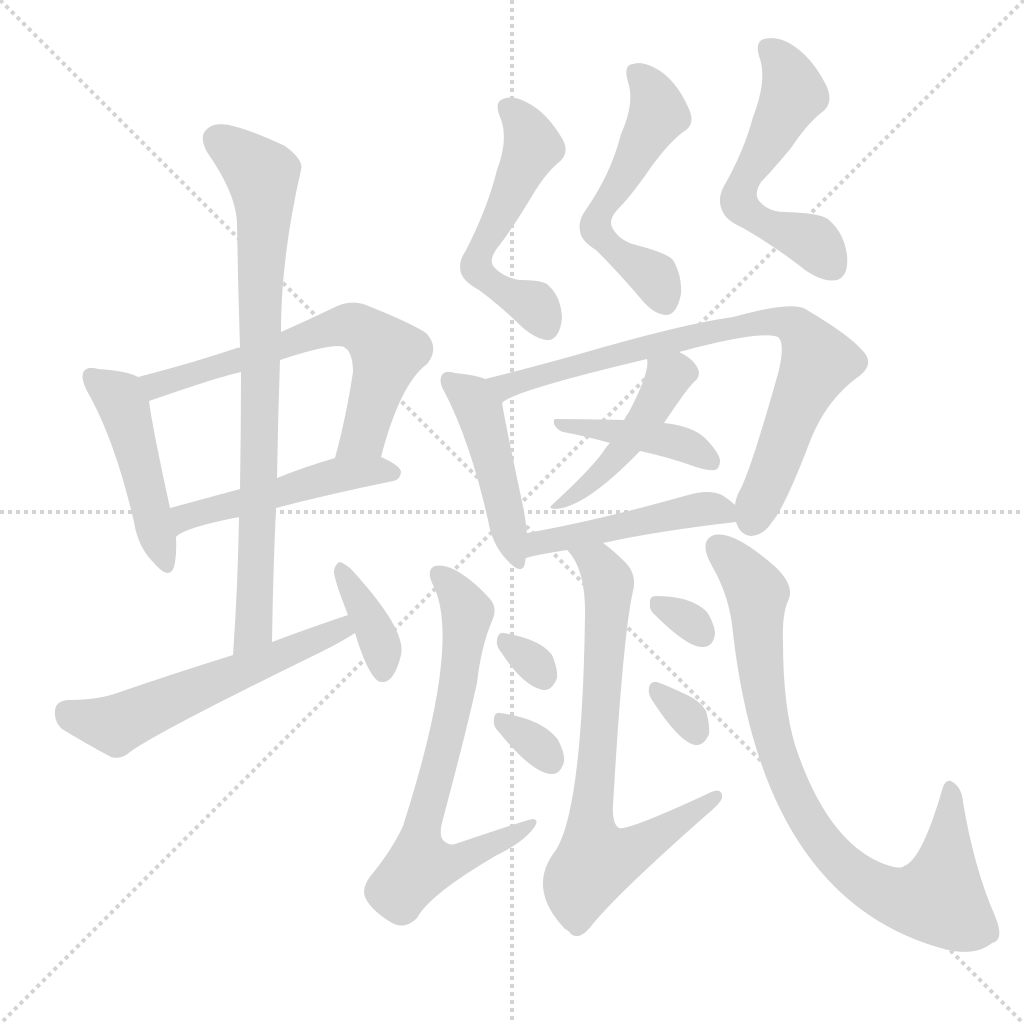
Character: La
Kangxi strokes: 21
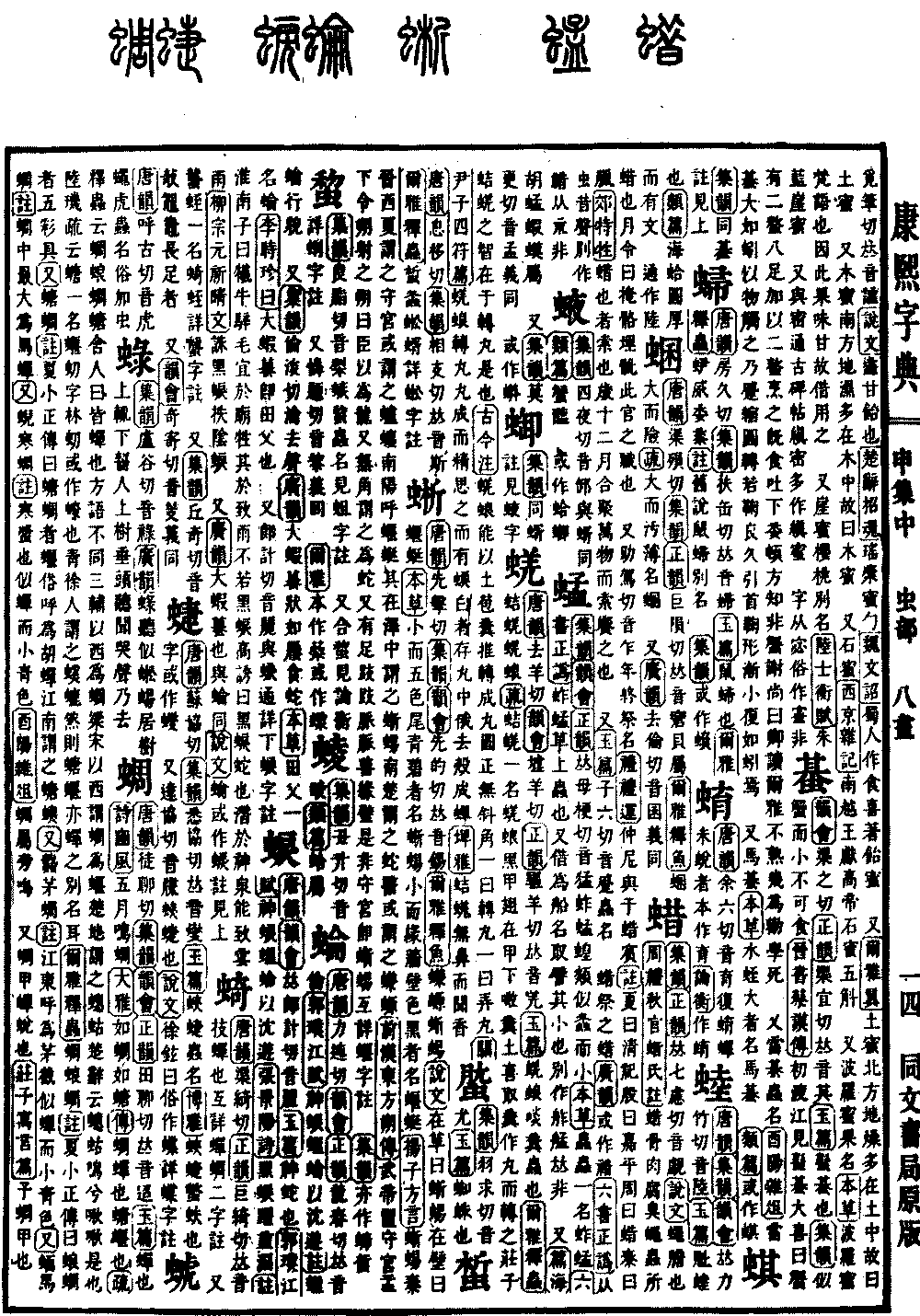
Page 1086, Entry 01
Pronounced la.
Jiyu (a dictionary of the Tang dynasty) and the Collection of Rhymes (Jiyun) and the Compendium of Rhymes (Yunhui) state that it is pronounced la. The Jade Chapters (Yupian) defines it as the dregs of honey. Lu Dian states that bees, when making honey, must take water from stagnant pools and inject it into the wax chambers before the honey can form. Therefore, it is called wax, as it is the residue of honey.
The Compendium of Materia Medica (Bencao) mentions insect white wax. Li Shizhen says the wax tree does not wither in any of the four seasons; it blooms with white flowers in the fifth month and bears fruit in clusters. Its insects are as large as nits or lice; they crawl along the tree branches, eat the sap, and spit out saliva. By peeling off the residue and refining it, wax is created.
There is also beeswax, which originates within honey. There is also water wax, and the leaves of the tree are slightly similar to the elm, and the sweet chinquapin tree can also be used to house insects to produce wax.
Book of Jin (Jinshu), Biography of Ruan Fu: Ruan Fu had a fondness for wooden clogs. Once, when someone came to visit him, they found him waxing his clogs. Ruan Fu said, How many pairs of clogs can a person wear in one lifetime?
Book of Jin, Biography of Shi Chong: Shi Chong was extravagant and used wax candles in place of firewood.
History of the Southern Dynasties (Nan Shi), Biography of Wang Sengqian: When he was young, he used candle drippings to cast a wax phoenix.
Also, winter plum (la mei) is the name of a flower.
Su Shi poem: Honeybees collect flowers to make yellow wax, and yellow wax made into flowers is also the same substance.
Also, the waxbill is the name of a bird.
Compendium of Materia Medica: The sanghu bird is also called the waxbill sparrow, whose beak is sometimes solidified in a yellow color like wax.
Wide Rhymes (Guangyun): Commonly written as a variant form.