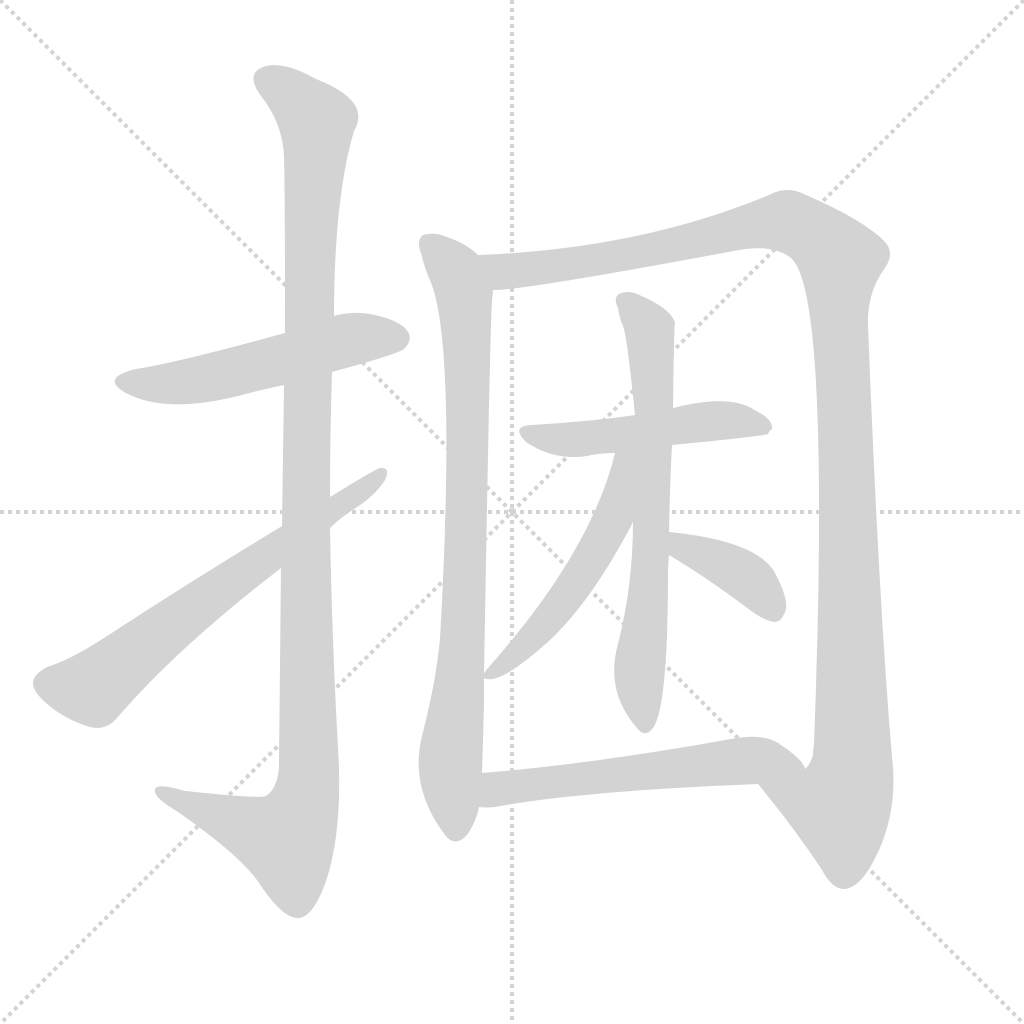
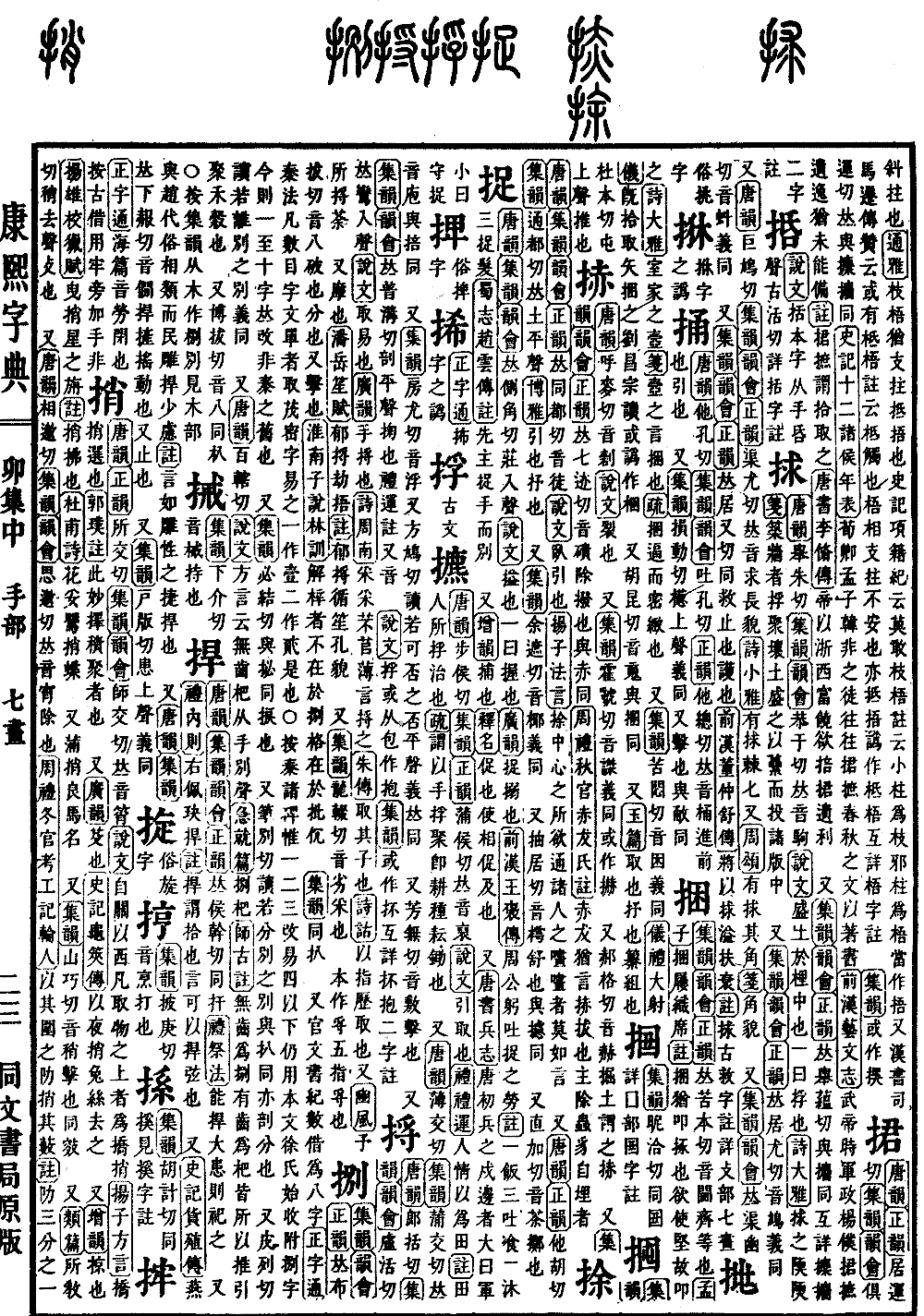
Mao Collection, Middle Volume
Radical: Hand (shǒu)
Kangxi strokes: 11
Page 433, Entry 07
Collected Rimes (Jiyun), Rime Meeting (Yunhui), and Orthodox Rimes (Zhengyun) state the pronunciation is kun (rising tone), same as the sound of kun. It means to align or make equal. In the Mencius (Mengzi), it states to bind shoes and weave mats. The commentary notes that binding is like knocking or beating; one wishes to make them firm, so they are beaten. In the Book of Odes (Shijing), Greater Odes (Daya), it refers to the inner chambers of a household. The commentary notes that the word for inner chamber is related to the word for binding. The sub-commentary states that binding implies being pressed and tightly woven.
Additionally, Collected Rimes (Jiyun) states the pronunciation is kun (falling tone), same as the sound of kun. The meaning is the same. In the Book of Etiquette and Ceremonial (Yili), Great Archery Ritual (Dasheyi), it states after gathering, take the arrows and bind them. Liu Changzong reads it this way. It is sometimes incorrectly written as the variant form kun.
Also pronounced hun (level tone). It is the same as the variant form.
Also, Jade Chapters (Yupian) defines it as to take, to scoop out, or to weave silk cords.
Textual research: In the sub-commentary to the Zhou Rites (Zhouli), Great Master of Military Form, the text has been corrected according to the original. In the Command of the Master of Archery (Sisheming), it mentions the connecting ropes of a net. According to the original text of the Book of Etiquette and Ceremonial (Yili), the Command of the Master of Archery has been corrected to Great Archery Ritual (Dasheyi).