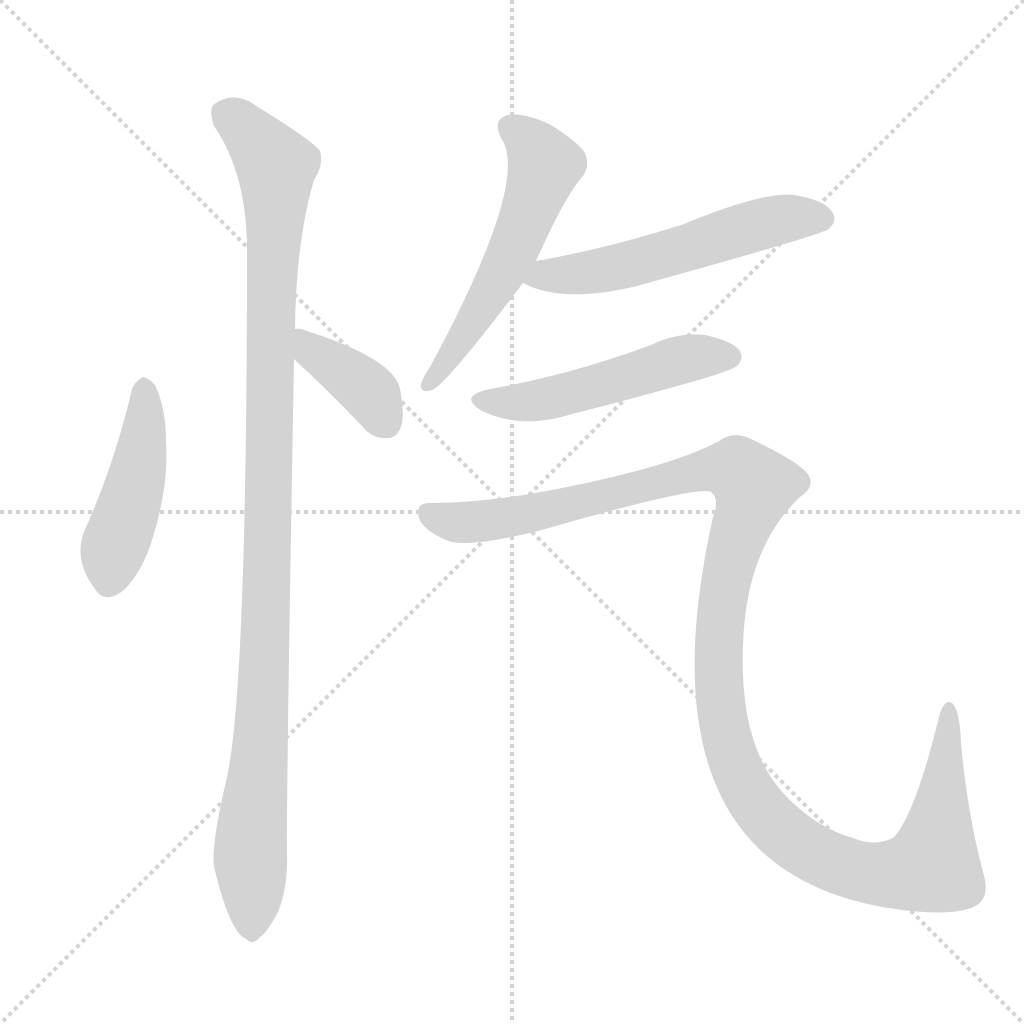
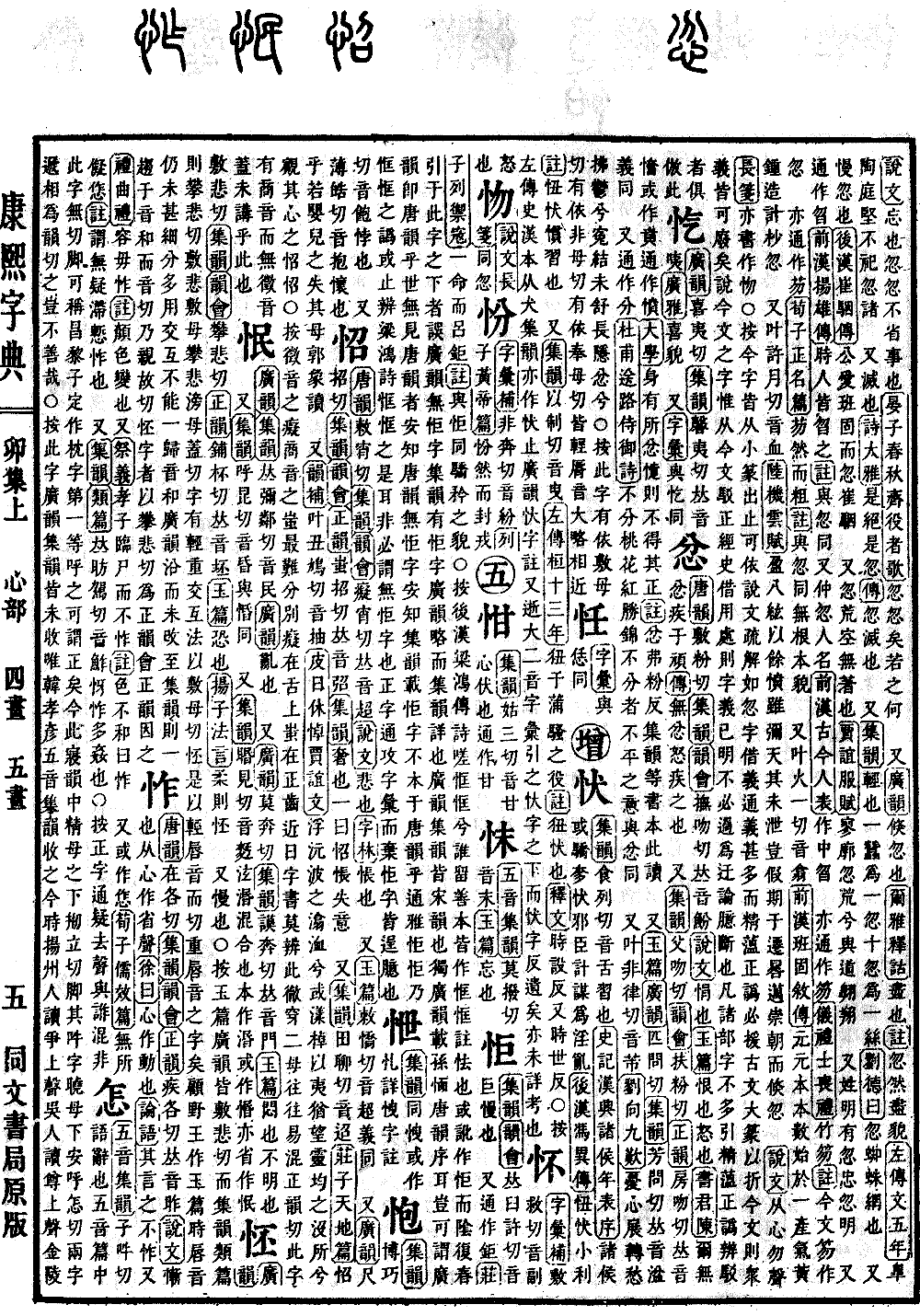
Mao Collection, Upper Volume
Radical: Heart (xīn)
Kàngxī stroke count: 14
Page 379, Entry 01
Pronounced yi.
Broad Rhymes (Guangyun): Described as the appearance of being happy and pleased.
Dictionary of Characters (Zihui): Same as the character (yi).
Pronounced xi.
Explaining Graphs and Analyzing Characters (Shuowen): The meaning of sighing.
Book of Odes (Shijing), Odes of Cao: Sighing, I wake and groan.
Note: According to Lu Deming, the pronunciation is given as (ku-ai).
Pronounced ke.
Broad Elegantia (Boya): The meaning of being filled or full.
Book of Rites (Liji), Meaning of Sacrifices (Jiyi): Upon going out and listening, there must be the sound of a sigh.
Pronounced kai.
Jade Compendium (Yupian): The meaning of anger or indignation.
Zuo Tradition (Zuo Zhuan), Fourth Year of Duke Wen: The feudal lords oppose that which the king is indignant toward, and present their achievements.
Commentary: Indignation and resentment.
Pronounced qi.
Same as the character (qi).
Approaching Classics (Erya), Explanation of Ancient Words: The meaning of to arrive or reach. Originally written as (qi). Sometimes written as (kai).
Book of Rites (Liji), Duke Ai’s Questions: If a ruler practices these five things, then he will reach the entire world.
Note: According to Explaining Graphs and Analyzing Characters (Shuowen), it is composed of the heart radical and the character (qi), with (qi) also serving as the phonetic, therefore the pronunciation (xu-ji) is the most accurate.