Xu Collection, Upper Volume
Radical: Metal (jīn)
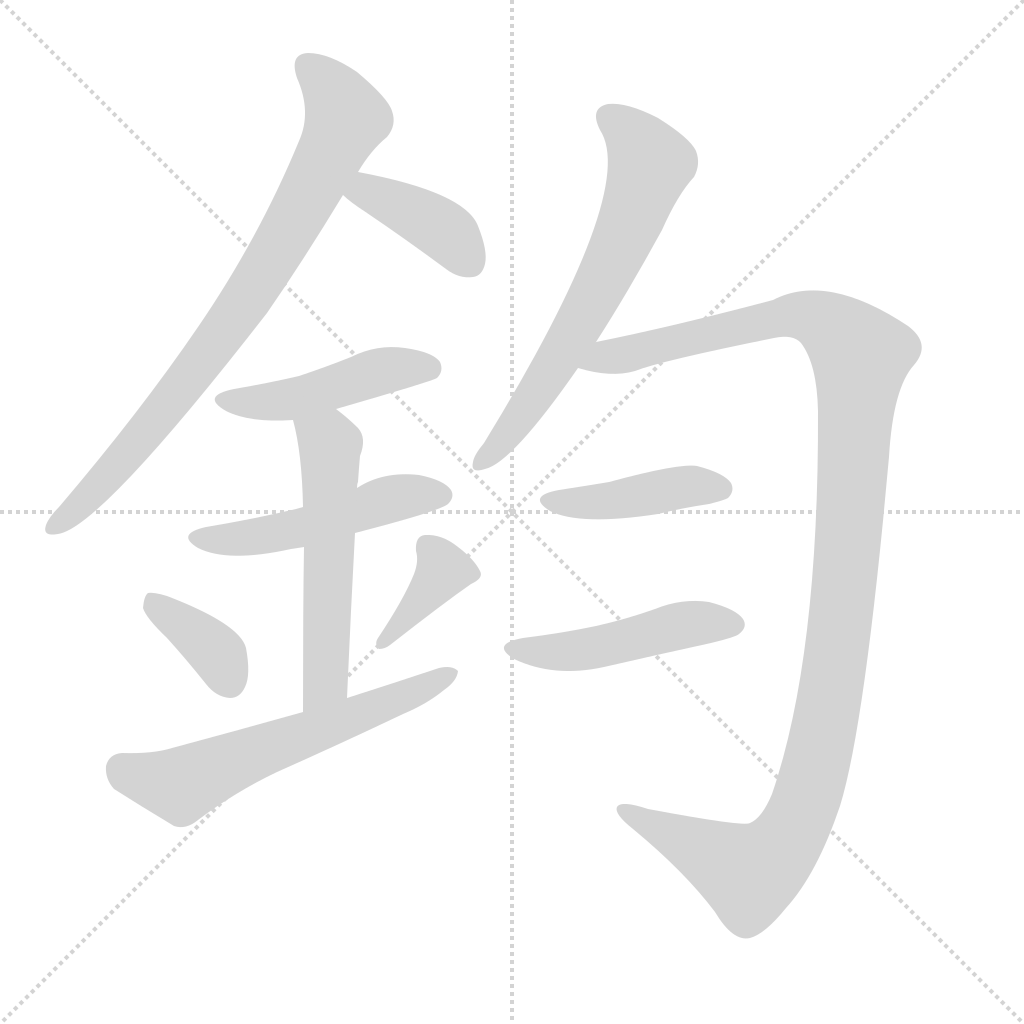
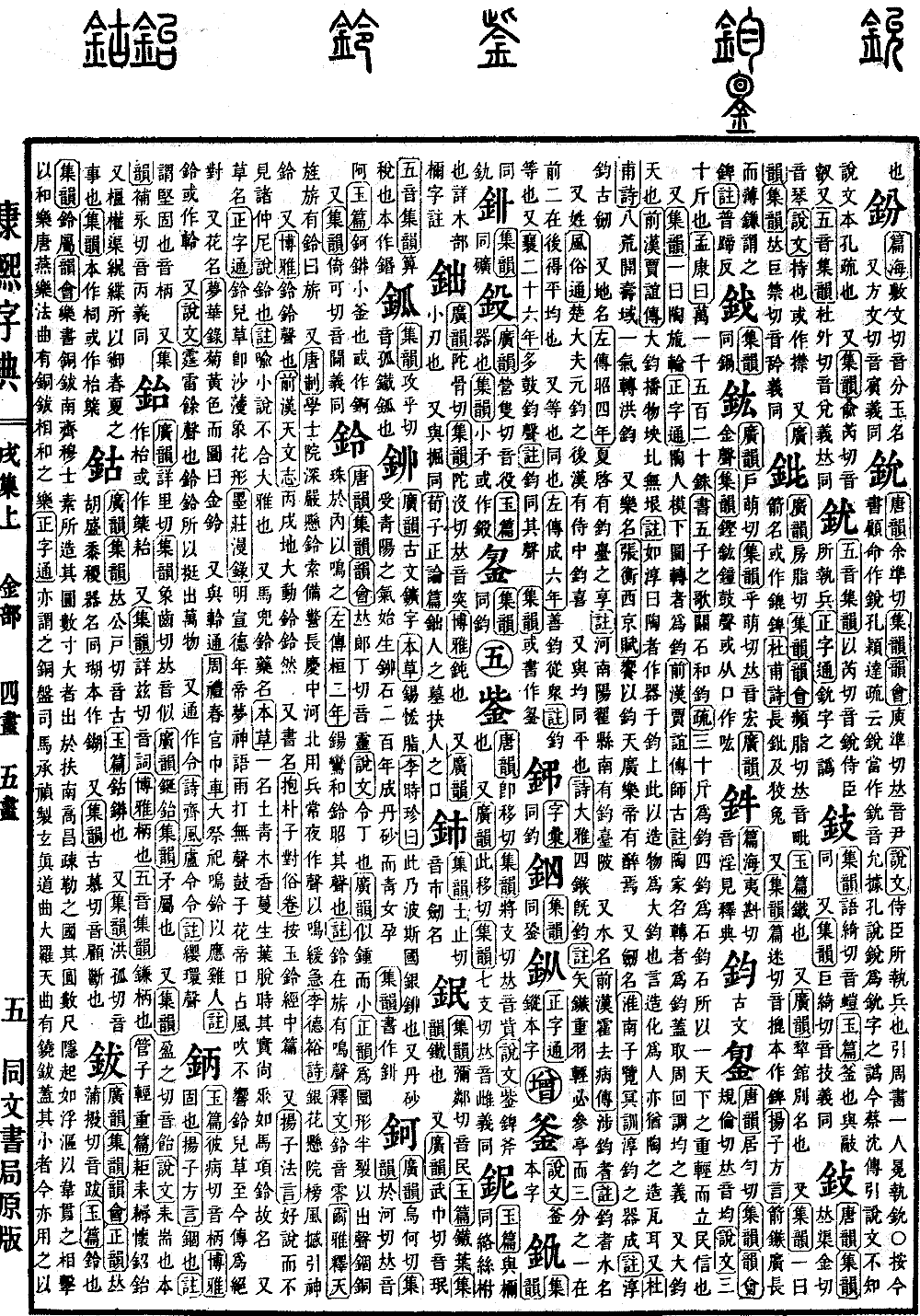
Jun; Kangxi strokes: 12; Page 1299, Entry 10
Ancient form: the character consisting of the radical metal with the phonetic component meaning to cut.
Tangyun: Pronounced jun. Jiyun and Yunhui: Pronounced jun.
Shuowen Jiezi: Thirty catties.
Meng Kang states: Eleven thousand five hundred and twenty zhu.
Book of Documents (Shujing), Song of the Five Brothers: The weight of the stone and the jun.
Commentary: Thirty catties make one jun, and four jun make one stone. The jun and stone are used to balance the weights of the empire and establish the trust of the people.
Also, Jiyun: One definition is the potter's wheel.
Zhengzitong: The rotating base of a potter's mold is called a jun.
Commentary by Shigu on the Biography of Jia Yi in the Book of Han (Hanshu): Potters call the rotating base a jun, taking the meaning of turning in a circle and balancing evenly.
Also, the Great Jun refers to Heaven.
Book of Han (Hanshu), Biography of Jia Yi: The Great Jun disseminates all things, vast and without limit.
Commentary: Ru Chun says, potters create vessels upon a jun, thus likening the creation of all things to a Great Jun. It means that nature's creation of humanity is like a potter making tiles.
Also, in the poetry of Du Fu: The eight wildernesses open to a realm of longevity, one breath turns the Great Jun.
Also, a name of a musical composition.
Zhang Heng, Western Metropolis Rhapsody (Xijing Fu): Feasted with the Junian wide music, and the Emperor was intoxicated.
Also, a name for a sword.
Huainanzi, Embracing the Spirit (Lanming Xun): When the Chunjun implement was finished.
Commentary: Chunjun is an ancient sword.
Also, a place name.
Zuo Tradition (Zuo Zhuan), Year 4 of Duke Zhao: Xia Qi held a feast at Jun Terrace.
Commentary: There is Jun Terrace slope south of Yangdi County in Henan.
Also, a water name.
Book of Han (Hanshu), Biography of Huo Qubing: Waded across the Jun.
Commentary: Junqi is the name of a body of water.
Also, a surname.
Customs and Traditions (Fengsu Tong): Descendants of the Chu official Yuan Jun; during the Han dynasty, there was the attendant Jun Xi.
Also, equivalent to the character for equal. Meaning to level.
Book of Odes (Shijing), Greater Odes: The four arrowheads are already balanced.
Commentary: The arrow head is heavy and the feathers are light; one must adjust them to divide the weight into three parts, one in front and two in the back, to achieve equality.
Also, to be equal; the same.
Zuo Tradition (Zuo Zhuan), Year 6 of Duke Cheng: When ability is equal, follow the multitude.
Commentary: Jun means equal.
Also, Year 26 of Duke Xiang: With many drums making an equal sound.
Commentary: Jun means to make the sounds the same.
Jiyun: Sometimes written as a variant form.