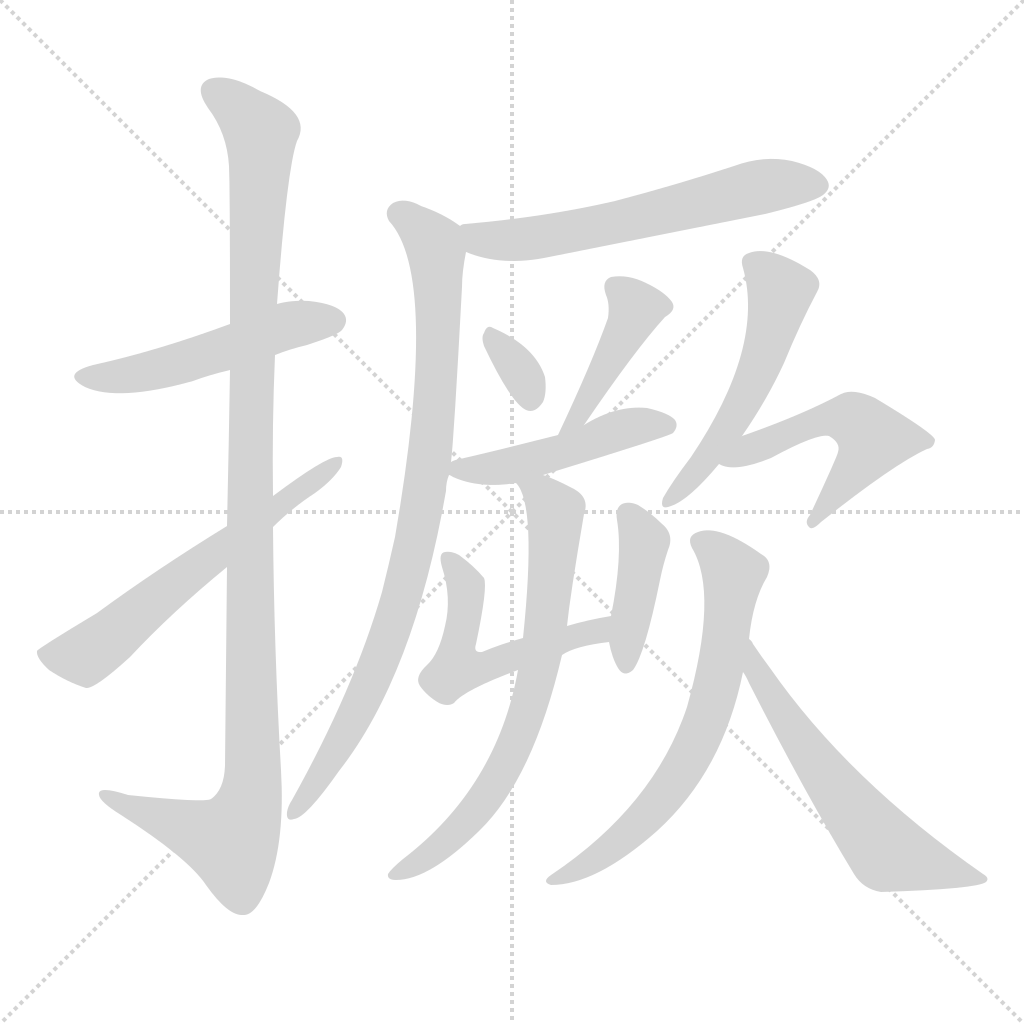
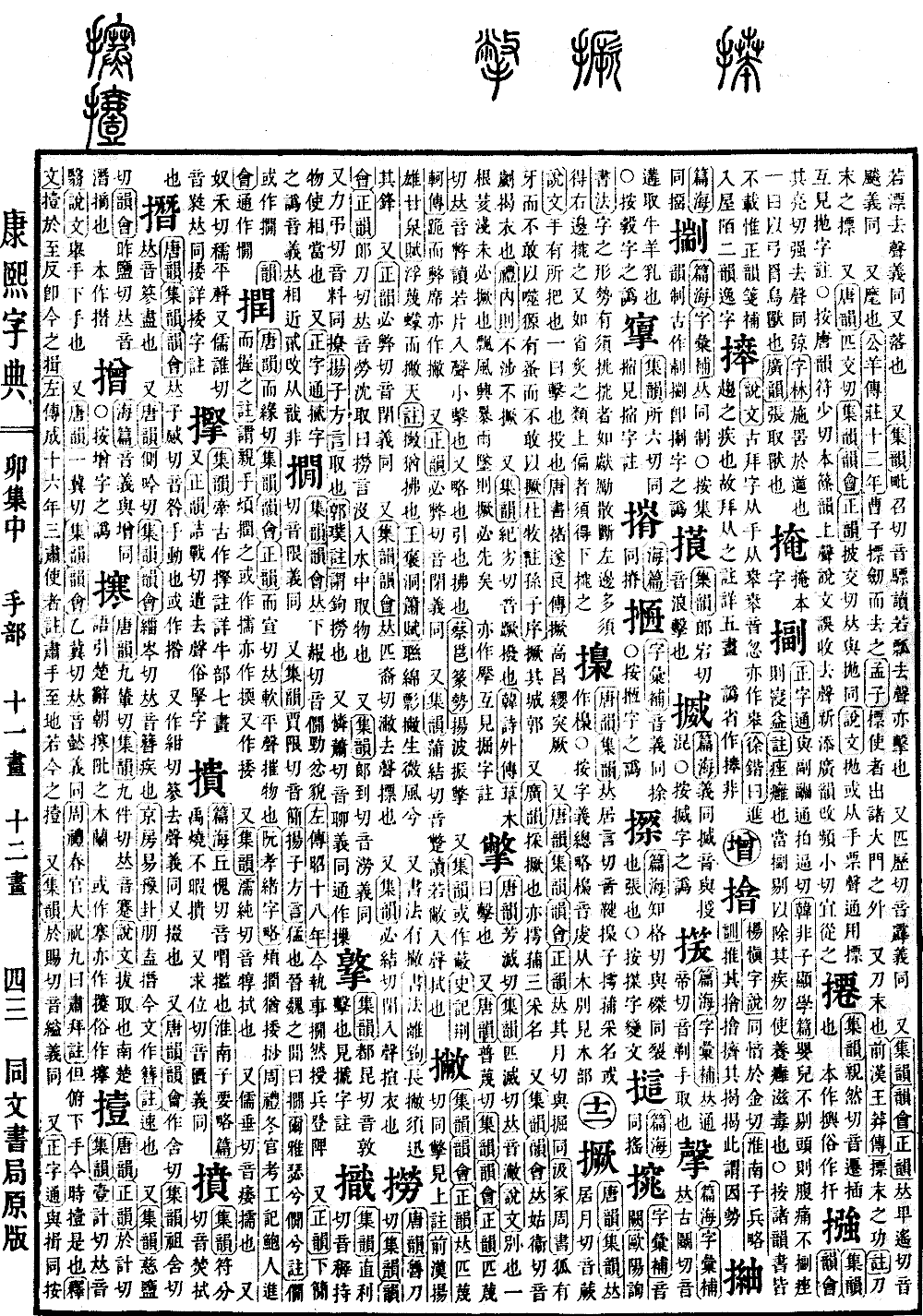
Mao Collection, Middle Volume. Radical: Hand (shǒu). Kangxi strokes: 16. Page 453, Entry 20.
According to Tang Rhymes (Tangyun) and Collection of Rhymes (Jiyun), it is pronounced jue. According to Explaining Graphs and Analyzing Characters (Shuowen), it means to hold something in the hand. Another definition is to strike or to throw. In the History of the Tang Dynasty (Tangshu), Biography of Chu Suiliang, it is written: to topple Gaochang and bind the Turks.
Also, according to Tang Rhymes (Tangyun), Collection of Rhymes (Jiyun), Rhyme Gathering (Yunhui), and Correct Rhymes (Zhengyun), it is pronounced jue. It is the same as the character for dig (jue). In the Bamboo Annals of the Zhou Dynasty (Jizhu Zhou-shu), it is written: The fox has fangs but dares not use them to bite; the badger has claws but dares not use them to dig. In Du Mu’s Preface to the Notes on Sunzi (Sunzi zhu), it is written: to raze their city walls.
Also, according to Broad Rhymes (Guangyun), it means to pick or pluck. It is also the name of a winning combination in the gambling game known as chupu.
Also, according to Collection of Rhymes (Jiyun) and Rhyme Gathering (Yunhui), it is pronounced gui. It means to lift one's garments. In the Book of Rites (Liji), Inner Chapters (Neize), it is written: Do not wade through water if you have not lifted your garments.
Also, according to Collection of Rhymes (Jiyun), it is pronounced jue. It means to stir or turn over. In Han’s Illustrations of the Odes (Han shi wai zhuan), it is written: If the roots of plants and trees are shallow, they will not necessarily be pulled up. When a whirlwind arises and a violent rain falls, those that are pulled up will be the first to go. It is also written in a variant form. See the note for the character for dig (jue) for additional information.