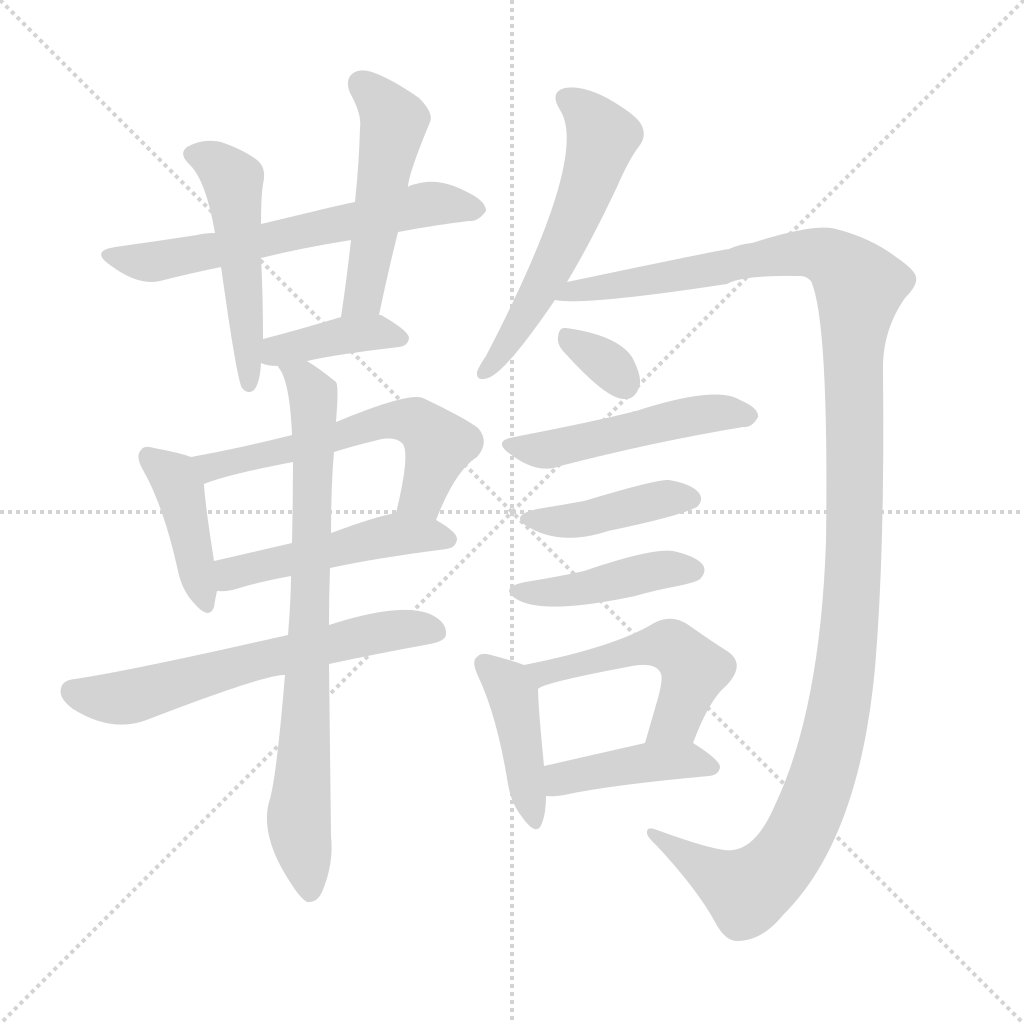
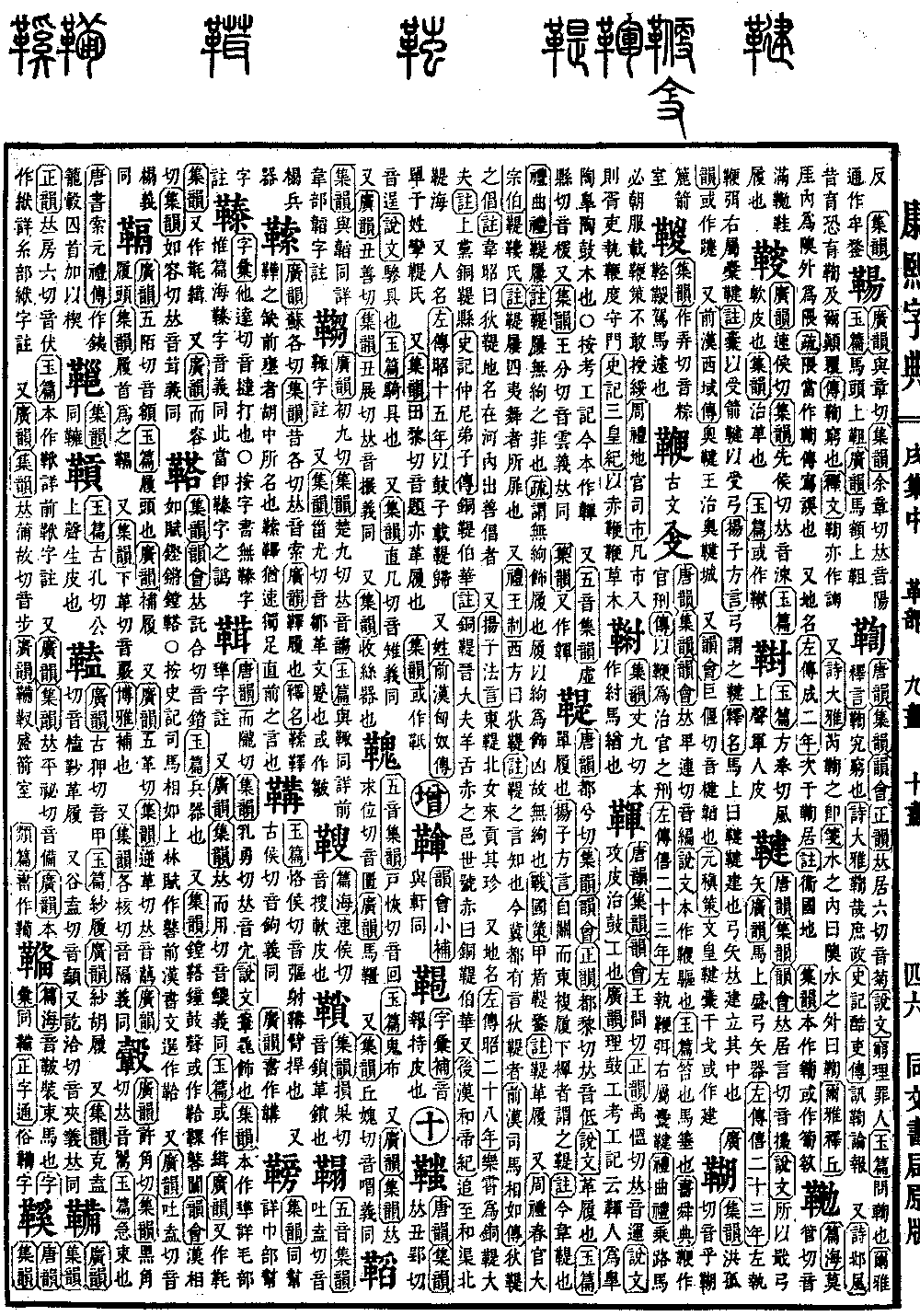
Xu Collection, Middle Volume. Radical: Leather (gé). Kangxi stroke count: 18. Page 1390, Entry 02.
Tang Rhyme (Tangyun), Collected Rhymes (Jiyun), Dictionary of Rhymes (Yunhui), and Correct Rhymes (Zhengyun) state the pronunciation is ju. According to the Explaining Graphs and Analyzing Characters (Shuowen Jiezi), it means to investigate a criminal to the full extent of the law. The Jade Treasury (Yupian) defines it as to interrogate. The Approaching Elegance (Erya), section on explanations of words, defines it as to investigate thoroughly. The Book of Odes (Shijing), Greater Odes, states: All government affairs are exhausted. The Records of the Grand Historian (Shiji), Biography of Harsh Officials, notes: Interrogation and sentencing were reported.
Also, the Book of Odes (Shijing), Odes of Bei, states: Formerly I was afraid of being brought to exhaustion, and that you would suffer ruin. The Commentary states: It means exhaustion. The Explanation of the Text notes: It is also written in a variant form (zhuan).
Also, the Book of Odes (Shijing), Greater Odes, mentions the banks of the Rui River. The Mao Commentary states: The area within the curve of the water is called yu, and the area outside the water is called ju. The Approaching Elegance (Erya), section on explanations of hills, states: Inside the bank is called yu, and the outside is called wei. The Subcommentary states: Wei should be written as ju; the transcript is in error.
Also a place name. The Zuo Commentary (Zuozhuan), second year of Duke Cheng, records: Stationed at Juju. The Annotation states: A location in the state of Wei. Collected Rhymes (Jiyun) notes that this is the original form of the character. It is also written in other variant forms.