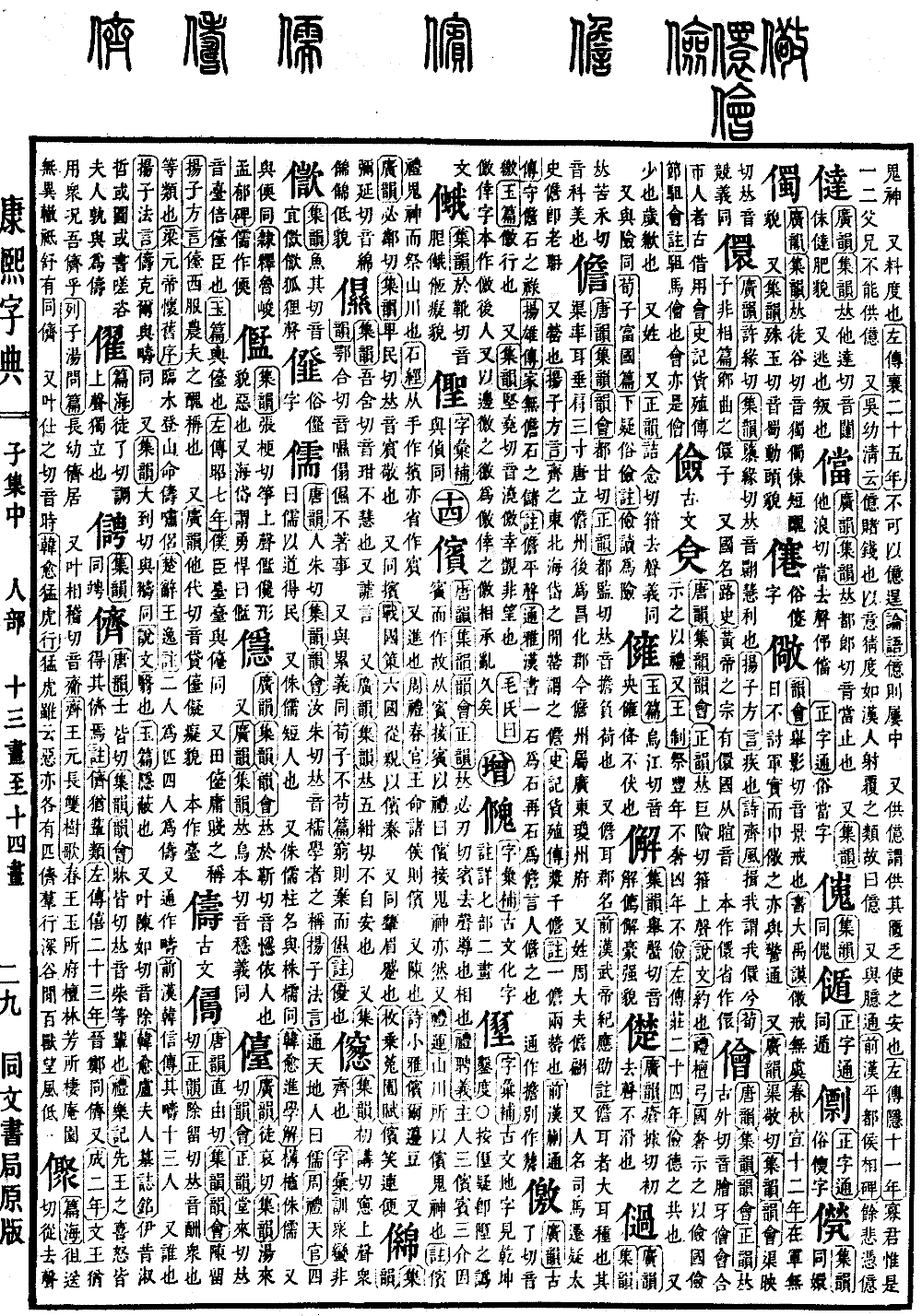
Zi Collection, Middle Volume
Radical: Person (rén)
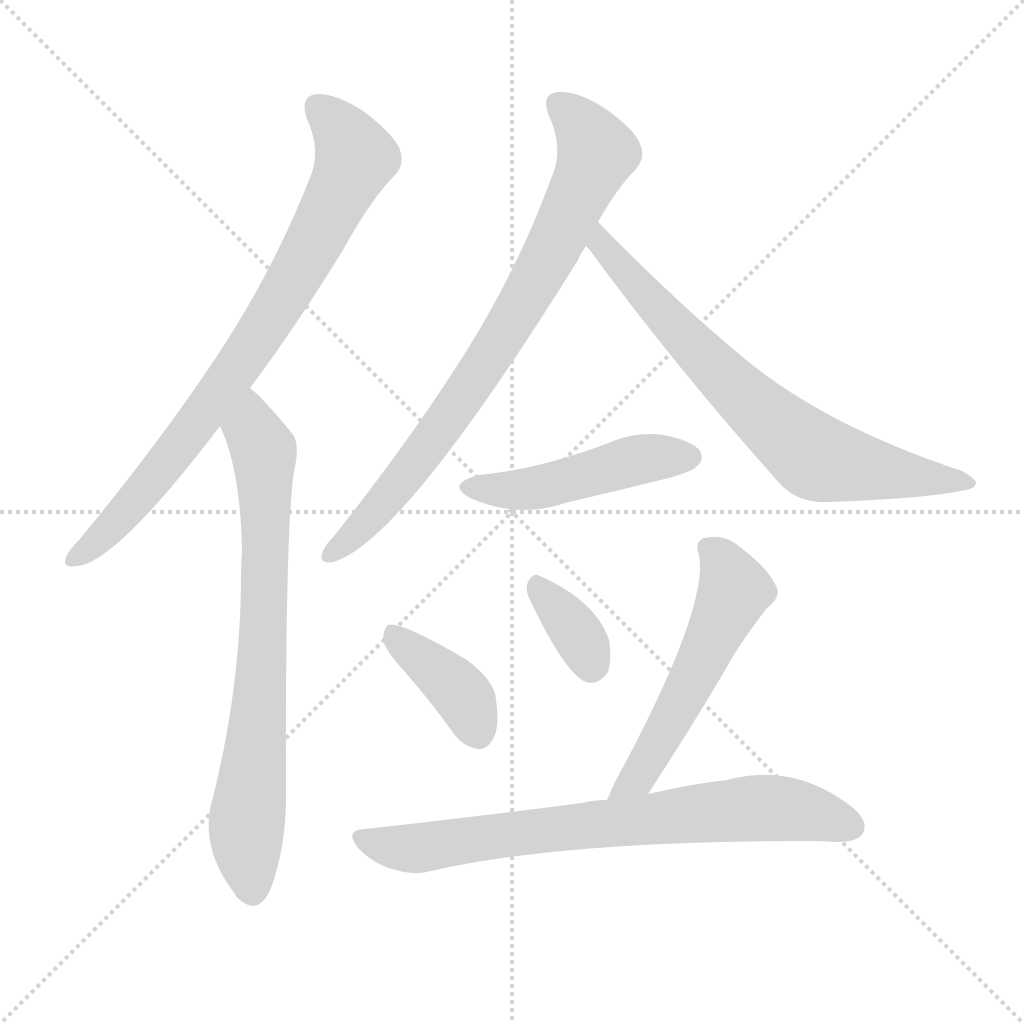
俭
Kangxi Strokes: 15
Page 119, Entry 03
Ancient form. Tang Rhyme (Tangyun), Collection Rhyme (Jiyun), Rhyme Meetings (Yunhui), and Orthodox Rhymes (Zhengyun) state it is pronounced jian (rising tone). Explaining Graphs and Analyzing Characters (Shuowen) defines it as to constrain or to economize. Book of Rites (Liji), Tan Gong chapter states: When the state is extravagant, use thrift to set an example; when the state is thrifty, use ritual propriety to set an example. Furthermore, in the Royal Regulations (Wangzhi), it states that for sacrificial rites, one should not be extravagant during years of abundance, nor should one be stingy during years of famine. Zuo Tradition (Zuozhuan), Year 24 of Duke Zhuang states: Thrift is the common standard for virtuous conduct. It also refers to a small amount or a poor harvest year. It is also a surname. Furthermore, Orthodox Rhymes (Zhengyun) states it is pronounced jie (falling tone). The meaning is the same. It is also synonymous with dangerous. Xunzi, Rich Nation chapter states: The common people are suspicious and the customs are dangerous (jian). Commentary: Jian is read as dangerous (xian).