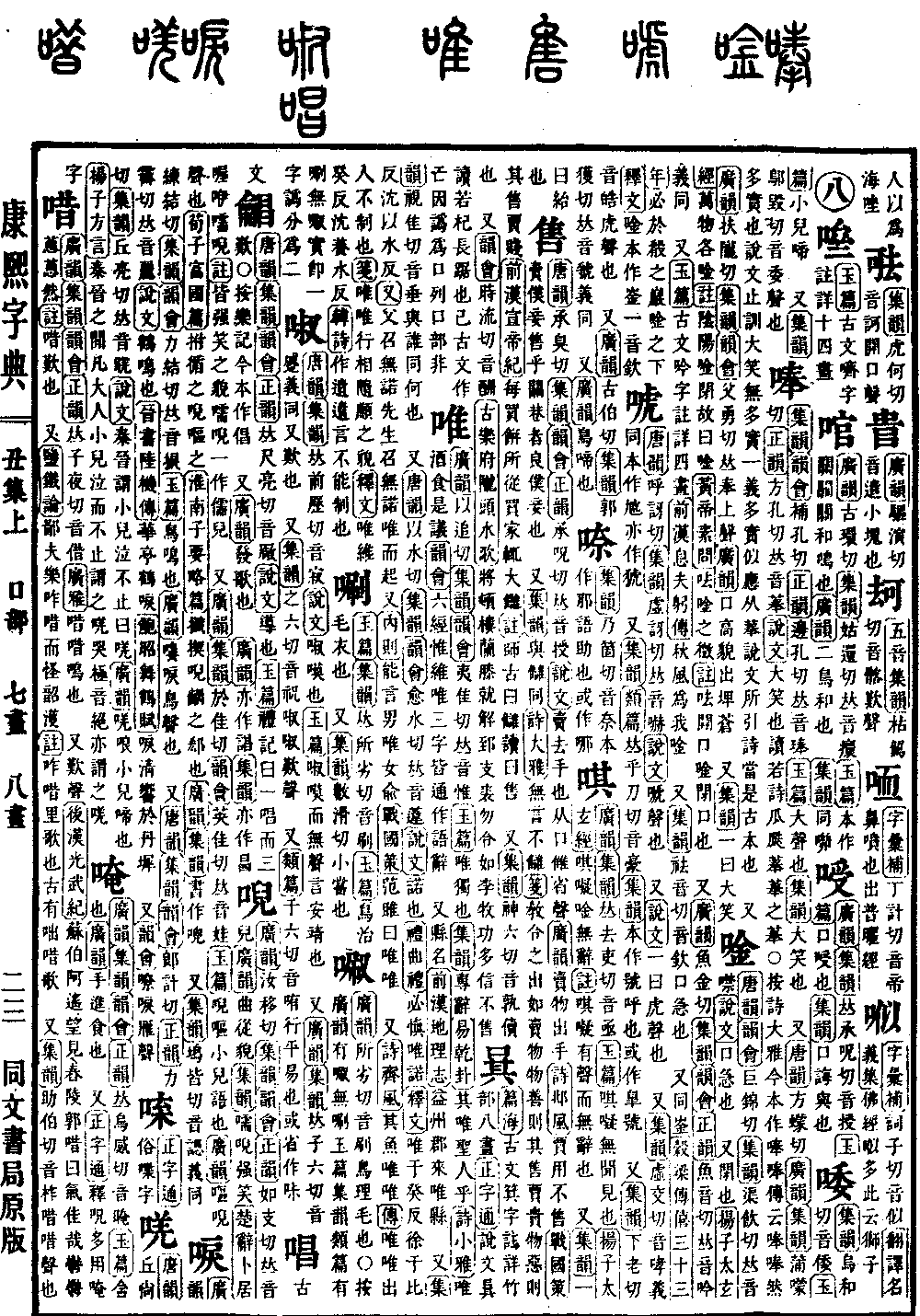
Chou Collection, Upper Volume
Radical: Mouth (kǒu)
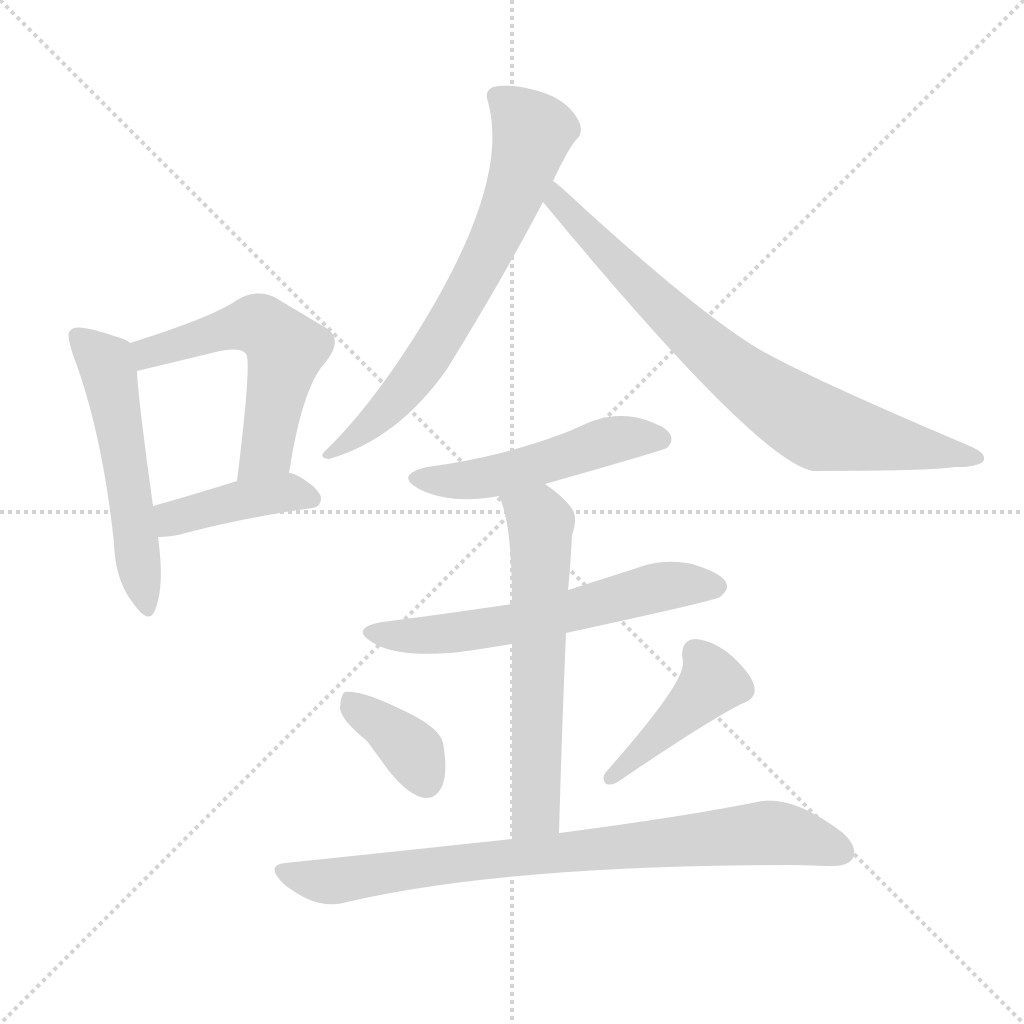
Character: jin
Kangxi strokes: 11
Page 193, Entry 11
According to Tang Rhymes (Tangyun) and Rhyme Collection (Yunhui), pronounced jin (falling-rising tone). According to Collected Rhymes (Jiyun), pronounced yin (rising tone), with a pronunciation identical to jin (falling-rising tone).
According to Explaining Graphs and Analyzing Characters (Shuowen), it refers to the mouth being tightly closed. It also carries the meaning of being sealed or shut.
According to Yangzi: Great Mystery (Taixuanjing), all things are each closed. The commentary notes that the closure of yin and yang is what is called jin.
According to Yellow Emperor's Inner Canon: Basic Questions (Huangdi Suwen), regarding the signs of opening and closing. The commentary notes that to open refers to opening the mouth, and to close refers to closing the mouth.
Additionally, according to Extensive Rhymes (Guangyun), pronounced yin (level tone). According to Collected Rhymes (Jiyun), Rhyme Collection (Yunhui), and Correct Rhymes (Zhengyun), pronounced yin (level tone), with a pronunciation identical to yin (level tone). The meaning is the same.
Additionally, according to Jade Chapters (Yupian), this is the ancient form of the character for chanting (yin). For a detailed explanation, see the entry under four strokes.
According to History of the Former Han (Qianhan shu), Biography of Xifu Gong, the autumn wind chants for me.
Additionally, according to Collected Rhymes (Jiyun), pronounced qin (level tone), with a pronunciation identical to qin (level tone). It refers to the mouth being tightly closed.
It is also identical to the character yin (high mountain peak). According to Guliang Commentary to the Spring and Autumn Annals (Guliang zhuan), 33rd Year of Duke Xi, one must be at the base of the mountain cliffs. The textual explanation notes that the original text for this character was yin (high mountain peak). Another pronunciation is identical to qin (level tone).