You Collection, Lower Volume
Radical: Carriage (chē)
Kangxi Strokes: 16
Page 1246, Entry 14
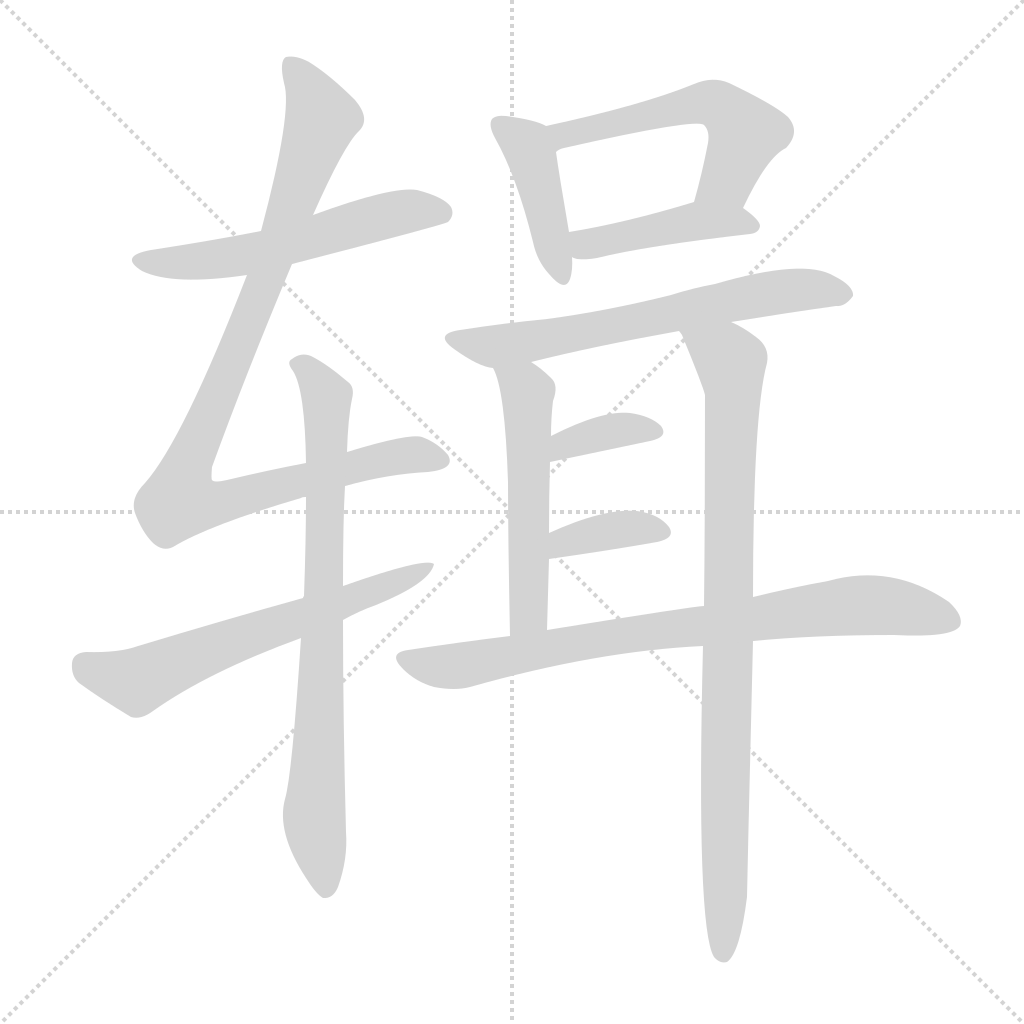
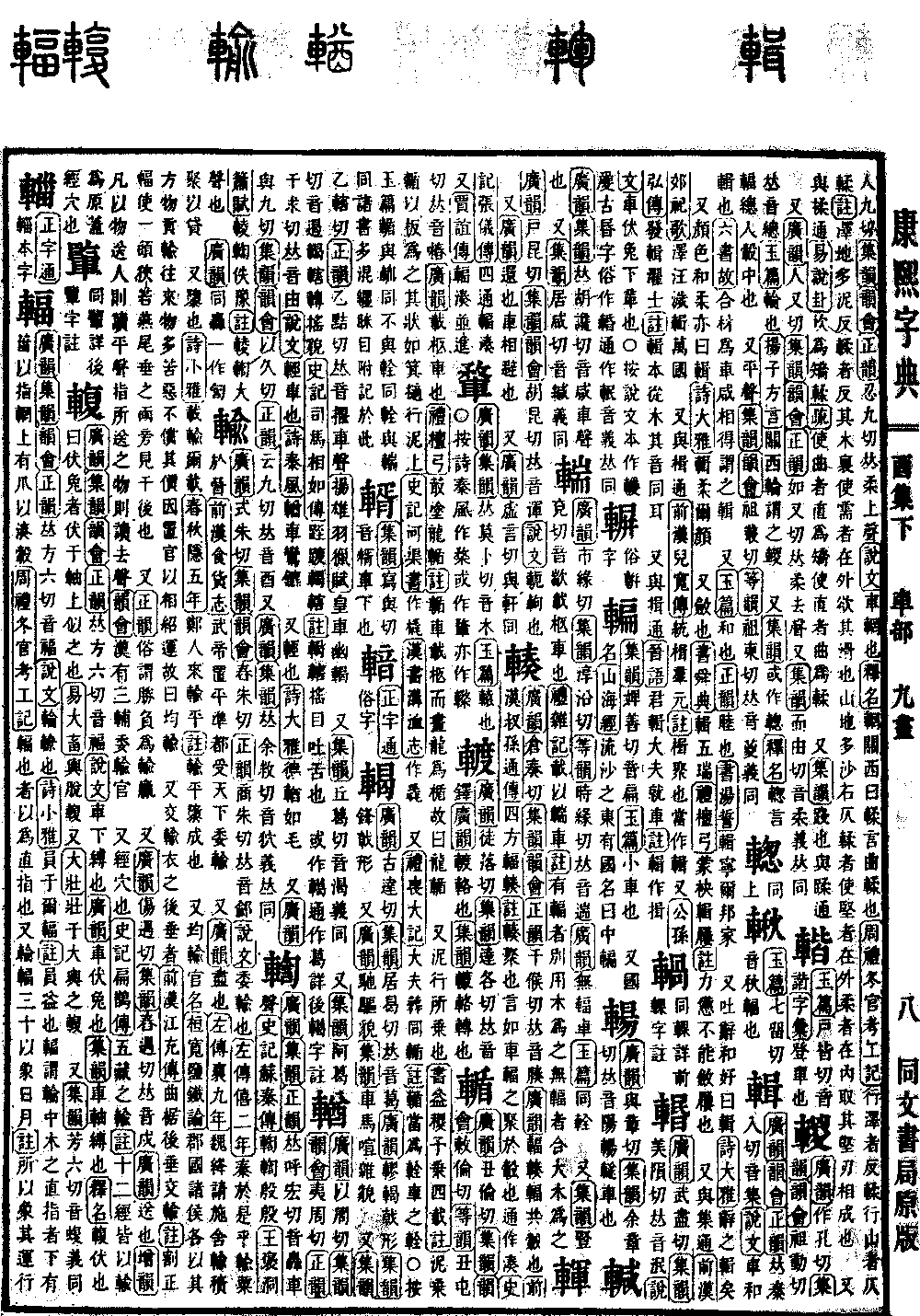
According to The Extensive Dictionary of Sounds and Meanings (Guangyun), The Combined Rhymes (Yunhui), and The Correct Rhymes (Zhengyun), the pronunciation is ji. According to The Explanation of Simple and Compound Characters (Shuowen), it refers to the harmony and assembly of a carriage. According to The Six Writings Commentary (Liushugu), it describes the joining of materials to construct a carriage such that all parts fit together well. It also means to harmonize, according to The Jade Encyclopedia (Yupian), and to maintain concord, according to The Correct Rhymes (Zhengyun). In the Book of Documents (Shangshu), specifically the Oath of Tang (Tangshi), it means to harmonize and bring peace to your state and family. It also refers to speaking in a harmonious and amiable manner. In the Book of Odes (Shijing), in the Greater Odes section (Daya), it is written that words should be harmonious. It further describes a gentle and amiable demeanor, as noted in the Greater Odes (Daya) section of the Book of Odes (Shijing). It also means to gather or collect. In the Book of Documents (Shangshu), in the Canon of Shun (Shundian), it refers to gathering the five ritual jades. In the Book of Rites (Liji), in the Tan Gong section, it describes pulling one's clothes and gathering one's sandals; the commentary notes this refers to being so exhausted that one cannot gather one's sandals. It is also used interchangeably with the character for collect (ji). In the History of the Former Han (Qianhan shu), in the Songs of Suburban Sacrifices (Jiaosi ge), it describes vast waters gathering all nations. It is also used interchangeably with the character for oar (ji). In the History of the Former Han (Qianhan shu), in the Biography of Er Kuan, it refers to unifying and gathering the multitude; the commentary notes that the character for oar (ji) signifies gathering and should be written as this character. In the Biography of Gongsun Hong, it refers to deploying and gathering sailors; the commentary notes that the original character included the radical for wood, but the pronunciation is the same. It is also used interchangeably with the character for bow or salute (yi). In the Discourses of the States (Guoyu), specifically the Discourses of Jin (Jinyu), it refers to the ruler bowing to the grandees as they approach the carriages; the commentary notes that this character is used for the act of bowing.