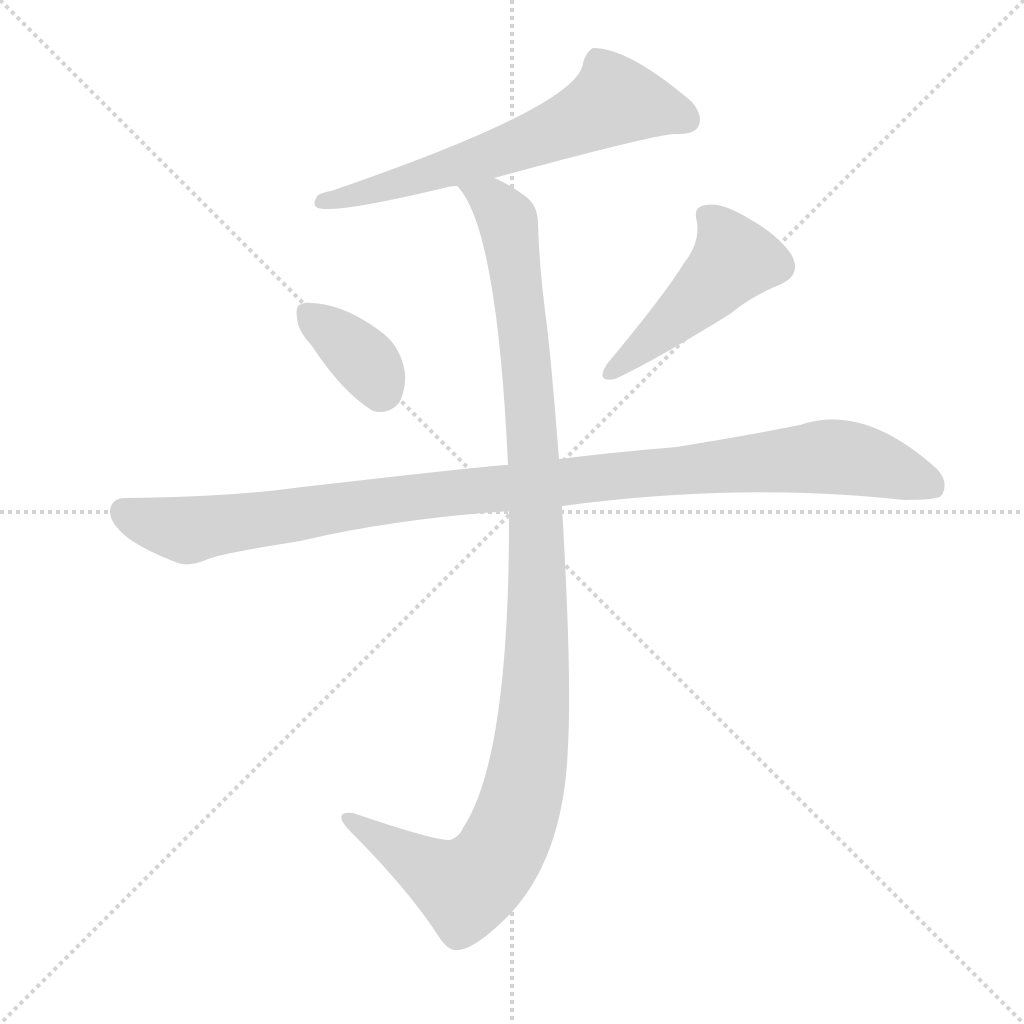
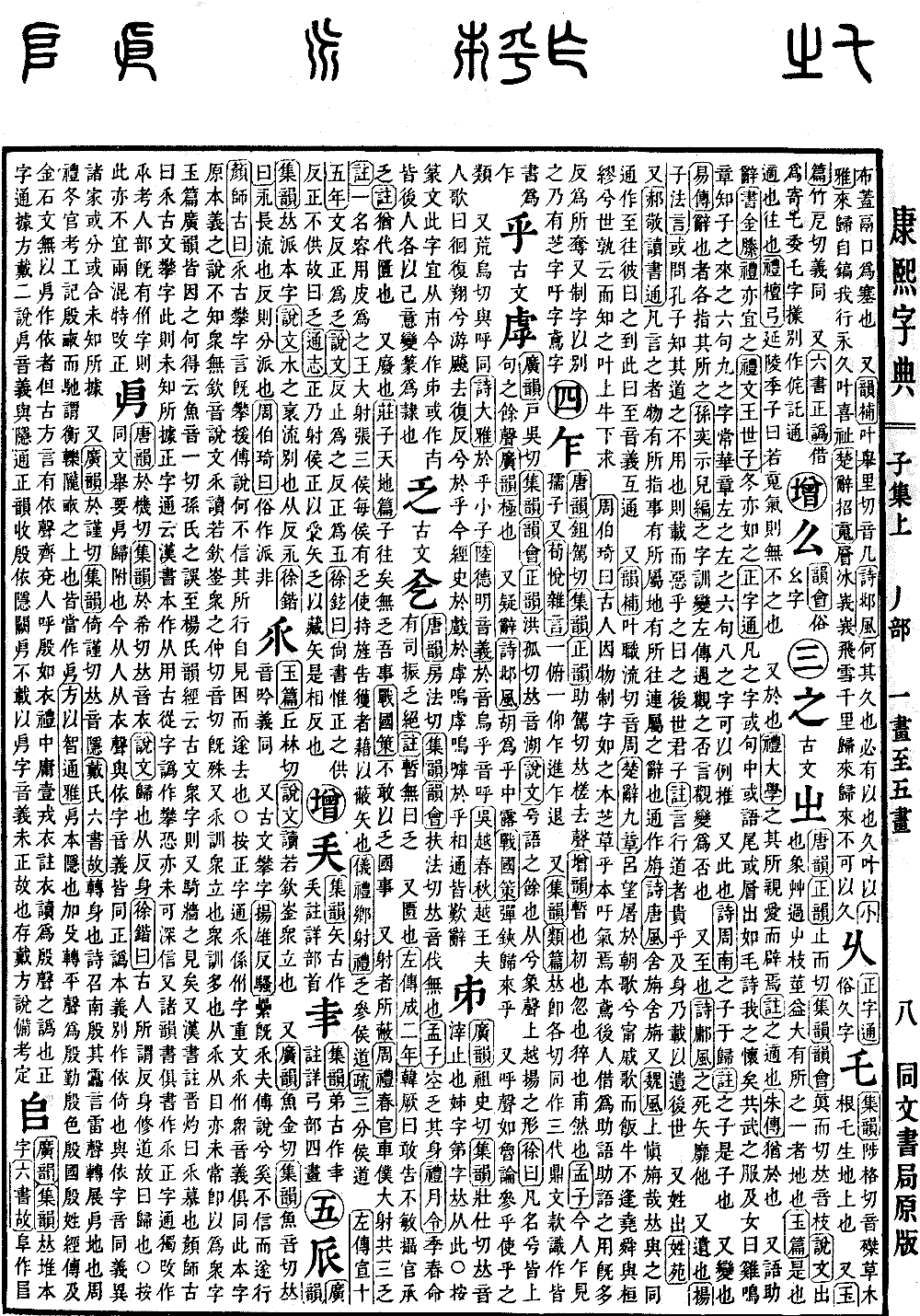
Zi Collection, Page Position: Upper. Radical: Slash (piě). hu. Kangxi Stroke Count: 5. Page 82, Position 07.
The ancient form is written as hu.
The Expanded Rhymes (Guangyun) indicates the pronunciation as a combination of the sounds hù and wú.
The Collected Rhymes (Jiyun), Rhyme Assembly (Yunhui), and Correct Rhymes (Zhengyun) indicate the pronunciation as a combination of hóng and gū, sounding similar to hú.
Explaining Graphs and Analyzing Characters (Shuowen Jiezi) explains it as the lingering sound following the particle xī. The character form is derived from xī, symbolizing the shape of sound rising and surpassing.
Xu states: Any particle containing xī represents the lingering sound of the preceding phrase.
The Expanded Rhymes also explains it as expressing a superlative or extreme tone.
It is also used as an interrogative particle.
For example, in the Book of Odes (Shijing): Why are you in the midst of the dew?
In the Strategies of the Warring States (Zhan Guo Ce): Tapping the sword hilt, shall I return?
It is also used as a calling sound.
For instance, in the Analects (Lunyu), it is used in phrases like Shen, oh! or The messenger, oh!
It is also pronounced with the combination of huāng and wū, which is the same as the character hū.
For example, in the Book of Odes: Alas, you young man!
Lu Deming's Pronunciation and Meaning (Yinyi) notes: wū is read as wū, and hū is read as hū.
The Spring and Autumn Annals of Wu and Yue (Wu Yue Chunqiu) records that the wife of the King of Yue sang: Hovering and soaring, the wandering gale leaves and returns. Alas!
In current Classics and Histories, terms such as wūhū, wūhū, wūhū, wūhū, and wūhū are interchangeable, all serving as exclamations.