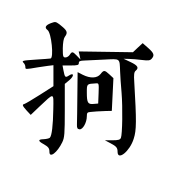
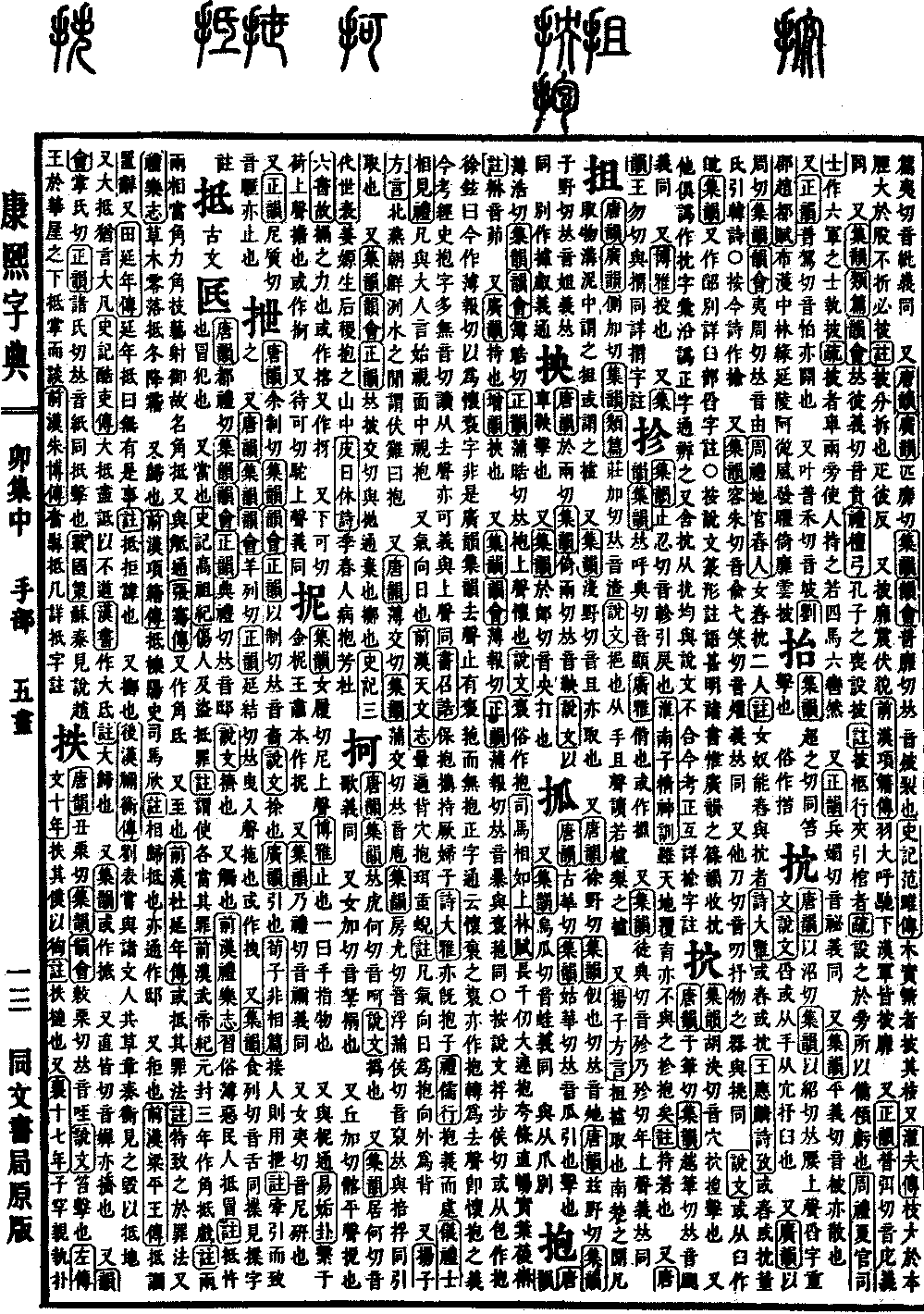
Mao Collection, Middle Volume. Radical: Hand (shǒu). Kangxi strokes: 9. Page 423, Entry 09.
According to the Tang Dynasty Rhymes (Tangyun) and the Collected Rhymes (Jiyun), it is pronounced he. The sound is the same as the character for laugh or exclamation. The Explaining Graphs and Analyzing Characters (Shuowen Jiezi) defines it as meaning to gesture or beckon.
Also, according to the Collected Rhymes (Jiyun), it is pronounced ge. The sound is the same as the character for song. The meaning is the same.
Also, it is pronounced na. The meaning is to grasp or hold.
Also, it is pronounced qia (flat tone). It means to be.
The Six Categories of Characters (Liushu Gu) defines it as using force to throttle or choke. Some editions write it as a variant form (ge). It is also written in another variant form.
Also, it is pronounced he (rising tone). It means to carry on the shoulder. Some editions write it as a variant form.
Also, it is pronounced tuo (rising tone). The meaning is the same.