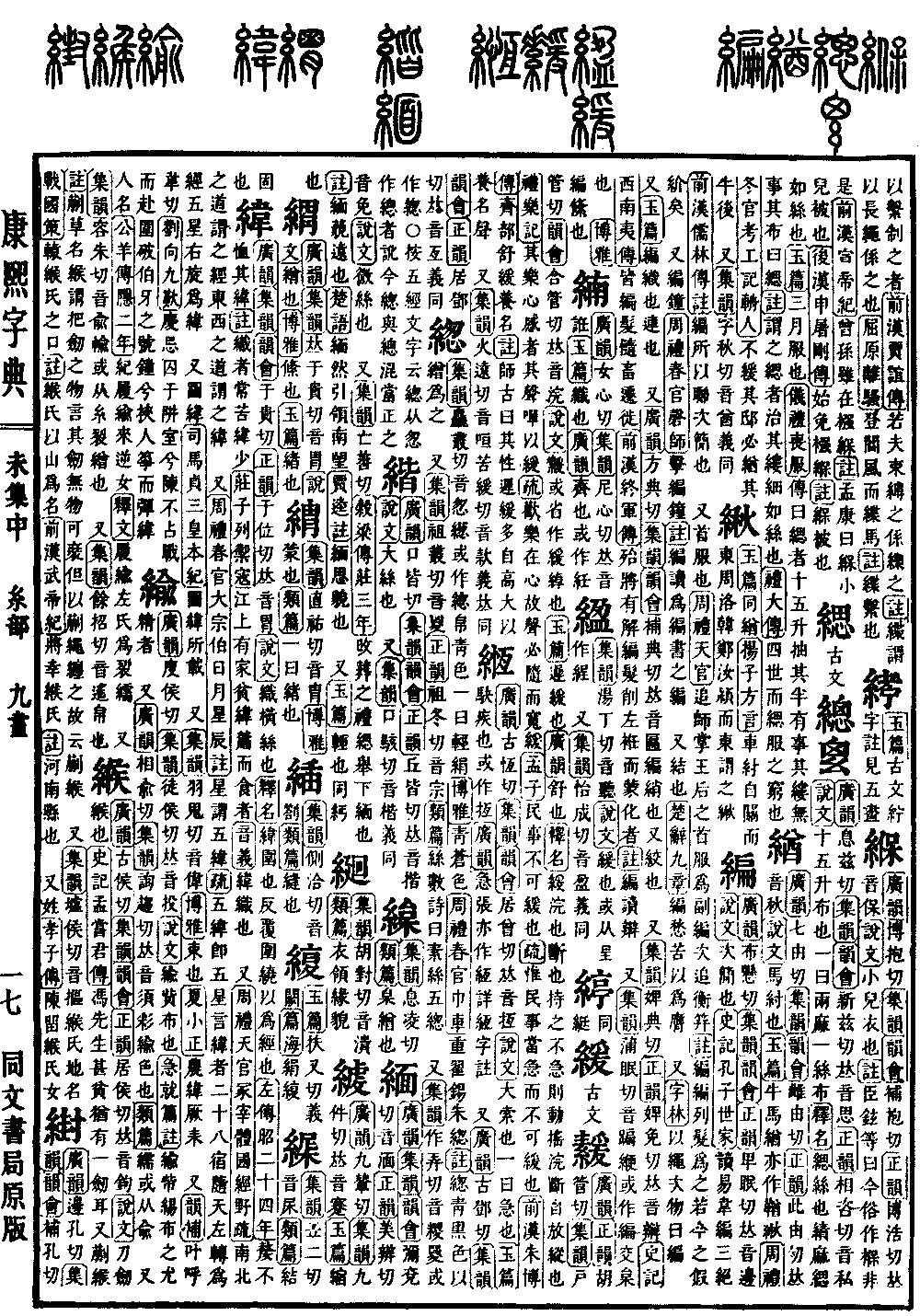
Wei Collection, Middle Volume
Radical: Silk (mì)
Page 931, Entry 05
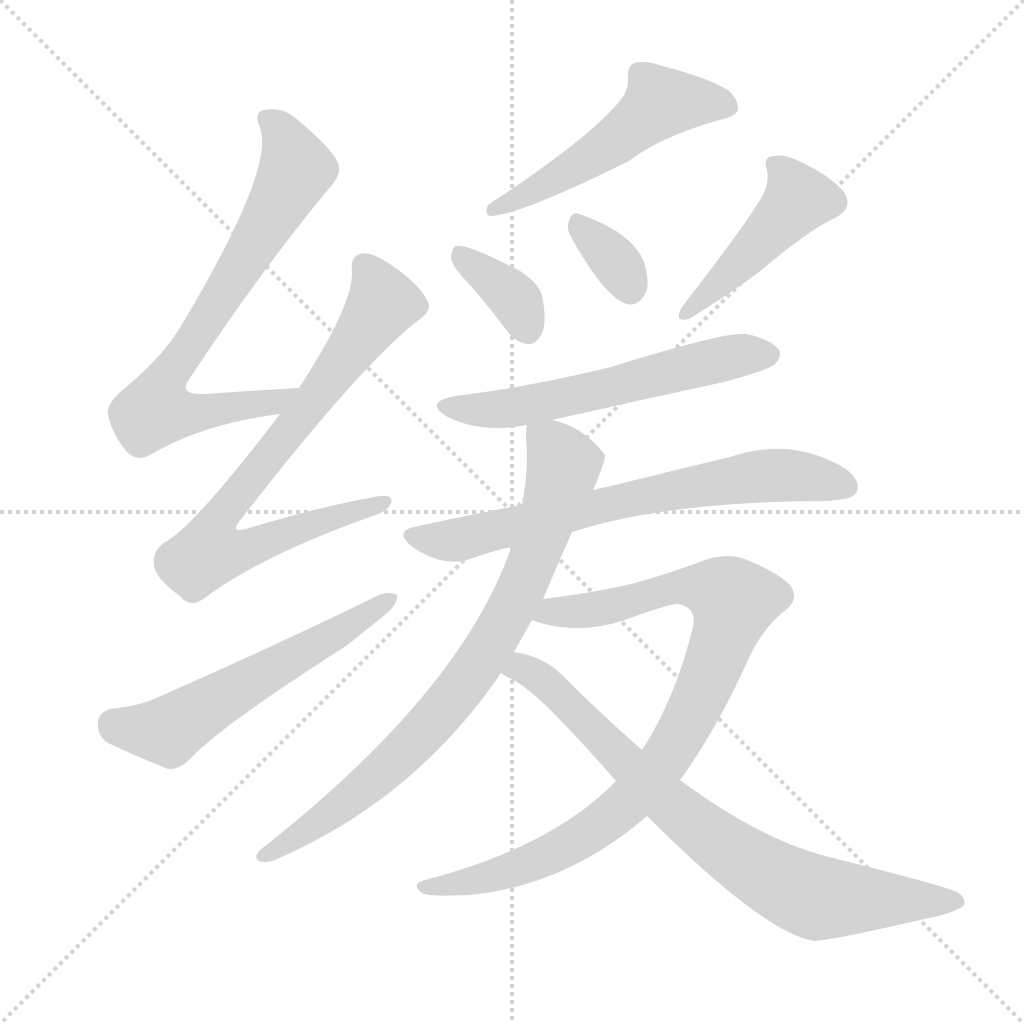
Ancient form. According to the Comprehensive Rhymes (Guangyun) and Correct Rhymes (Zhengyun), it is pronounced huan (falling tone). According to the Collection of Rhymes (Jiyun), it is pronounced huan (falling tone). According to the Rhyme Compendium (Yunhui), it is pronounced huan (falling tone). As stated in the Analytical Dictionary of Chinese Characters (Shuowen), it is sometimes written in a simplified form. It means loose or leisure. According to the Jade Compendium (Yupian), it means slow or sluggish. According to the Comprehensive Rhymes (Guangyun), it means relaxed. According to the Explanation of Names (Shiming), it means to wash or to break; when one does not hold something tightly, it wavers, indicating a state of letting go or breaking loose. From the Record of Music (Yueji) in the Book of Rites (Liji): When the heart is moved by joy, the sound is gentle and slow. Commentary: When joy is in the heart, the voice naturally follows with a sense of breadth and relaxation. From the Mencius (Mengzi): The affairs of the people must not be delayed. Commentary: Only the affairs of the people are urgent and cannot be slowed down. From the Biography of Zhu Bo in the History of the Former Han Dynasty (Qian Hanshu): The people of the Qi region are sluggish and slow, seeking only to maintain their reputation. Commentary: Shigu says that their nature is slow and sluggish, often acting with arrogance to cultivate a reputation. Also, according to the Collection of Rhymes (Jiyun), it is pronounced xuan (falling tone) and pronounced kuan (falling tone). The meanings are the same.