Chen Collection, Middle Volume
Radical: Tree (mù)
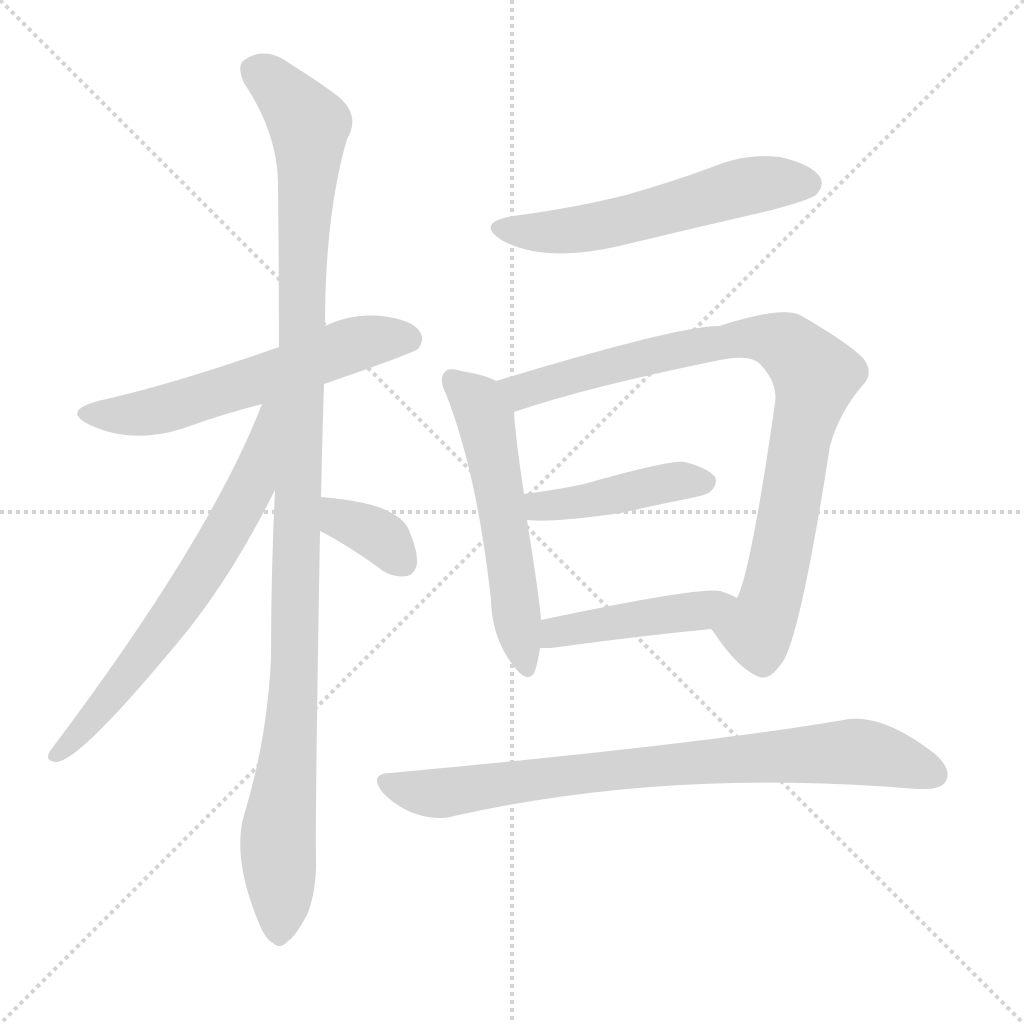
Huan
Kangxi strokes: 10
Page 526, Entry 05
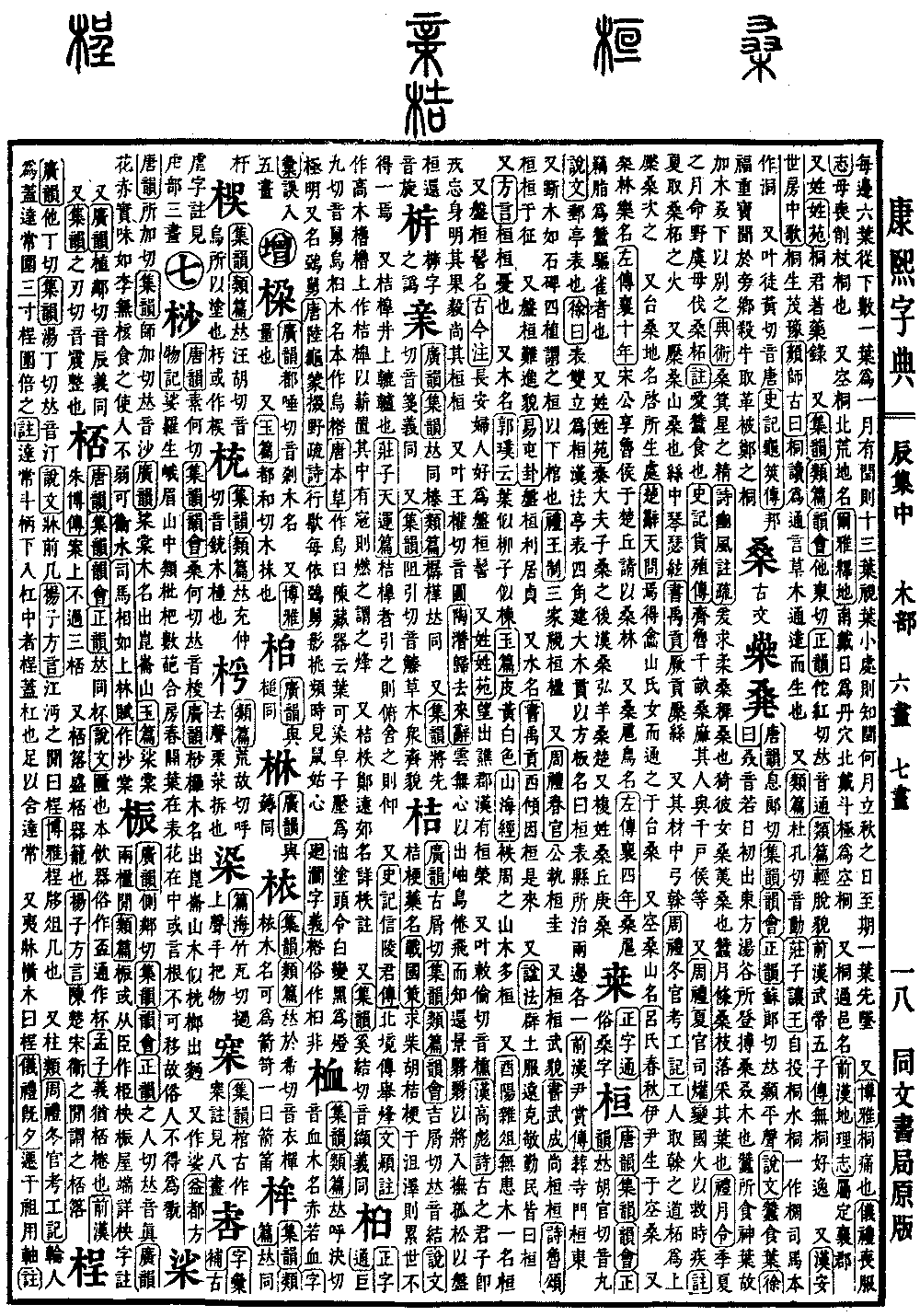
Pronounced huan. According to the Explaining Graphs and Analyzing Characters (Shuowen), it refers to a marker post at a postal station. Xu states that two posts standing together are called huan. By Han dynasty law, at the four corners of a station marker, large wooden posts were erected and pierced with square boards, which were called huan markers, with one on each side of the magistrate's office. In the Biography of Yin Shang in the History of the Former Han (Qian Han Shu), it is recorded: Buried to the east of the huan post at the temple gate. Also, hewing wood like stone and planting it in four directions is called huan, used for lowering a coffin. In the Book of Rites (Liji), in the chapter on the Rites of Tan Gong (Tan Gong), it states: The three families viewed the huan pillars. Also, in the Rites of Zhou (Zhou Li), in the Spring Office (Chun Guan), it is stated: The Duke holds the huan jade tablet. Also, huan huan describes a martial appearance. In the Book of Documents (Shujing), in the Oath at Mu (Mu Shi), it says: Still huan huan. In the Book of Odes (Shijing), in the Odes of Lu (Lu Song), it says: Huan huan on the expedition. Also, pan huan describes a hesitant appearance. In the Book of Changes (Yijing), in the Difficulty at the Beginning hexagram (Tun Gua), it says: Pan huan, it is beneficial to remain firm. Also, the name of a river. In the Book of Documents (Shujing), in the Tribute of Yu (Yu Gong), it says: From the west, it follows the huan. Also, according to the Law of Posthumous Titles (Shifa), one who expands territory and brings distant lands to submission, or is reverent and diligent toward the people, is called huan. Also, according to the Dialects (Fangyan), huan means sorrow. Also, the name of a tree. Guo Pu says: The leaves resemble a willow, and the fruit resembles a chinaberry. According to the Yu Pian, the bark is yellowish-white. In the Classic of Mountains and Seas (Shanhaijing), it states: In the mountains of Zhizhou, there are many huan trees. Also, according to the Miscellaneous Morsels from Youyang (Youyang Zazu), the soapberry tree is also called huan. Also, pan huan is the name of a hairstyle. According to the Records of Past and Present (Gujin Zhu), women in Chang'an enjoyed wearing the pan huan chignon. Also, a surname. According to the Garden of Surnames (Xing Yuan), their ancestral home is in Qiaojun, and there was a Huan Rong during the Han dynasty. Also, rhyming with chun, pronounced chun. In the poem by Gao Biao of the Han, it states: The gentlemen of old, when going to war, forgot their own bodies. Clarifying their resolve and courage, they valued their huan huan. Also, rhyming with yuan, pronounced yuan. In the Return to the Fields (Gui Qu Lai Ci) by Tao Qian, it says: The clouds drift unintentionally out of the mountain peaks, and the birds are tired of flying, looking for a way to return. The scenery grows dim as the sun is about to set, and I stroke the solitary pine while lingering (pan huan). Huan is pronounced xuan.