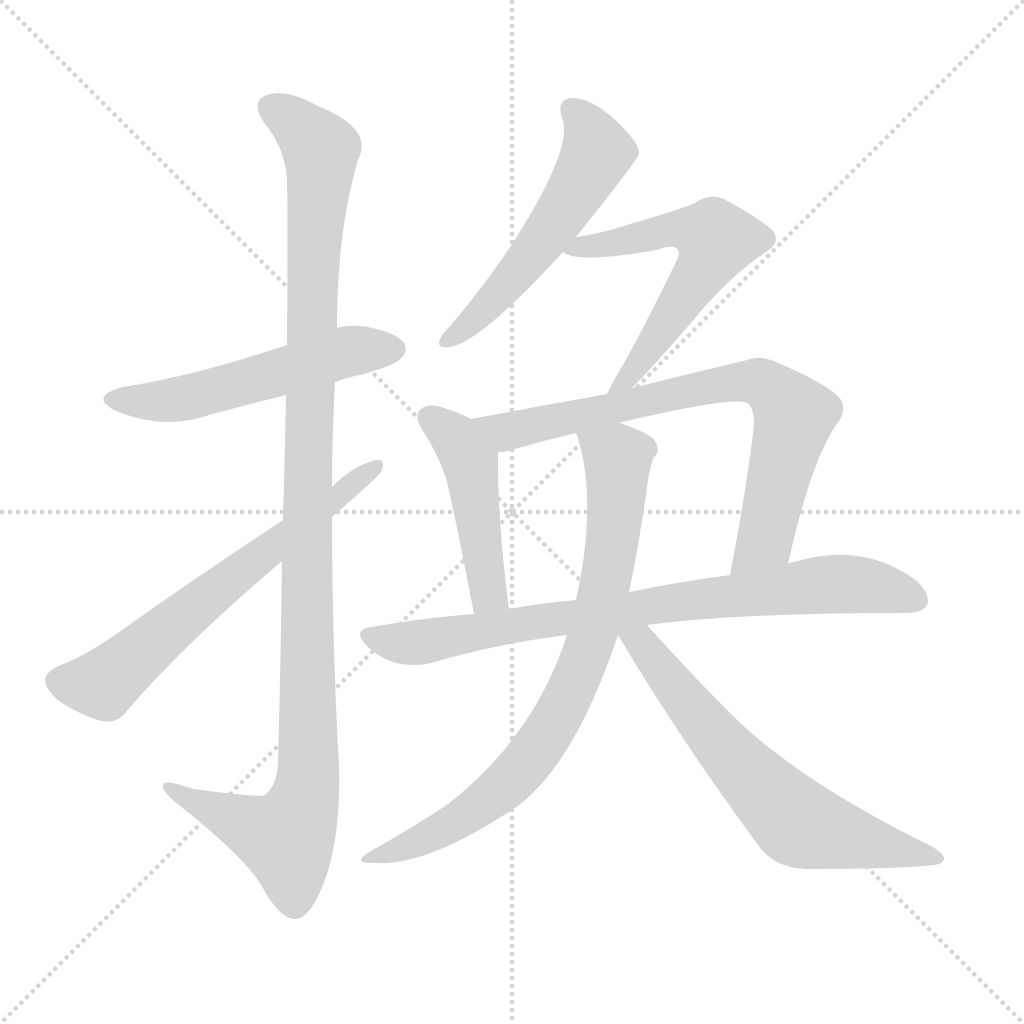
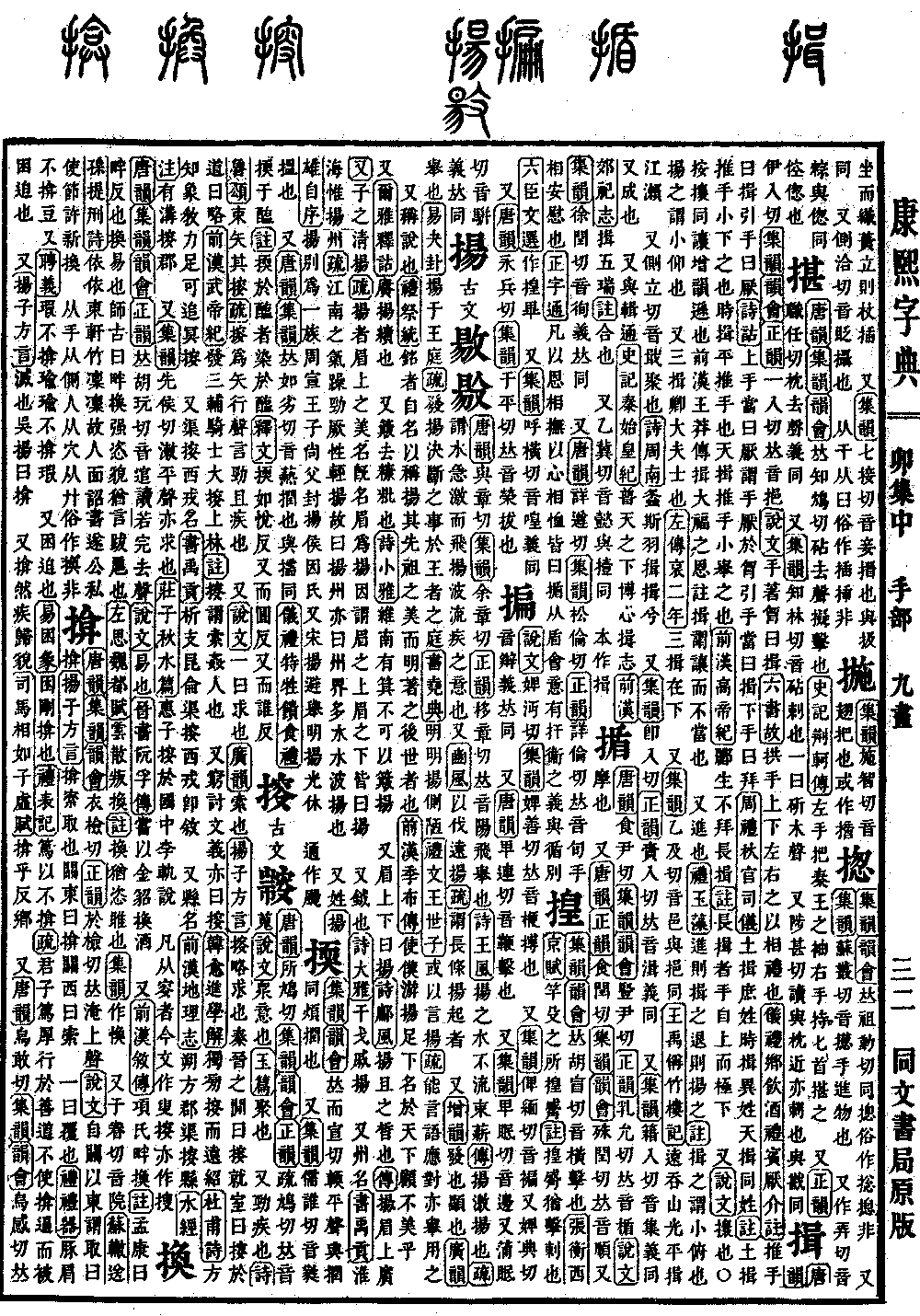
Mao Collection, Middle Volume. Radical: Hand (shǒu). Kangxi strokes: 13. Page 442, Entry 06.
According to the Book of Broad Rhymes (Guangyun), Gathered Rhymes (Jiyun), Collected Rhymes (Yunhui), and Correct Rhymes (Zhengyun), the pronunciation is huan (departing tone). It is read like the word wan (departing tone).
According to the Explaining Graphs and Analyzing Characters (Shuowen), it means to exchange or replace. In the Biography of Ruan Fu from the Book of Jin (Jinshu), it is mentioned that he once exchanged a gold marten hat for wine.
Furthermore, in the Introductory Treatise from the History of the Former Han (Qian Hanshu), it mentions the Xiang family were rebellious and unconstrained (panhuan). The commentary by Meng Kang states that pan means to rebel, and huan means to change. The commentary by Yan Shigu states that panhuan refers to an arrogant and unrestrained manner, similar to being overbearing. In the Rhapsody on the Capital of Wei (Weidu Fu) by Zuo Si, it says the clouds scatter and things become unruly. The commentary notes that this refers to an unbridled and violent nature.
The Gathered Rhymes (Jiyun) notes a variant form (huan).
It is also pronounced yuan (departing tone). In a poem by Su Zhe titled Sending Off Official Sun, it says: The bamboo by the eastern pavilion sways gently, the faces of old friends remain stern. Imperial edicts regulate public and private affairs, and official credentials permit a new exchange.
The character is composed of the radical for hand, the side component, the cave component, and the two-handed component. The common form is written as shown here, which is incorrect.
Textual research: In the Rhapsody on the Capital of Wei (Weidu Fu) by Zuo Si, it says the clouds scatter and things become unruly. The commentary notes: The character indicates an unbridled nature. According to the original commentary, the character for rebellion has been added to the entry.