You Collection, Upper Volume
Radical: Speech (yán)
Kangxi Strokes: 13
Page 1158, Entry 10
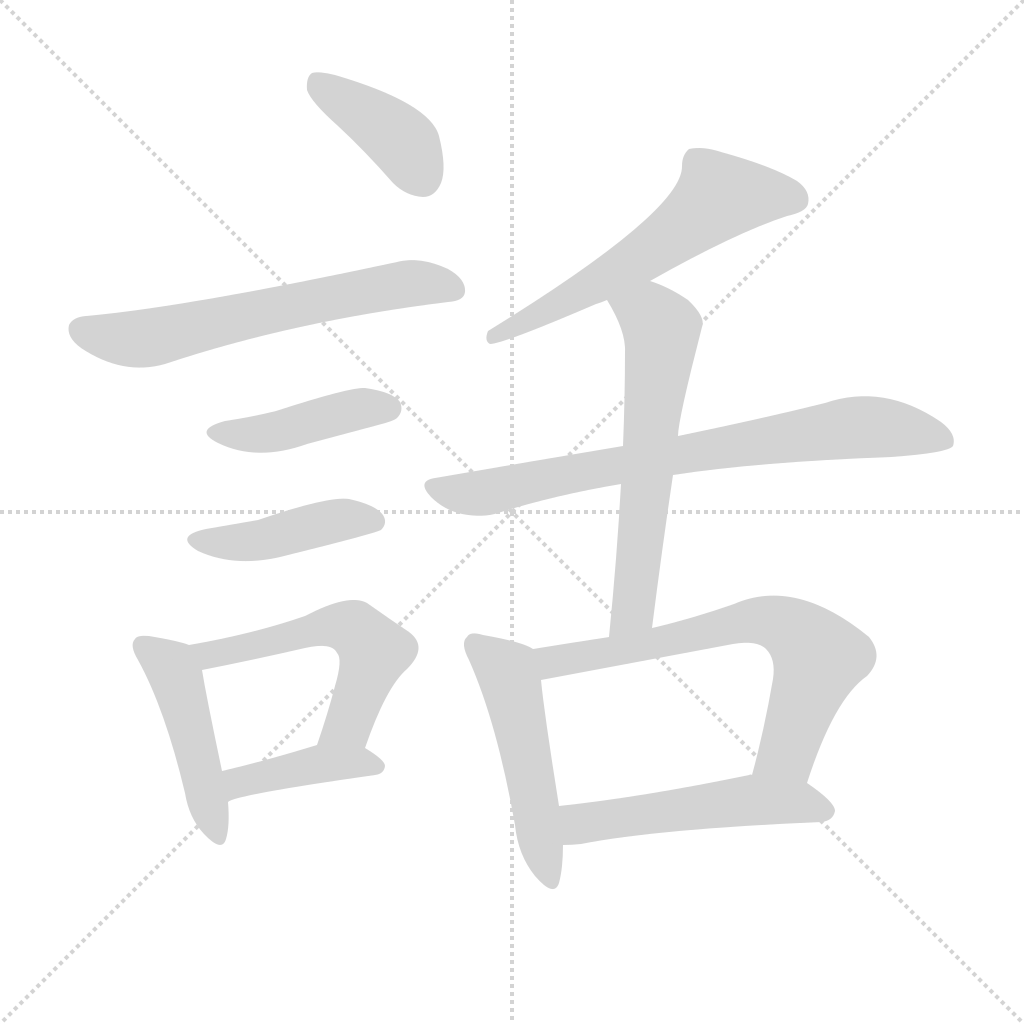
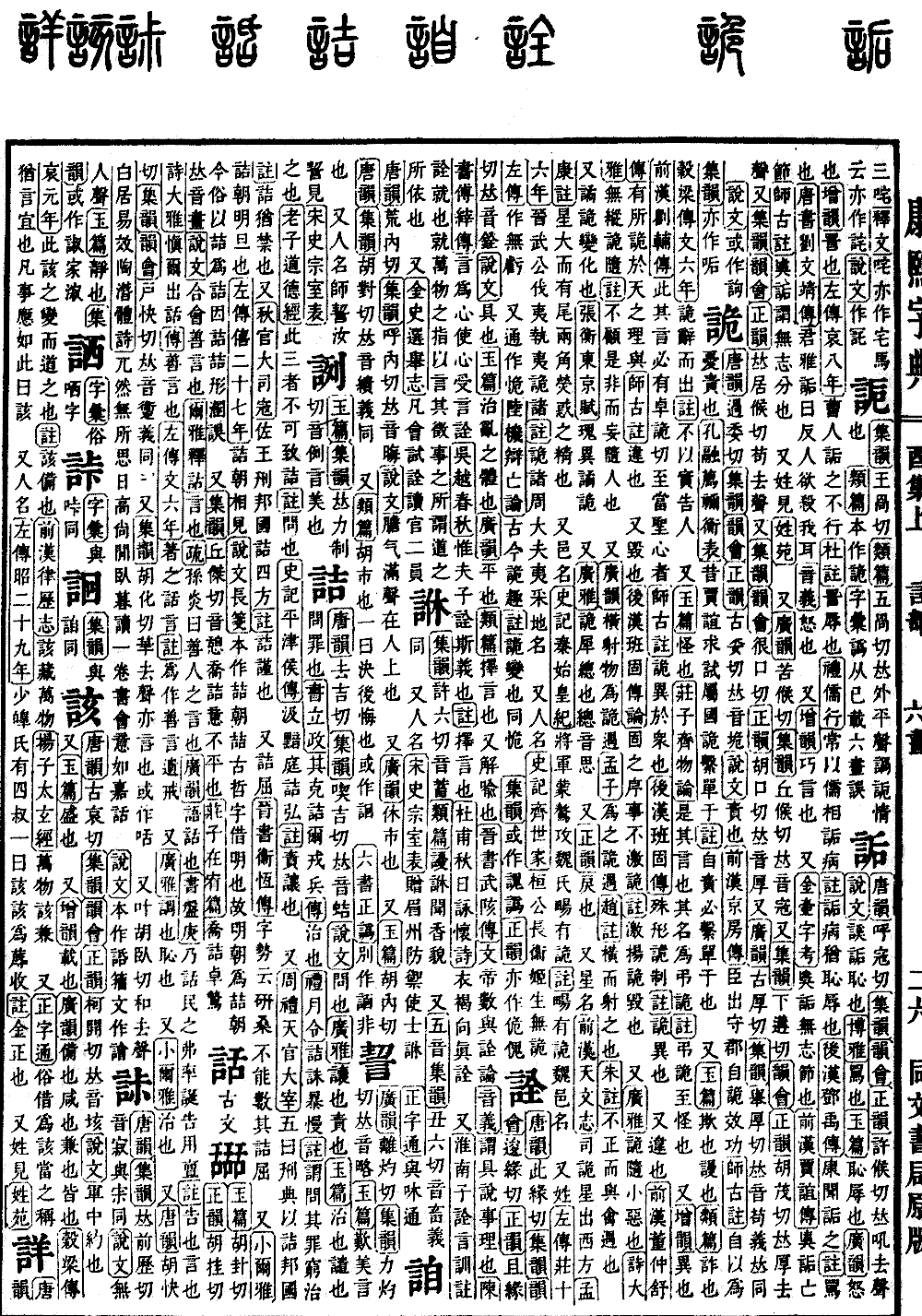
According to the Jade Chapters (Yupian), it is pronounced hua (falling tone). According to the Correct Rhymes (Zhengyun), it is pronounced hua (falling tone). It is pronounced the same as the word for drawing or painting. According to the Explaining Graphs and Analyzing Characters (Shuowen Jiezi), it refers to gathering together beautiful words. The Erya: Explanations of Ancient Words (Erya Shigu) defines it as speaking. The commentary by Sun Yan states: This refers to the words spoken by a virtuous person. The Broad Rhymes (Guangyun) defines it as speech or language. The Book of Documents (Shangshu), Pan Geng chapter, records: Tell the people who do not follow, proclaim it with sincerity. The commentary explains: To proclaim or to speak. The Book of Odes (Shijing), Greater Odes (Daya), records: Be careful of the words you speak. The commentary defines this as good words. The Zuo Tradition (Zuo Zhuan), Sixth Year of Duke Wen, records: Record them as admonishing words. The commentary explains: To record good words as a legacy of instruction. It is also defined by the Expanded Erya (Guangya) as teasing or insulting. It is also defined by the Small Erya (Xiao Erya) as to govern. Additionally, according to the Tang Rhymes (Tangyun), it is pronounced huai (falling tone), and according to the Collected Rhymes (Jiyun) and the Rhyme Collection (Yunhui), it is pronounced huai (falling tone); the pronunciation is the same as the word for boastful or untruthful speech. The meaning is the same. Furthermore, according to the Collected Rhymes (Jiyun), it is pronounced hua (departing tone). It also means to speak. It is sometimes written in a variant form (shi). It also rhymes with the sound of wo (falling tone). Bai Juyi, in his poem imitating Tao Qian, writes: I sit in a daze with no thoughts, the sun rises high and I am still lying down in leisure. In the evening I read a volume of books, and grasping the meaning is like hearing pleasant words. In the Explaining Graphs and Analyzing Characters (Shuowen Jiezi), the original character is written as a variant. The large seal script (zhouwen) is written as a variant.