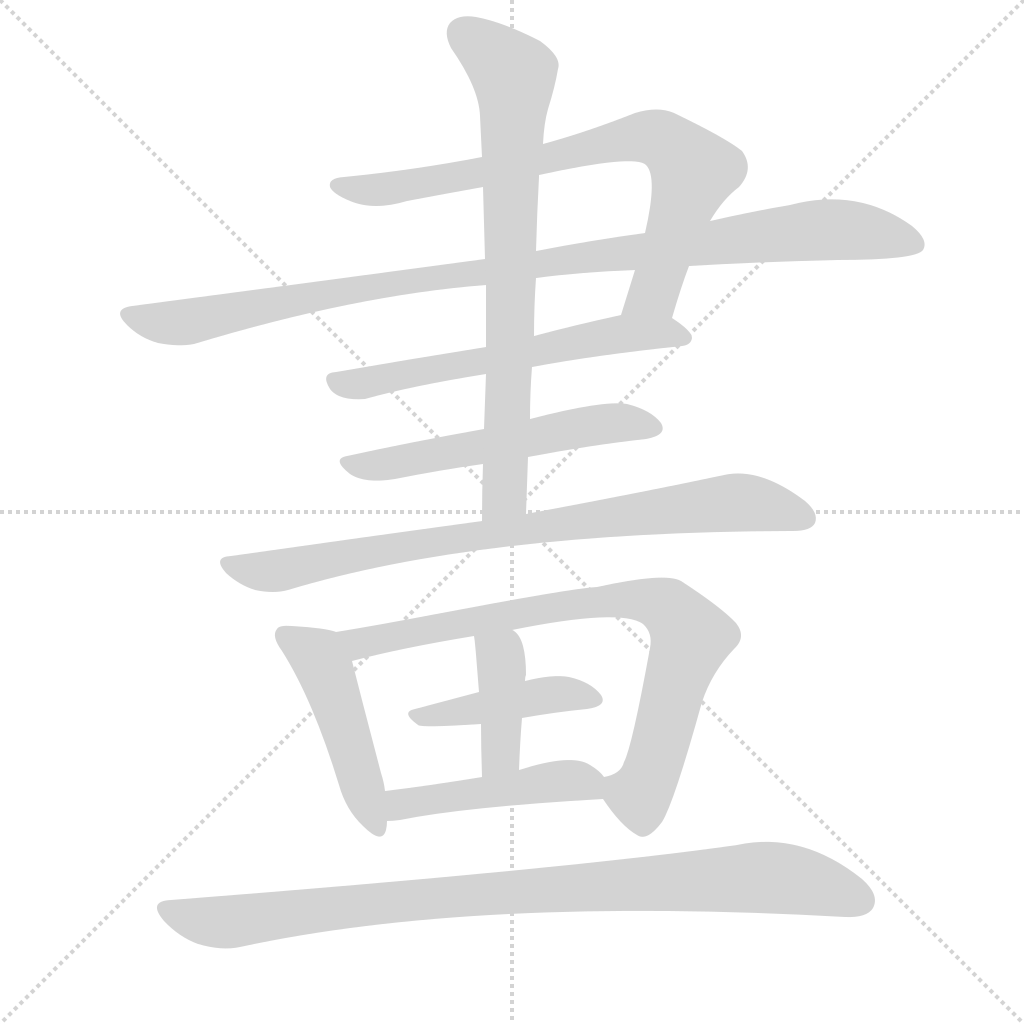
Wu Collection, Upper Volume
Radical: Field (tián)
Paint or Draw; Kangxi strokes: 12; Page 137, Entry 02
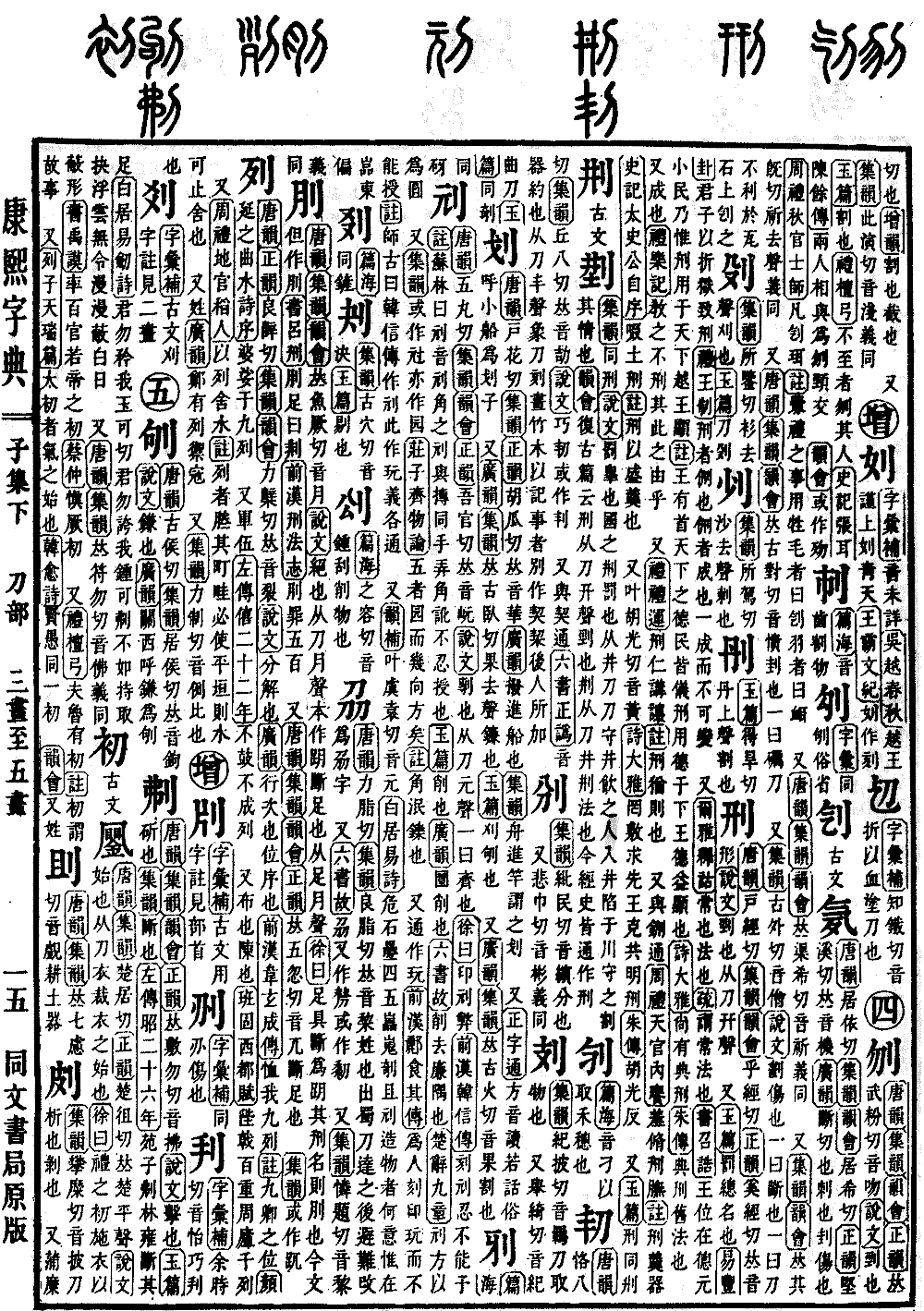
Ancient form. Tang Rhymes (Tangyun), Collected Rhymes (Jiyun), Rhyme Compilation (Yunhui), and Orthodox Rhymes (Zhengyun), pronounced huai (entering tone). It refers to the lines of a hexagram. It also means to divide or delineate. It means boundaries. Book of Zuo (Zuozhuan), Year 4 of Duke Xiang: The vast traces of Yu were divided into the Nine Provinces. Commentary: Draw means to divide. Book of Rites (Liji), Tan Gong: Duke Ai sent people to offer condolences to Kuishang. Meeting on the road, they yielded and drew the shape of a palace on the ground to receive the condolences. Commentary: Drawing the shape of a palace on the ground. Also, a strategy or plan. Zou Yang, Letter to the King of Wu: It is only to hope that the Great King will plan carefully. Records of the Grand Historian (Shiji), House of King Yan: Tian Sheng, a man from the State of Qi, went traveling. Lacking funds, he used a strategy to seek an audience with Liu Ze, the Marquis of Yingling. Commentary: Fu Qian says: Used a plan to seek an audience. Also, to stop or cease. Analects (Lunyu): Now you stop and do not advance. Also, the name of a hill. Erya, Interpretation of Lands: The road passes to its right and then circles the Hua Hill. Commentary: Saying the road is delineated by it. Interpretation of Names (Shiming): A road coming out from the right is called hua. The people of the hill revere the right side; whenever there are indications or plans, they use the right hand. Also, a place name. Records of the Grand Historian (Shiji), Biography of Tian Dan: When the Yan army first invaded the State of Qi, they heard that Wang Zhu of Huayi was a man of virtue. Commentary: Justice states: Gazetteer of Land (Kuodizhi) says: Jili City is thirty li northwest of Linzi, which was the City of Ji during the Spring and Autumn period. It is also said to be Huayi, the city where Wang Zhu resided, named after the Hua River.
Also, in Guang Rhymes (Guangyun), Collected Rhymes (Jiyun), Rhyme Compilation (Yunhui), and Orthodox Rhymes (Zhengyun), pronounced hua (falling tone). Erya, Interpretation of Words: To draw is to shape. Commentary: To draw is to depict a form. Interpretation of Names (Shiming): To draw is to hang. Using five colors to depict the form of things. Commonly written in a variant form. Rites of Zhou (Zhouli), Heaven's Officials: Regarding the provision of ritual vessels with ax-shaped patterns and colored silk ribbons for sacrifices. Commentary: All ritual garments for sacrifice have painted tops and embroidered bottoms. Ceremonial Rites (Yili), Archery Rites: For the cloth targets used by senior officials, tigers and leopards are drawn. For the cloth targets used by scholars, deer and pigs are drawn. Also, an official title. Book of the Later Han (Houhanshu), Treatise on Officials: One Chief of the Painting Office, with a salary of four hundred shi, wearing a yellow ribbon. Also, Rhyme Supplement (Yunbu), rhyming with hui (falling tone). Qin Langya Inscription: The regional lords divided their duties, and all affairs were governed easily. Actions were invariably appropriate, and there was nothing that was not according to plan. Yi is pronounced yi.