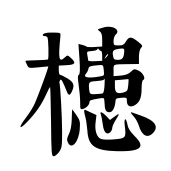
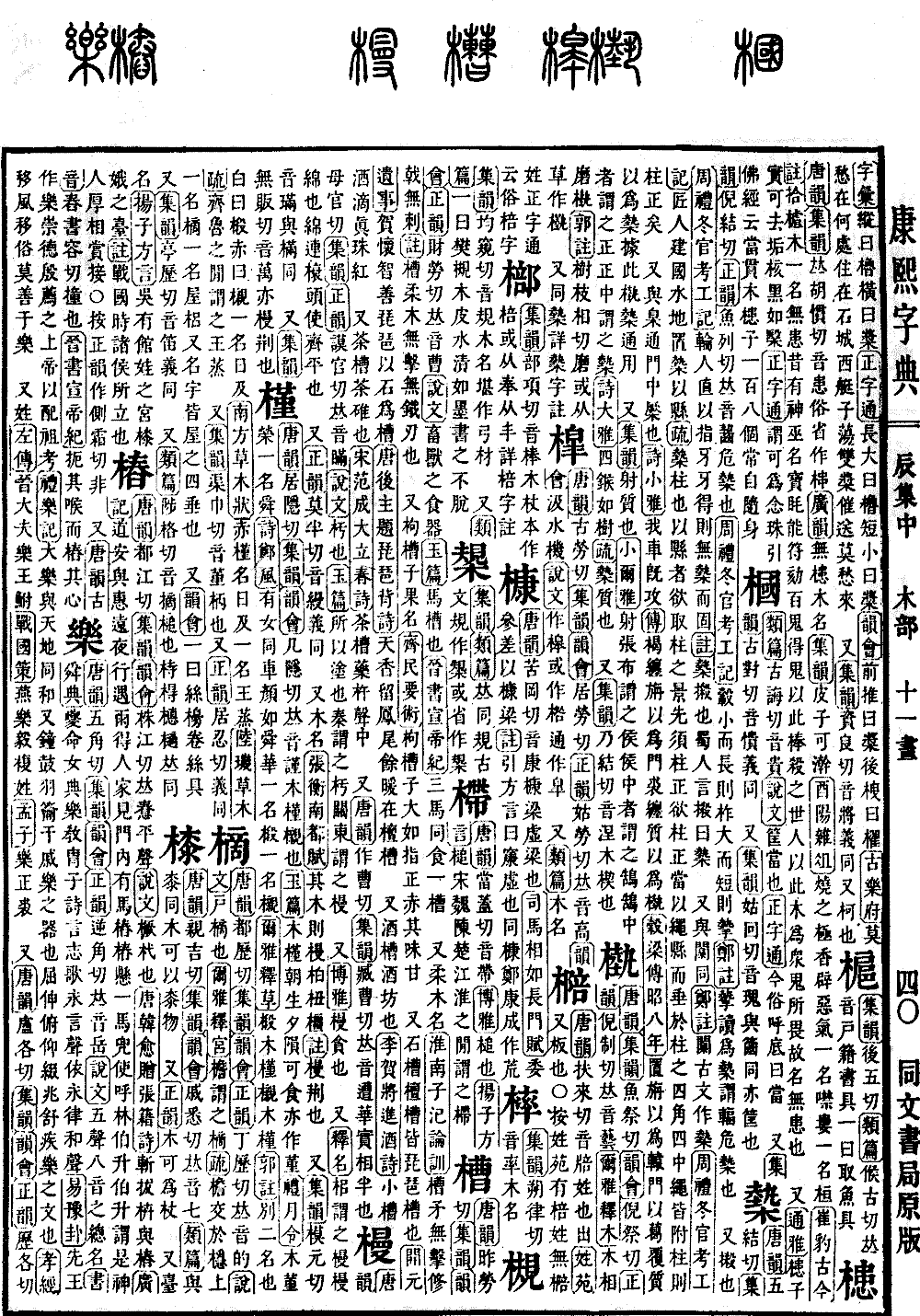
Chen Collection, Middle Volume. Radical: Tree (mù). Character: huan. Kangxi stroke count: 15. Page 548, Entry 02.
Pronounced huan (falling tone). A simplified variant is written as huan.
According to the Rhyme Dictionary of the Tang (Tangyun) and the Collected Rhymes (Jiyun), it is a name of a tree. The bark and seeds can be used for cleaning.
According to the Miscellaneous Morsels from Youyang (Youyang Zazu), when burned it is highly fragrant and wards off foul odors. It is also known as jinlou and huan.
According to the Notes on Ancient and Modern Matters (Gujin Zhu) by Cui Bao, it is also known as shimu or wuhuan. It is said that in ancient times there was a shaman named Baomao who could summon and expel ghosts; he would kill them with a staff made from this wood. Because the world feared that ghosts were repelled by this tree, it was named wuhuan (no worry).
According to General Discourses (Tongya), the seeds of this tree can remove dirt, and the pits are black and like...
According to the Correct Meaning Guide (Zhengzitong), it is said that the seeds can be made into prayer beads. It cites the Buddhist scriptures, which state: one should string together one hundred and eight soapberry seeds and always carry them on one's person.