Si Collection, Lower Volume
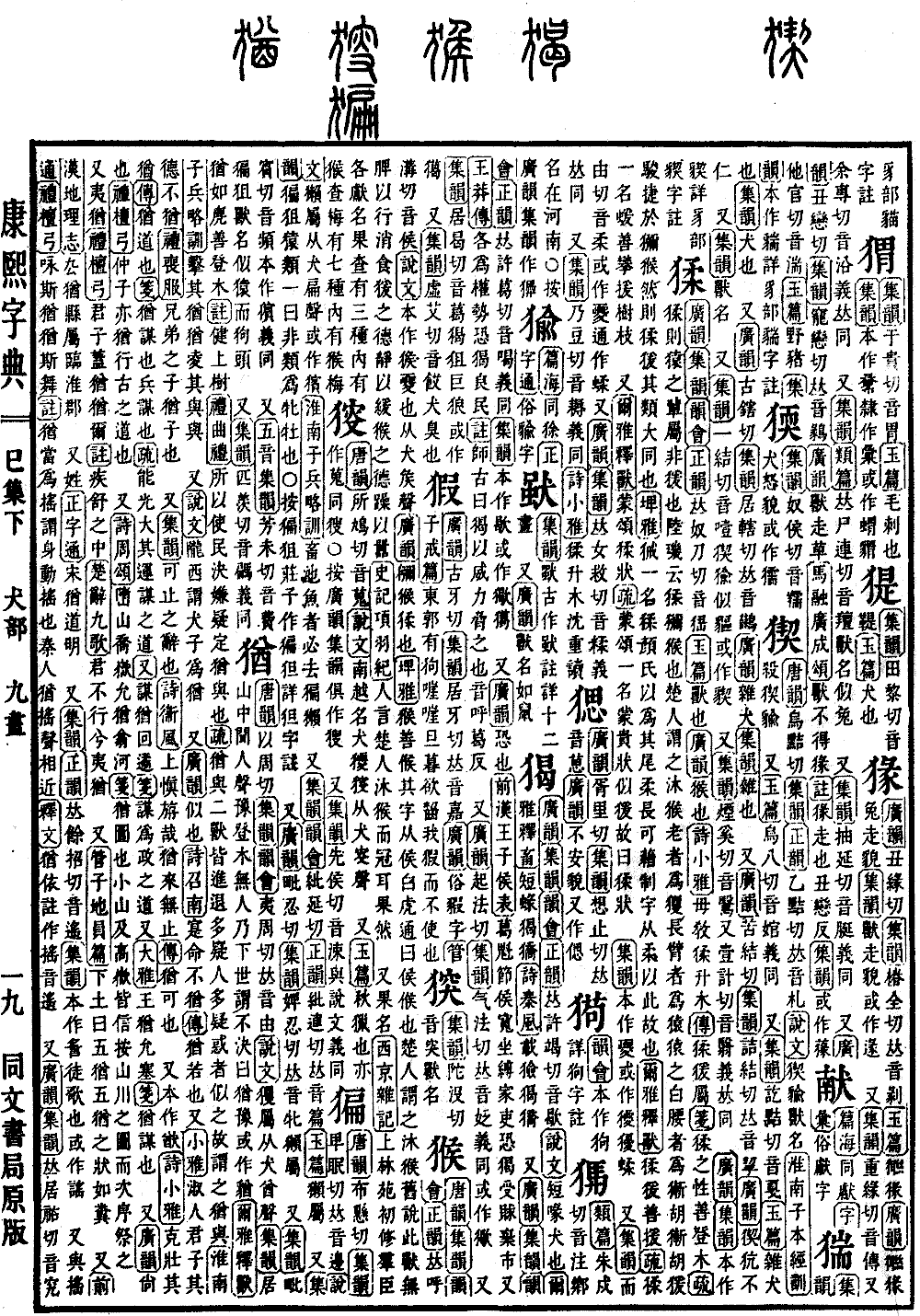
Radical: Dog (quǎn)
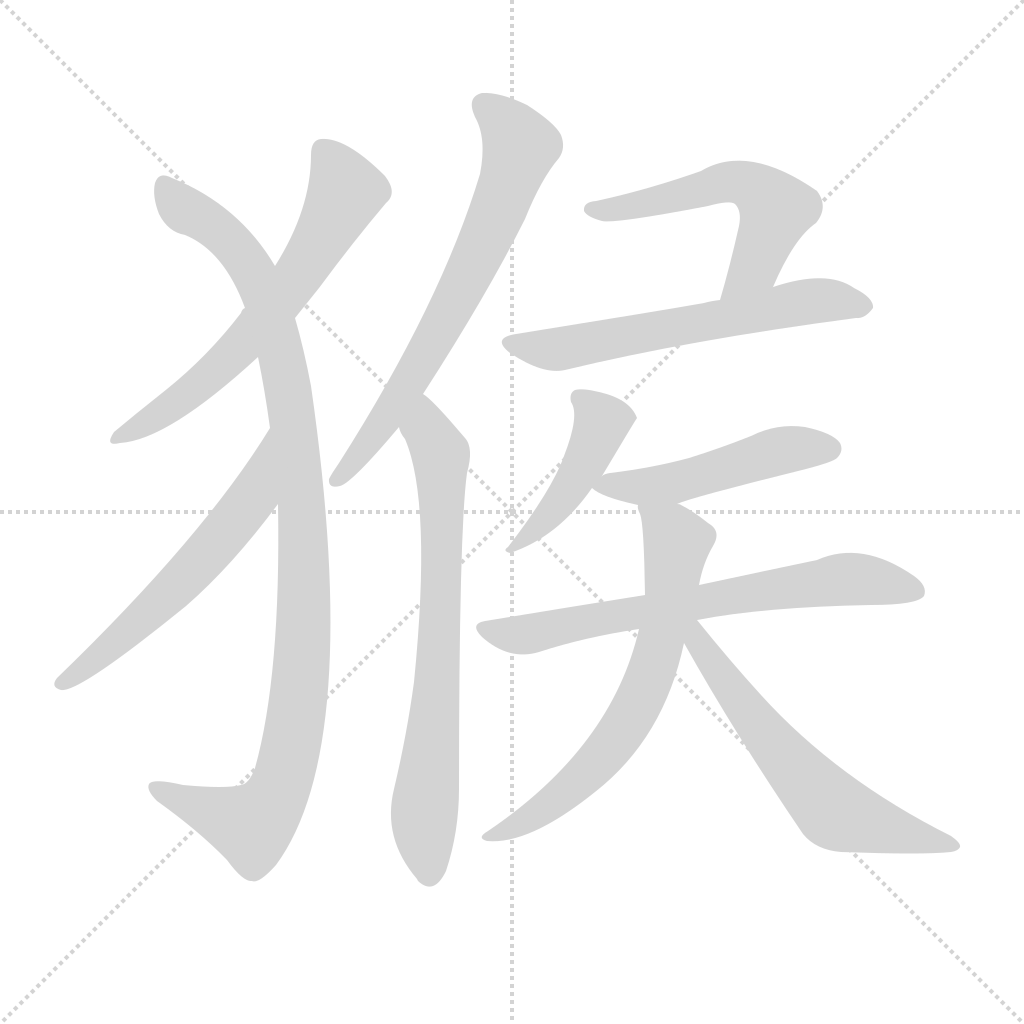
Entry: Monkey
Kangxi Dictionary strokes: 13
Page 715, Entry 17
Pronounced hou.
According to the Explaining and Analyzing Characters (Shuowen Jiezi), it was originally written as a variant form, referring to a type of primate. Composed of the radical for dog and the phonetic element hou.
According to the Guangyun dictionary, it is a macaque, also known as a rhesus monkey.
The Piya notes that the monkey is skilled at being watchful, which is why the character is derived from the phonetic element meaning to wait or watch. The Baihu Tong says: to watch is to be alert. The people of Chu refer to them as bathed monkeys. Old accounts say these animals do not have spleens and digest food through movement. The nature of the gibbon is quiet and slow, while the nature of the monkey is restless and clamorous.
Records of the Grand Historian (Shiji), Biography of Xiang Yu: People say the people of Chu are merely monkeys wearing hats, and indeed it is so.
Also the name of a fruit. The Xijing Zaji notes: When the Shanglin Park was first constructed, the various officials each presented famous fruits. There were three types of hawthorn, including the monkey hawthorn. There were seven types of plums, including the monkey plum.