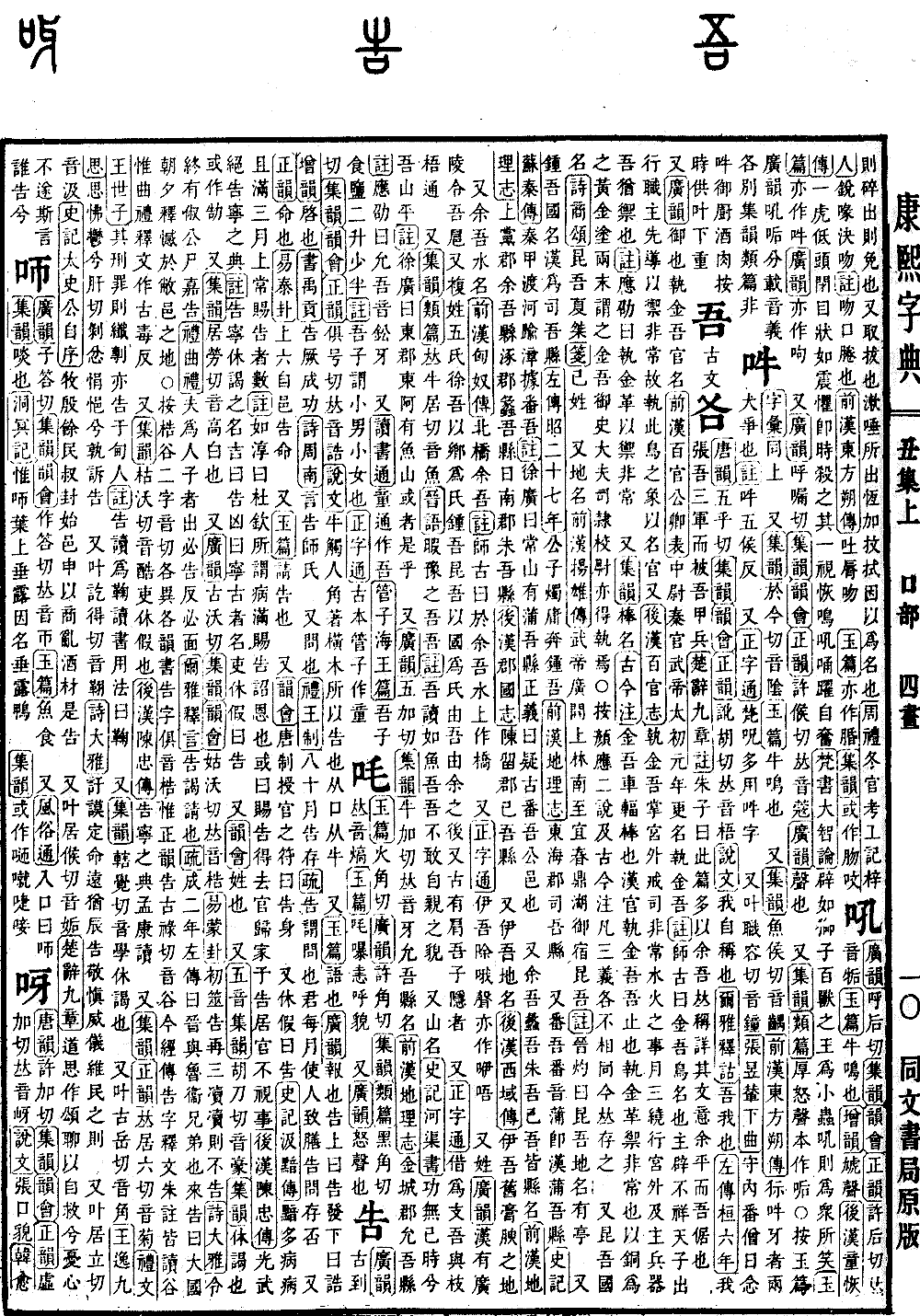
Chou Collection, Upper Volume
Radical: Mouth (kǒu)
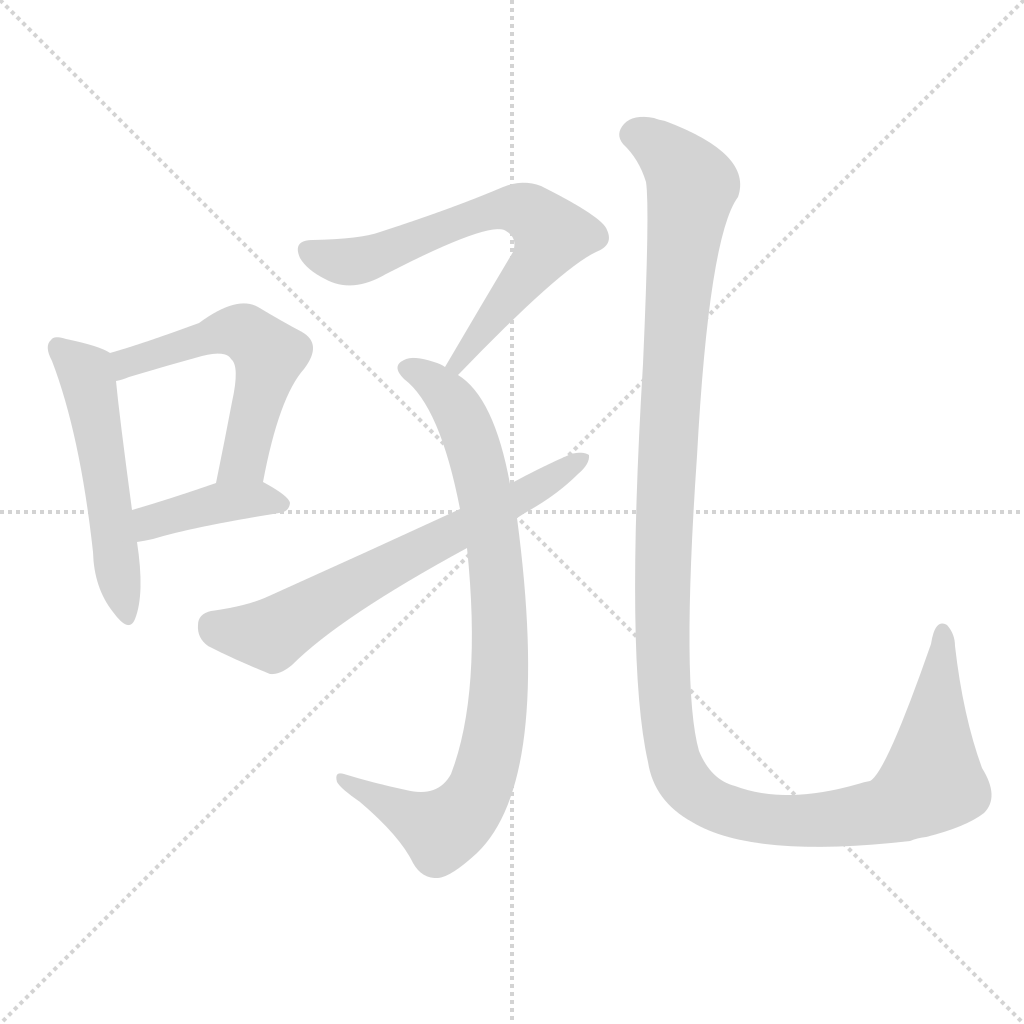
吼
Kangxi stroke count: 7
Page 180, Entry 01
Pronounced hou (falling tone).
Jade Chapters (Yupian): The sound of an ox lowing.
Expanded Rhymes (Zengyun): The sound of a roaring tiger.
Book of the Later Han (Hou Hanshu), Biography of Tong Hui: One tiger lowered its head and closed its eyes, appearing as if in shock and fear, and was immediately killed; the other watched, and when Tong Hui let out a roar, the tiger leaped up, rousing itself.
Buddhist Scriptures, Treatise on the Great Perfection of Wisdom (Dazhidu Lun): Just as the lion is the king of all beasts, if it were to roar at small insects, it would be ridiculed by all.
Jade Chapters (Yupian): Also written as the variant form (hōng).
Expanded Rhymes (Guangyun): Also written as the variant form (xǔ).
Also pronounced kou (falling tone).
Expanded Rhymes (Guangyun): Sound.
Also, Collected Rhymes (Jiyun) and Classified Chapters (Leipian): A sound expressing intense rage. Originally written as the variant form (hǒu).
Note: The Jade Chapters and Expanded Rhymes record the character吼 separately, with distinct pronunciations and meanings. The assertions in the Collected Rhymes and Classified Chapters are incorrect.
Textual Research: Book of the Later Han, Biography of Tong Hui: One tiger lowered its head and closed its eyes, appearing as if in shock and fear, and was immediately killed; the other watched, and when Tong Hui let out a roar, the tiger leaped and danced, rousing itself. As per the original text, the character for jump has been corrected to leap and dance.