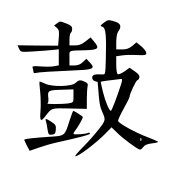
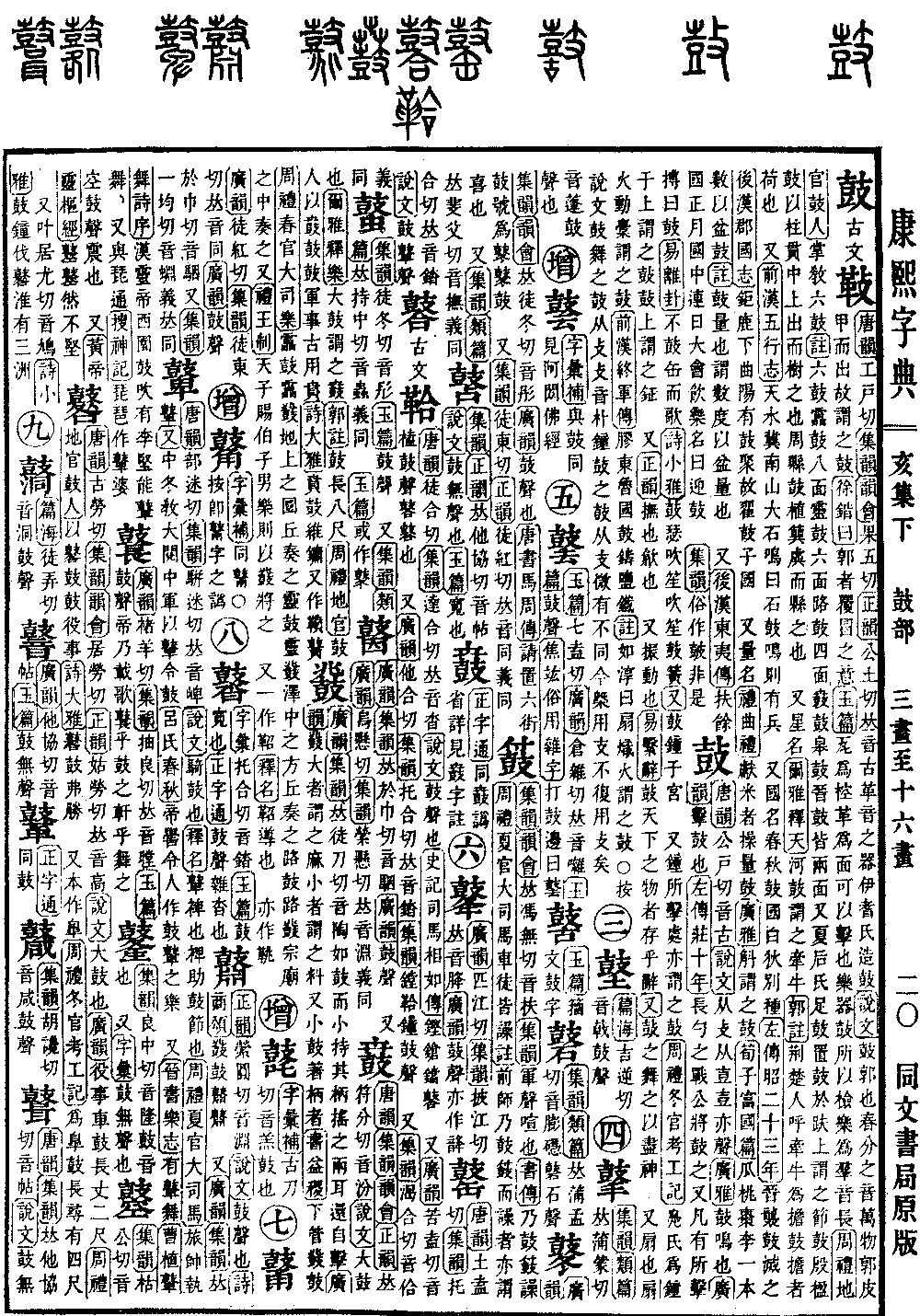
Hai Collection, Lower Volume
Radical: Drum (gǔ)
Kangxi Strokes: 13
Page 1526, Entry 03
Tang Rhymes (Tangyun): Pronounced gu.
Explanation of Characters (Shuowen): Composed of the radical for tap and the character for drum (zhu), the latter also serving as a phonetic element.
Elegant Definitions (Guangya): The sound of a drum.
Expanded Rhymes (Guangyun): To strike a drum.
Zuo Tradition (Zuozhuan), Year 10 of Duke Zhuang: During the Battle of Changshao, the Duke was about to strike the drums.
General term for any striking or beating is also called gu.
Book of Changes (Yijing), Li Hexagram: Neither beating the earthenware jug nor singing.
Book of Odes (Shijing), Lesser Odes: Plucking the zither and blowing the reed pipe, blowing the reed pipe and playing the reed organ.
Ibid: Striking the bell in the palace.
The part of a bell that is struck is also called gu.
Rites of Zhou (Zhouli), Winter Offices, Artificers Record: The bell-makers forge bells; the upper part is called gu, and the part above the gu is called zheng.
Standard Rhymes (Zhengyun): To stroke, to draw in.
Also, to vibrate or excite.
Book of Changes (Yijing), Appended Remarks: That which excites the movements of the world resides in the language.
Ibid: Exciting them and dancing them to exhaust the spirits.
Also, to fan; fanning a fire to move a bellows is called gu.
History of the Former Han (Qian Hanshu), Biography of Zhong Jun: Jiaodong and the State of Lu operated the bellows to forge salt and iron.
Commentary: Ru Chun states that fanning a scorching fire is called gu.
Note: In the Explanation of Characters, the gu used in the sense of excitement (guwu) is written with the tap radical, pronounced pu. The gu in bell and drum is written with the branch radical; they are slightly different. Nowadays, the branch radical is used generally, and the tap radical is no longer used.
Textual Research: In the Book of Changes, Appended Remarks, the text reads exciting the movements of the world. The entry has been corrected to reflect the original text, changing the character for things to the character for movements.