You Collection, Upper Volume
Radical: Speech (yán)
Kangxi Strokes: 12
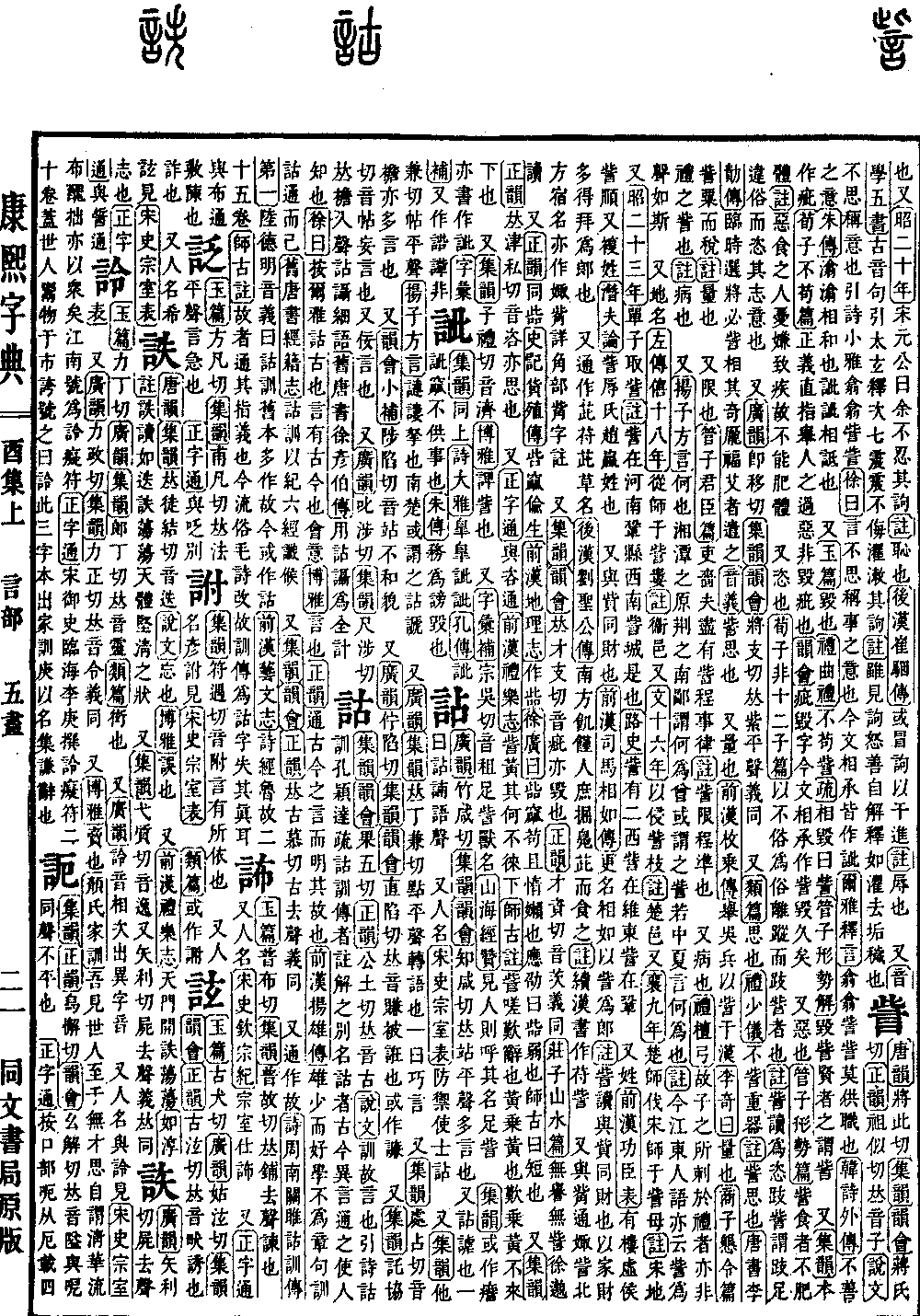
Page 1153, Entry 04
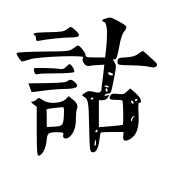
According to Jiyun and Yunhui, pronounced gu (falling-rising tone); according to Zhengyun, pronounced gu (falling tone). As defined in Shuowen Jiezi, it refers to the explanation of ancient words. Quoting the commentary by Kong Yingda on the Book of Odes (Shijing): The term guxun zhuan refers to specific forms of annotations. Gu refers to words that differ between ancient and modern times, clarified so that people may understand them. Xu states: According to the Erya, gu means ancient, implying words that have both ancient and modern forms; it is a compound ideograph. According to Boya, it means speech. According to Zhengyun, it acts to connect ancient and modern language to clarify the reason for things. In the Biography of Yang Xiong in the History of the Former Han (Qianshu), it is noted that Xiong was fond of learning from a young age, not merely for rote memorization of texts but for understanding the explanations of the classics. In the Treatise on Classics and Books in the Old Book of Tang (Jiu Tangshu), it states that explanatory notes are used to record the six classics and prophetic texts.
Also, according to Jiyun, Yunhui, and Zhengyun, pronounced gu (falling tone). The meaning is the same. It is also used interchangeably with the character meaning ancient or reason (gu). In the first section of the commentary on the Guanju poem from the Zhou Nan section of the Book of Odes (Shijing), Lu Deming states in his phonological commentary: In older editions, the term guxun is often written as gu, while now it is sometimes written as gu. In the Treatise on Literature in the History of the Former Han (Qianshu), it refers to the twenty-five volumes of the Lu version of the Book of Odes (Shijing). The commentary by Shigu states: The character gu here means to explain the intent and meaning of the text. Common editions of the Mao Commentary on the Book of Odes (Shijing) have changed the characters for ancient/reason to the current character for explanation, which loses the original meaning.