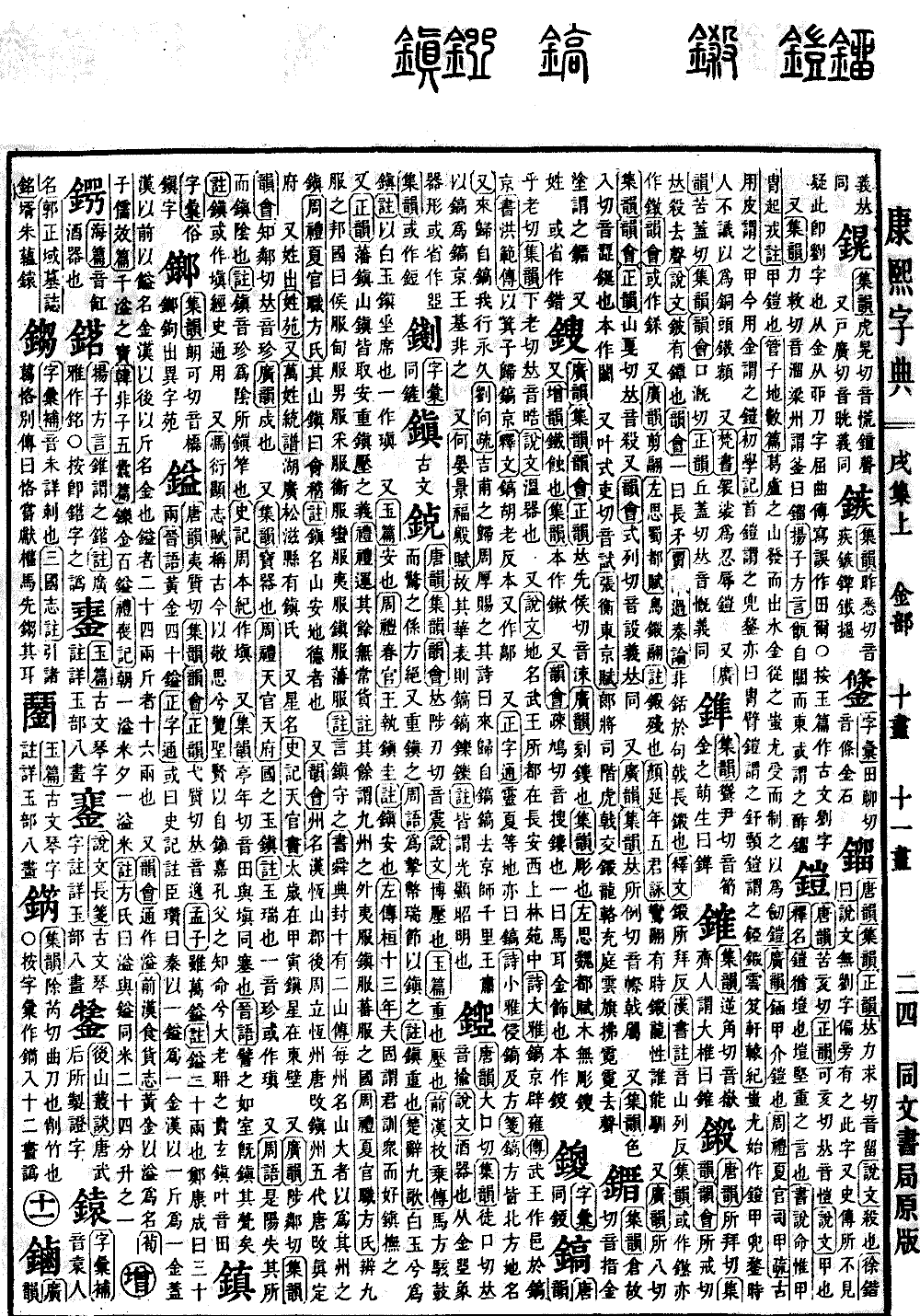
Xu Collection, Upper Volume
Radical: Metal (jīn)
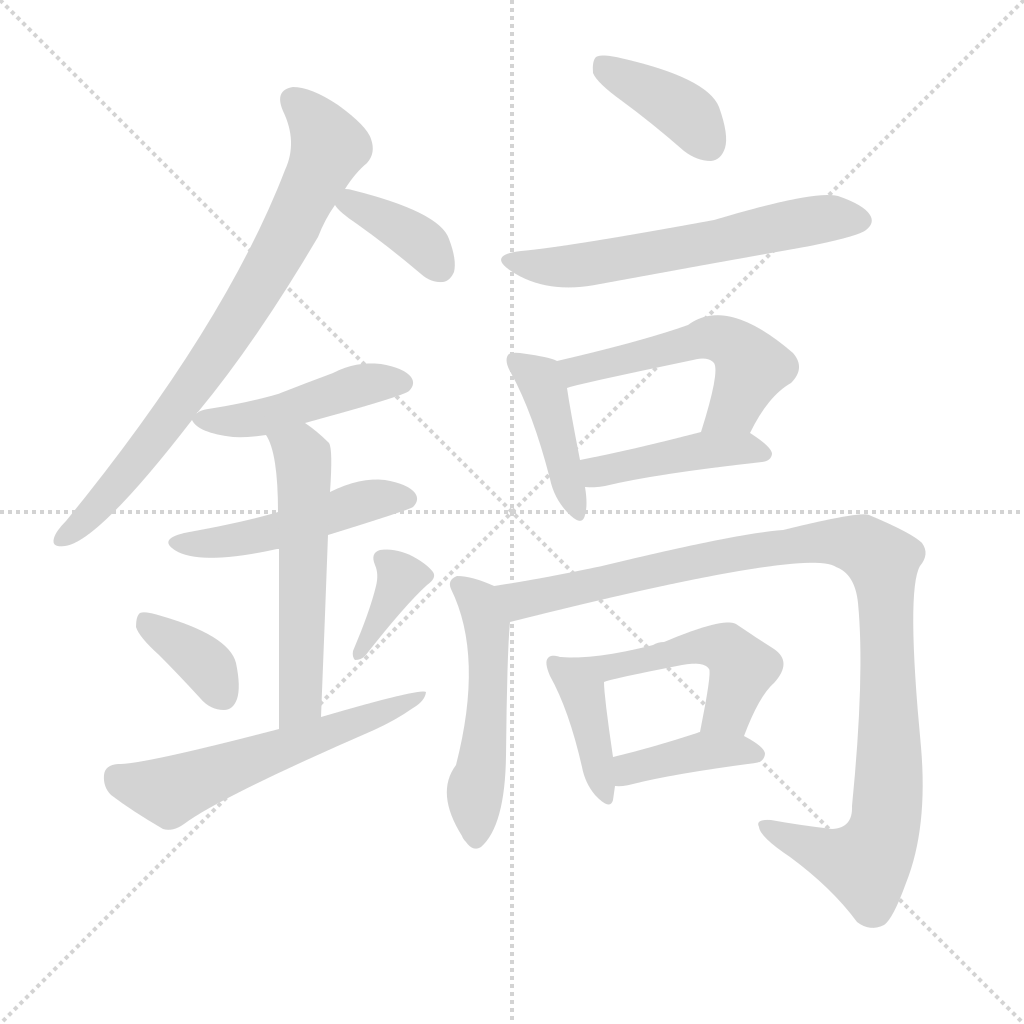
鎬
Kangxi strokes: 18
Page 1318, Entry 12
Pronounced hao. Pronounced hao, read the same as hao.
Shuowen Jiezi (Explaining Single and Compounding Characters) defines this as a vessel for warming or heating. It is also recorded as a place name, the site where King Wu of Zhou established his capital, located within the Shanglin Garden west of Chang'an.
Book of Odes (Shijing), Great Odes: Contains the phrase "Hao Capital and Biyong."
Commentary: Notes that King Wu of Zhou established his capital at Hao Capital.
Book of Documents (Shangshu), Great Plan Commentary: Mentions "bringing Jizi back to Hao Capital."
Explication of Texts (Shiwen): Notes the pronunciation of Hao as hao. Some versions write this character as a variant form (hao).
Zhengzitong (Correct Character Guide): Records that regions such as Lingxia are also called Hao.
Book of Odes (Shijing), Lesser Odes: Contains the phrase "invading Hao and Fang."
Annotation: Notes that both Hao and Fang are northern place names.
Also: "Returning from Hao, my journey was long."
Liu Xiang's Memorial: Mentions that when Jifu returned, the King of Zhou rewarded him generously; the poem states "returning from Hao," and since Hao is a thousand li from the capital, Wang Su believed Hao refers to Hao Capital, though Wang Ji disagreed with this interpretation.
He Yan, Rhapsody on Jingfu Hall: Writes "therefore its ornate pillars are hao hao shuo shuo."
Annotation: Explains this as the appearance of being brilliant, resplendent, and bright.