Wei Collection, Lower Volume
Radical: Silk (mì)
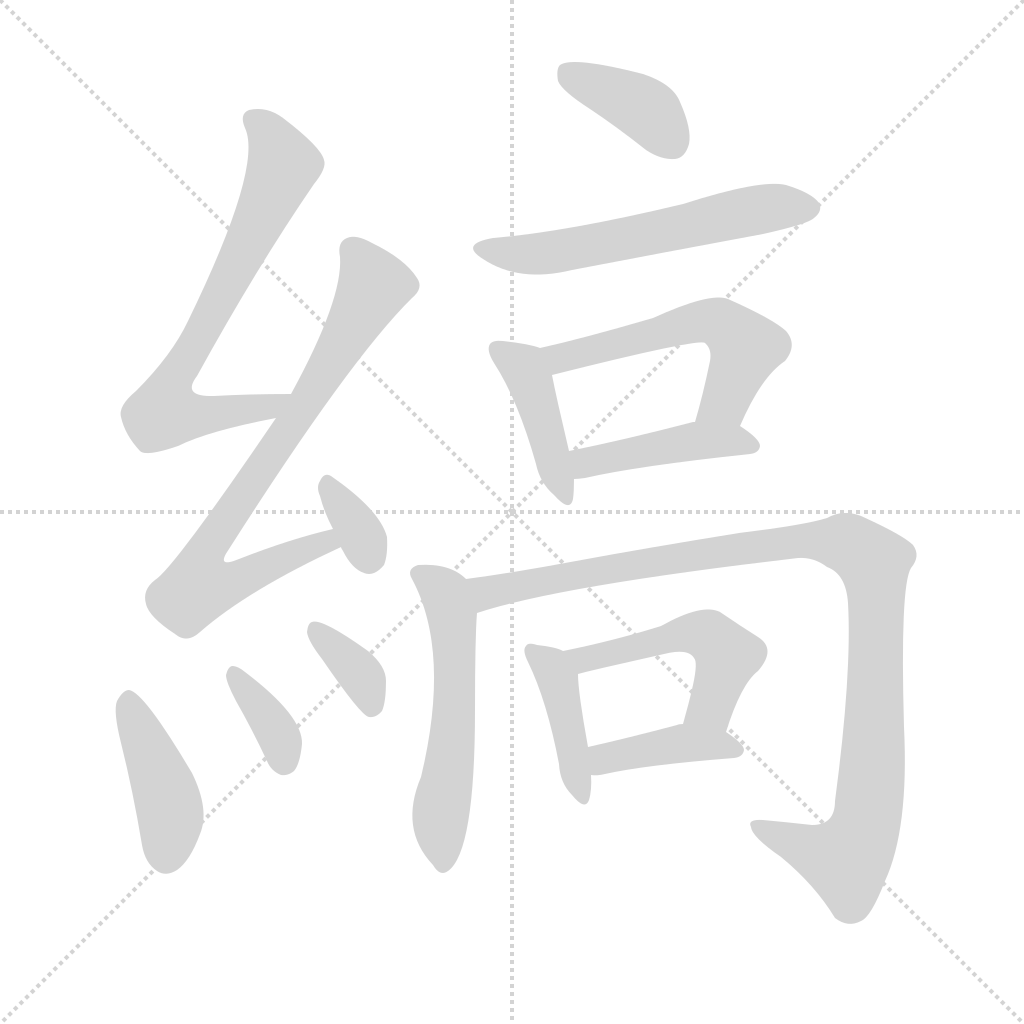
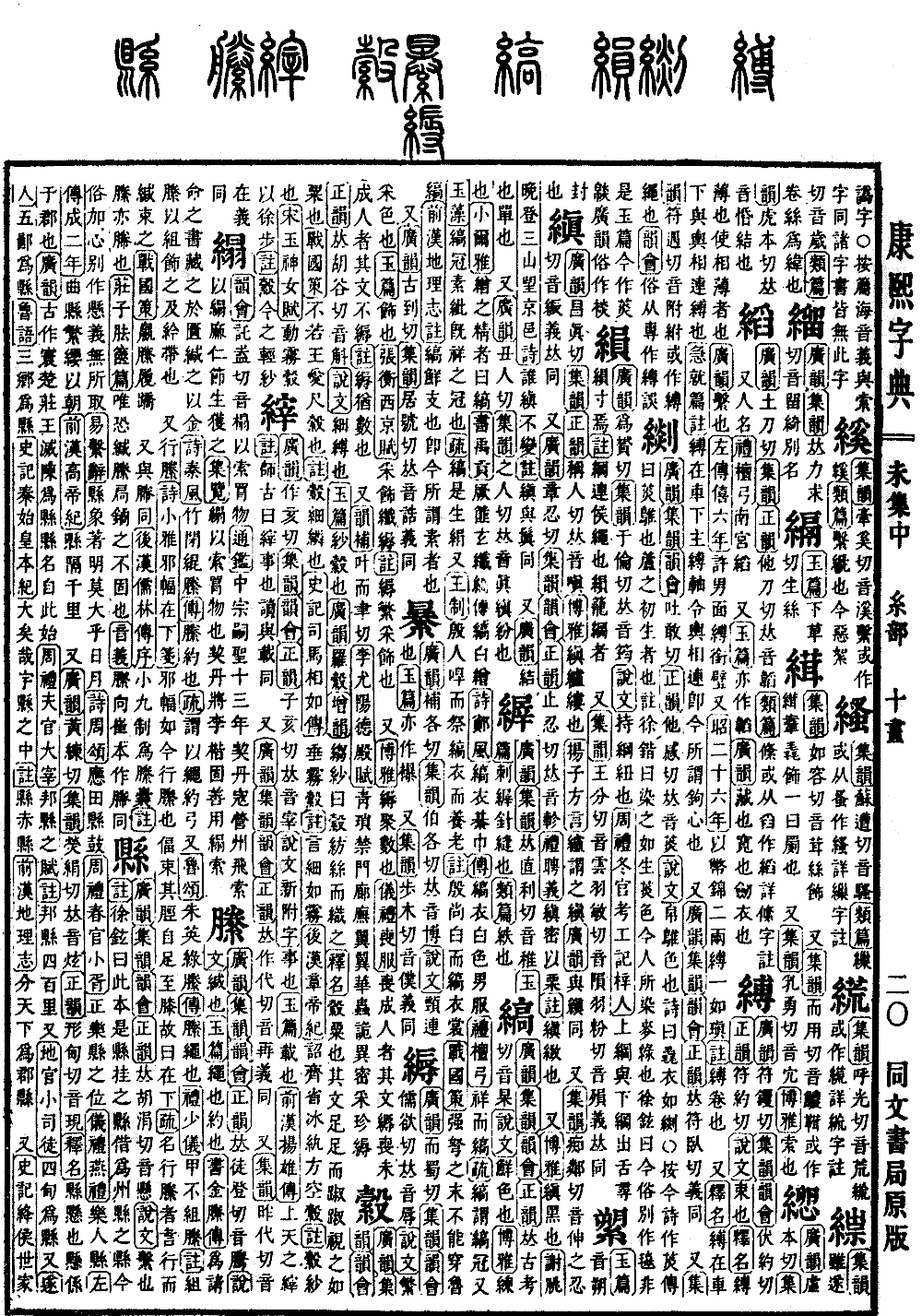
Gao; Kangxi strokes: 16; Page 934, Entry 16
Broad Rimes (Guangyun), Collected Rimes (Jiyun), Dictionary of Rhymes (Yunhui), and Correct Rimes (Zhengyun): Pronounced gao (rising tone).
Explaining Graphs and Analyzing Characters (Shuowen): Refers to a fresh color.
Broad Elegance (Boya): Refers to unbleached silk.
Small Literary Lexicon (Xiao Erya): Refers to the finest grade of silk fabric.
Book of Documents (Shangshu), Tribute of Yu (Yu Gong): With baskets containing fine silk (gao).
Commentary: Gao is white silk.
Book of Odes (Shijing), Zheng Airs (Zhengfeng): Wearing a white silk robe and a grey scarf.
Commentary: A white silk robe is a white garment for men.
Book of Rites (Liji), Tan Gong: After the auspicious sacrifice, wear white silk.
Sub-commentary: White silk refers to a white silk cap.
Book of Rites (Liji), Jade Pattern (Yuzao): A white silk cap with a plain trim, worn for the mourning period after the first anniversary.
Sub-commentary: Gao is raw silk.
Book of Rites (Liji), Royal Regulations (Wangzhi): The Shang dynasty people offered sacrifices with their hair disheveled and wore white silk robes when caring for the elderly.
Note: The Shang dynasty esteemed the color white, hence the white silk robes and garments.
Strategies of the Warring States (Zhanguoce): The tail end of a strong crossbow cannot penetrate Lu silk.
Former Han History (Qianhan Shu), Treatise on Geography, Notes: Gao is fresh silk, which is what is currently referred to as plain fabric.
Also, according to Broad Rimes (Guangyun): Pronounced gao (falling tone); according to Collected Rimes (Jiyun): Pronounced gao (falling tone). The meaning is the same.