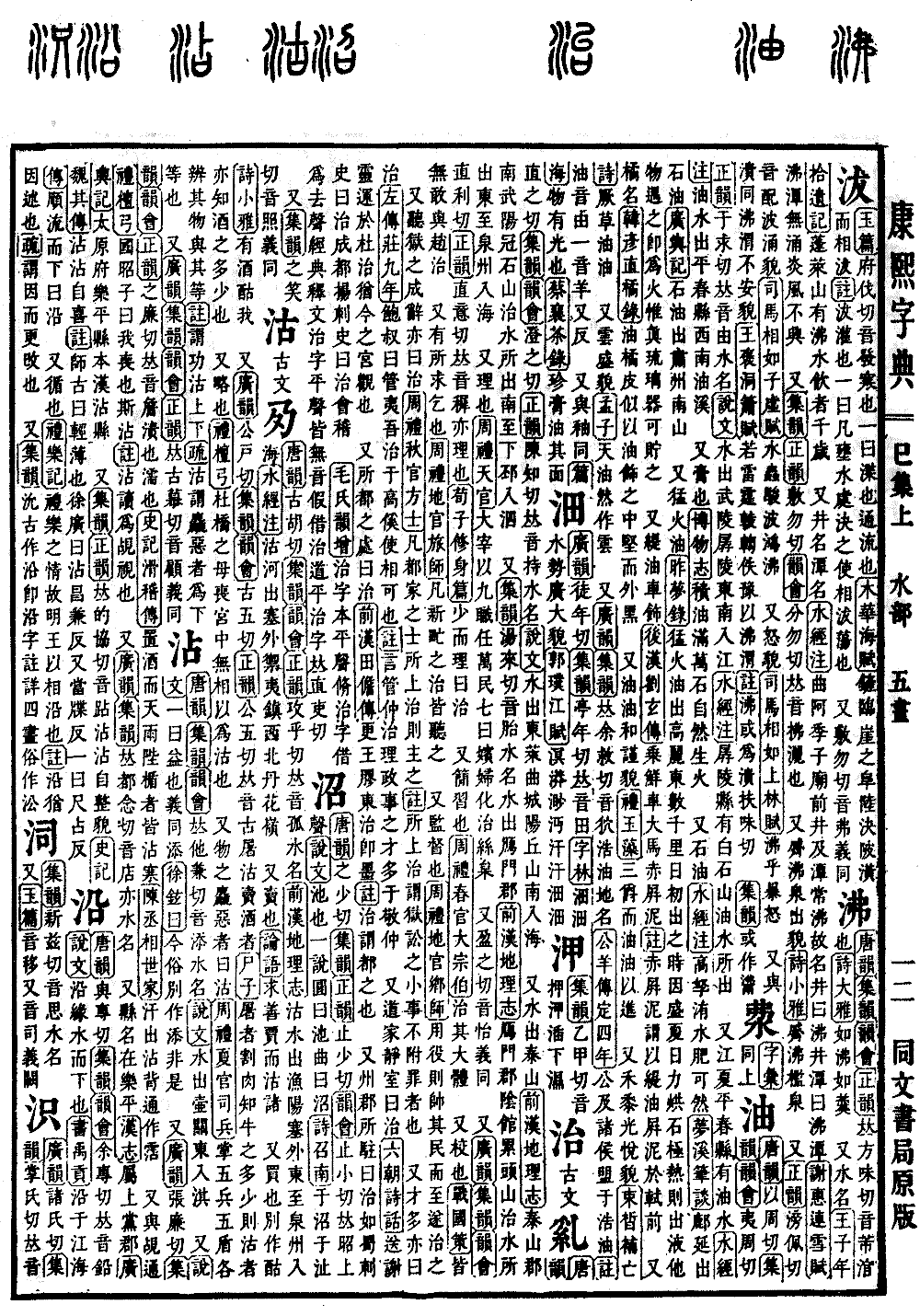
Si Collection, Upper Volume
Radical: Water (shuǐ)
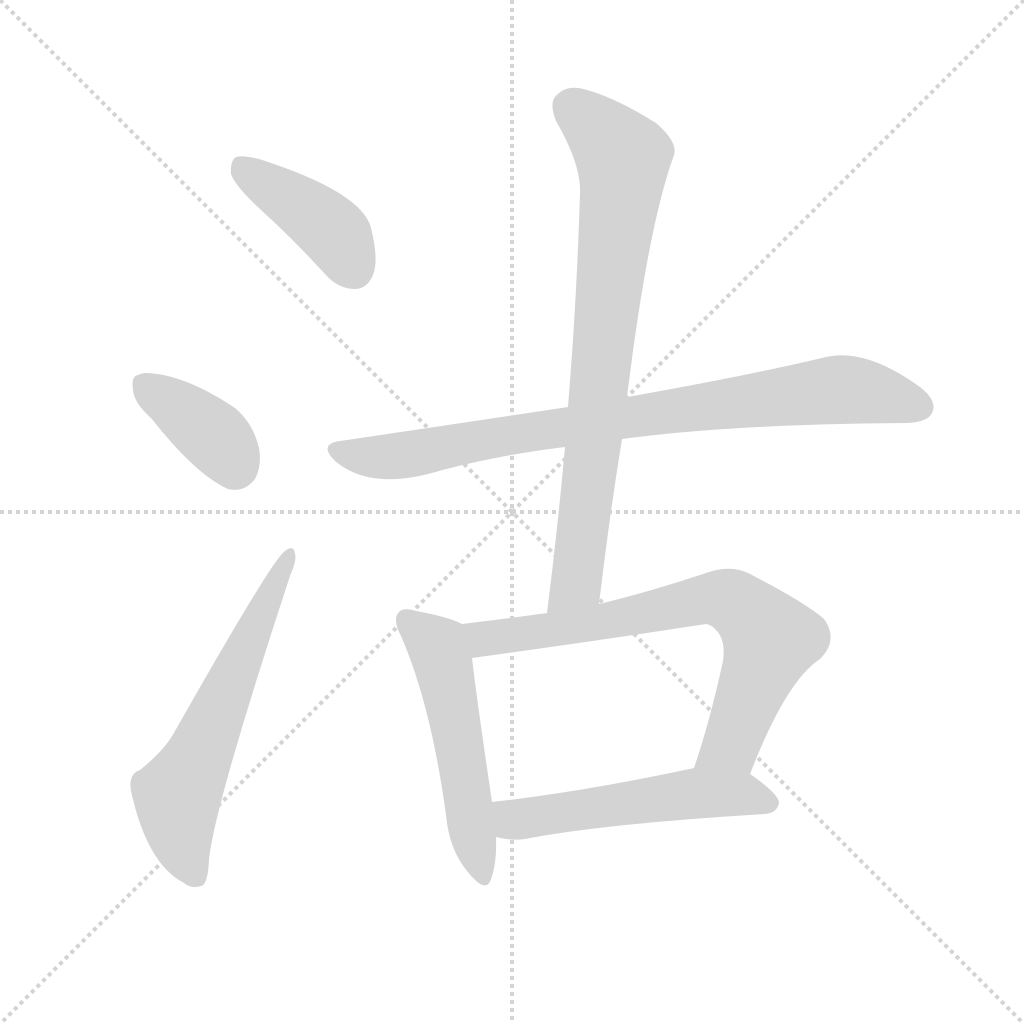
沽
Kangxi Stroke Count: 9
Page 614, Entry 10
Ancient form: 夃
Pronounced gu (level tone)
Name of a river. Book of Han (Hanshu), Treatise on Geography states that the Gu River originates outside the Yuyang frontier and flows east to enter the sea at Quanzhou. Commentary on the Water Classic (Shuijing Zhu) states that the Gu River originates at Danhualing, northwest of Yuyizhen outside the frontier.
Also means to sell. Analects (Lunyu) states: Wait for a good price and then sell.
Also means to buy. Sometimes written in a variant form (gū). Book of Odes (Shijing), Lesser Odes of the Kingdom (Xiaoya) states: If there is no wine, go and buy some for me.
Pronounced gu (rising tone)
Tu-gu refers to a wine seller. Master Shi (Shizi) states: A butcher cutting meat knows the amount of the ox, so a wine seller knows the amount of the wine.
Also means simple or coarse. Book of Rites (Liji), Tan Gong states: Du Qiao’s mother passed away, and there was no one in the palace to assist, so it was considered that the ritual was too simple.
Also refers to items of inferior quality. Rites of Zhou (Zhouli), Summer Official, Officer of Weapons manages the five types of weapons and five types of shields, distinguishing their categories and grades. The commentary says this refers to the superior and inferior distinctions. The sub-commentary says gu refers to inferior quality, ranked as the lowest grade.
Pronounced gu (departing tone)
Meaning same as above.
Textual Research:
Book of Odes (Shijing), Lesser Odes of the Kingdom (Xiaoya) mentions having wine to sell me. The text has been corrected from having wine to no wine according to the original source.