You Collection, Upper Volume
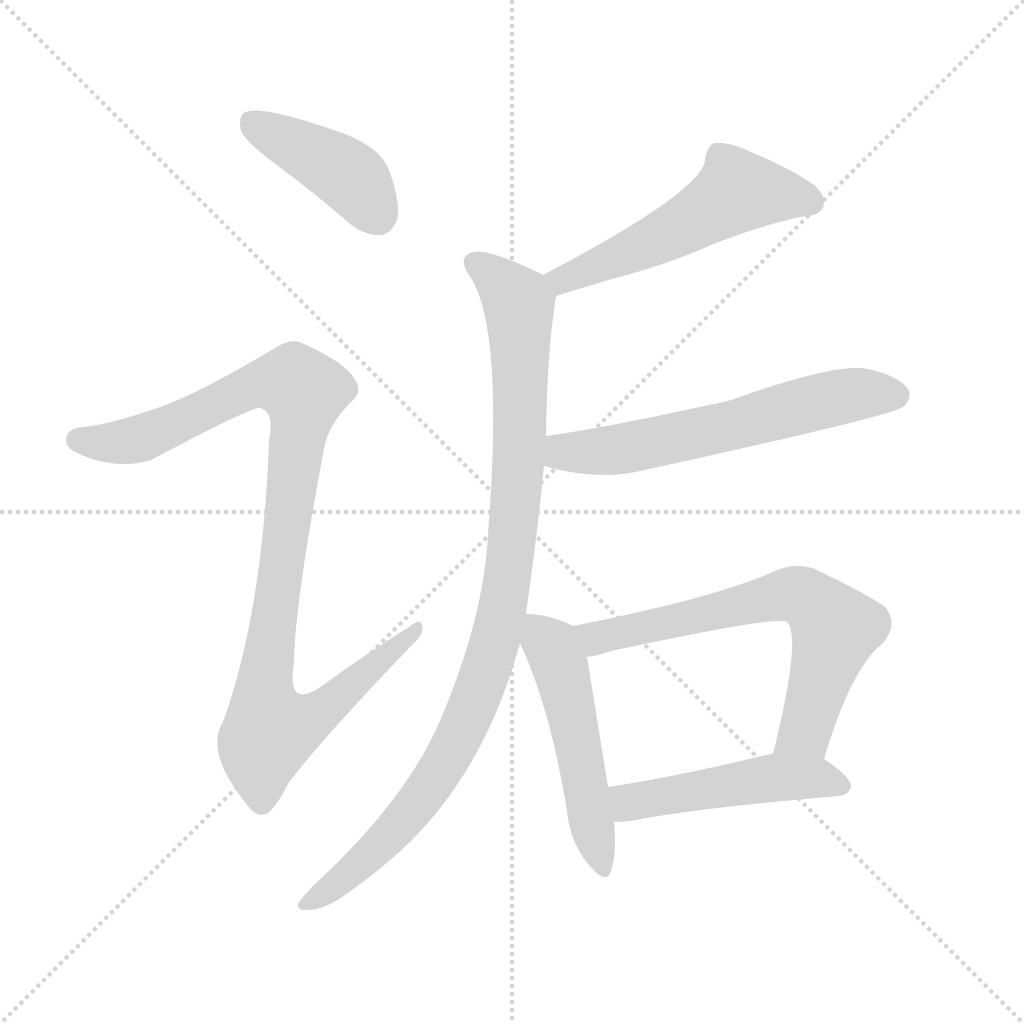
Radical: Speech (yán)
Gou
Kangxi Strokes: 13
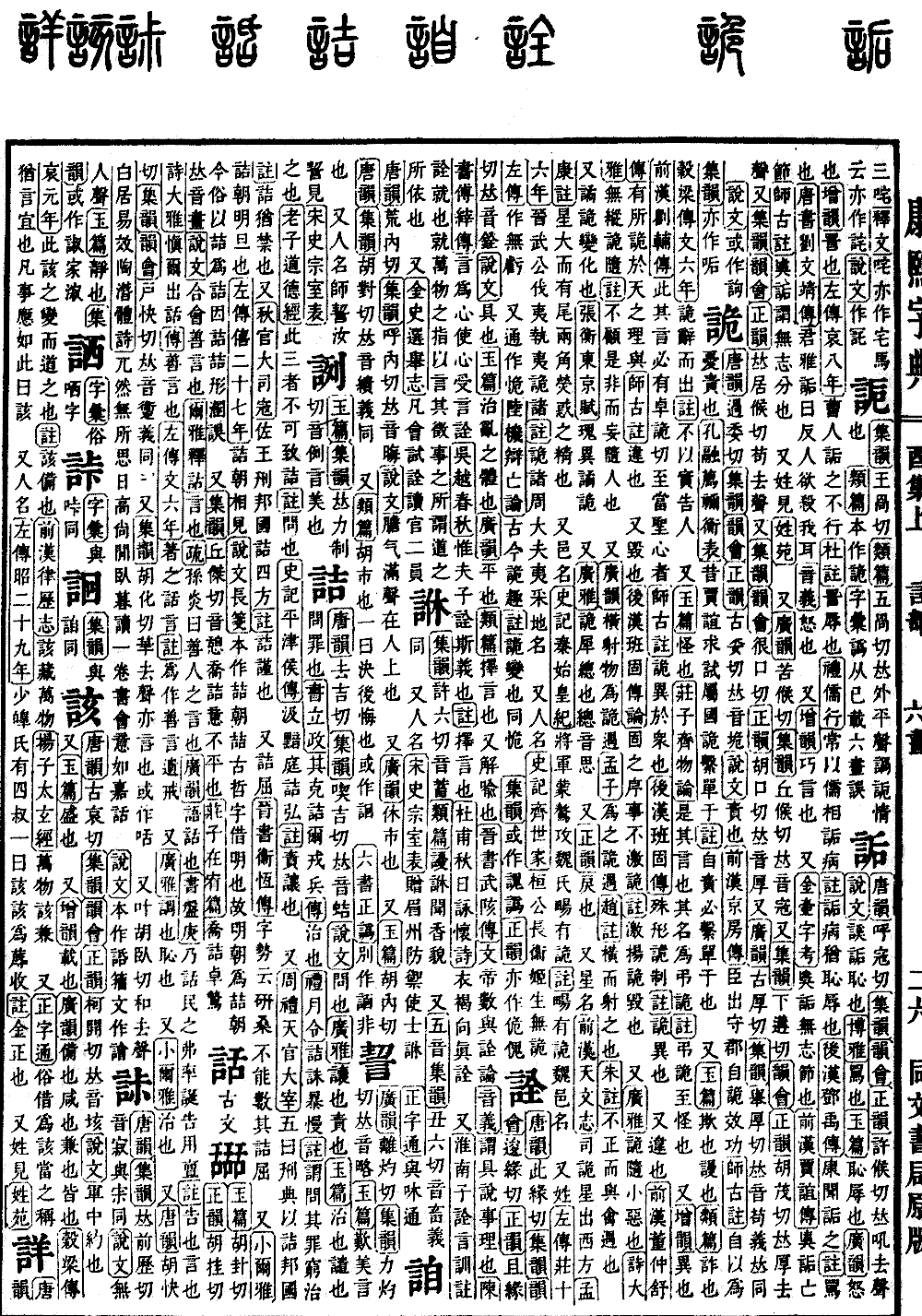
Page 1158, Entry 01
Pronounced hou (falling tone).
According to Explaining Graphs and Analyzing Characters (Shuowen Jiezi), it refers to disgrace.
According to the Erya (Boya), it means to scold.
According to the Jade Chapters (Yupian), it means shame or humiliation.
According to the Broad Rhymes (Guangyun), it means to be angry.
According to the Expanded Rhymes (Zengyun), it means to curse or revile.
In the Zuo Commentary (Zuozhuan), eighth year of Duke Ai, it is written: The people of Cao reviled him, but he did not leave. The commentary by Du Yu says: It means to insult and shame.
In the Book of Rites (Liji), record of the scholars, it is written: Often using the scholarly style to criticize one another. The commentary says: Criticizing is the same as shame and humiliation.
In the History of the Later Han (Hou Hanshu), biography of Deng Yu, it is written: Kang heard him reviling him. The commentary says: It means to scold.
In the Old Book of Tang (Tangshu), biography of Liu Wenjing, it is written: Junya scolded him, saying: You are a traitorous person who wants to kill me. The pronunciation commentary says: It means to be angry.
Also, according to the Expanded Rhymes (Zengyun), it means clever words.
Also, according to the Jinhu Zikao, liao-gou refers to having no ambition or integrity.
In the Book of Han (Qian Hanshu), biography of Jia Yi, it is written: Liao-gou, lacking integrity. The commentary by Yan Shigu says: Liao-gou refers to having no ambition or status.
Also a surname, found in the Encyclopedia of Surnames (Xingyuan).
Also pronounced ku.
Also pronounced hou (falling tone).
Also pronounced gou (falling tone).
Also pronounced hou (rising tone).
Also pronounced gou (rising tone). The meaning is the same.
According to Explaining Graphs and Analyzing Characters (Shuowen Jiezi), it is sometimes written as the variant form gou.
According to the Collected Rhymes (Jiyun), it is also written as the variant form gou.