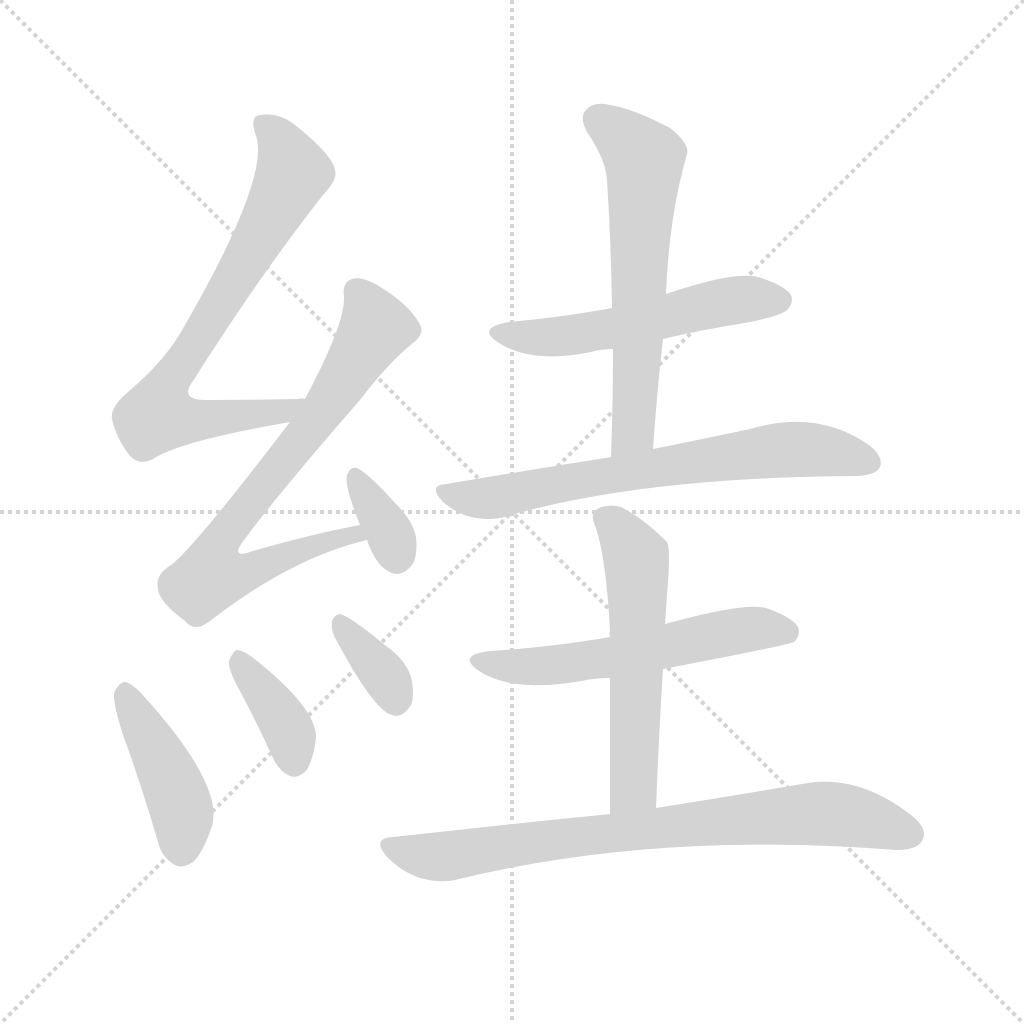
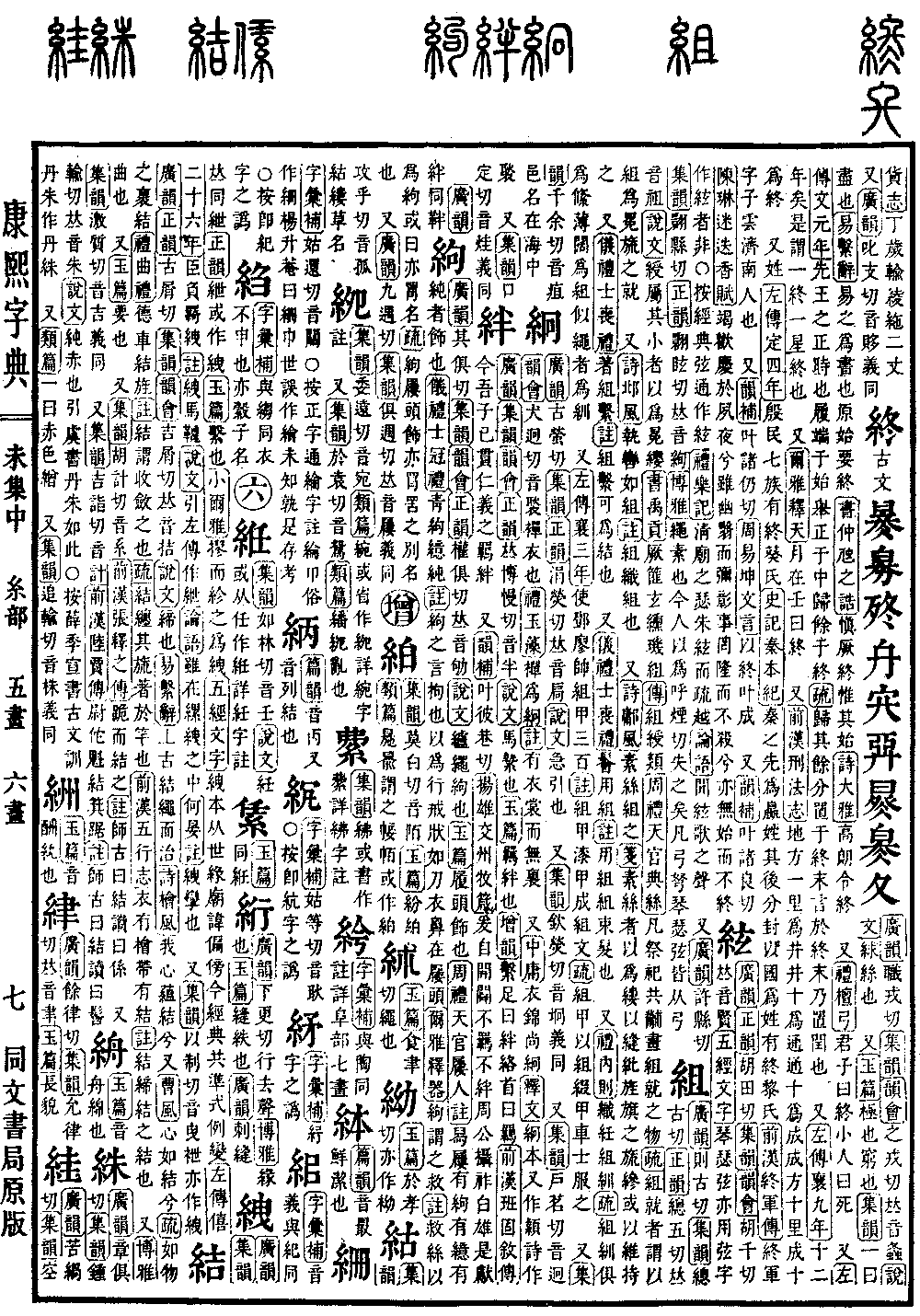
Wei Collection, Middle Volume. Radical: Silk (mì). Kangxi stroke count: 12. Page 921, Entry 39.
Pronounced gua.
According to the Explaining Graphs and Analyzing Characters (Shuowen), this refers to the dregs of silk cocoons or the head of a cocoon. Another interpretation describes it as the process of using a bag to boil and refine silk wadding. The commentary to the Quick Literacy Collection (Jijiupian) states that the coarsest variety of silk fabric is called gua, which is thread drawn from cocoon dregs.
Also pronounced guai. The meaning is the same.
Also pronounced hua. Pronounced gua. According to the Jade Chapter (Yupian), the meaning is to stop or to have an obstruction in walking. According to the Broad Rhymes (Guangyun), it refers to silk thread becoming knotted.
In the Zuo Tradition (Zuozhuan), entry for Duke Huan, 3rd Year: The outer horses (canma) were entangled and stopped. The sub-commentary explains that the outer horses were positioned outside the carriage shafts, and their reins were often caught by trees because the horses necks were bent and could not accommodate the shafts.
In the Zuo Tradition, entry for Duke Cheng, 2nd Year: The outer horses were caught by trees and stopped. The commentary explains that it refers to the outer horses being entangled.
In the History of the Former Han (Qianhan), Biography of Ban Gu: Not obstructed by the legal net of the sages. The commentary by Yan Shigu states that the pronunciation of this term is the same as hang (gua).
In the Songs of Chu (Chuci), Crossing the River: The heart is congested and suspended, unable to be resolved. The commentary states that the term means to hang or suspend.