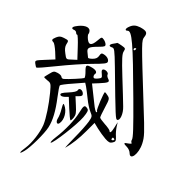
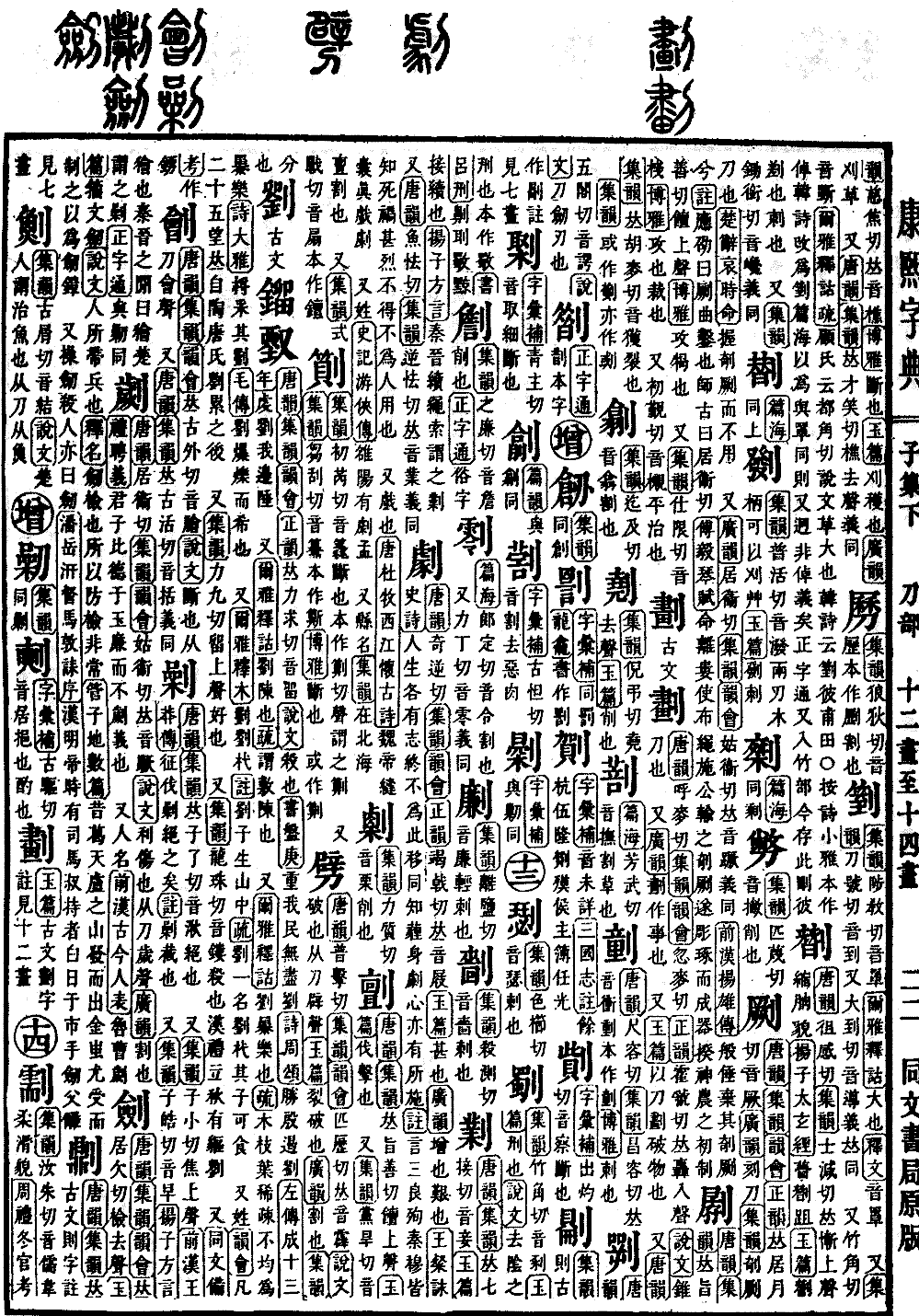
Zi Collection, Page Position: Lower. Radical: Knife (dāo). Character: Guì. Kangxi Dictionary Stroke Count: 15 strokes. Page 144, Entry 44. Tang Rhymes (Tangyun) indicates the pronunciation as jū-wèi-qiè. Collected Rhymes (Jiyun) and Rhyme Summary (Yunhui) indicate the pronunciation as gū-wèi-qiè, pronounced the same as jué. Explaining Graphs and Analyzing Characters (Shuowen Jiezi) defines it as using a sharp instrument to cut or wound. The character form is composed of the Radical: Knife (dāo) with suì as the phonetic component. Expanded Rhymes (Guangyun) defines the meaning as to cut or scratch. In the Record of Rites (Liji), it is recorded that the gentleman compares virtue to jade; although it has sharp corners, it does not cut or injure people, symbolizing righteousness. It is also used as a personal name. In the Book of Han (Hanshu), Table of Ancient and Modern Persons, there is a record of Cao Gui of the State of Lu.